An official website of the United States government


Tips for serving in Senegal from 8 Peace Corps Volunteers
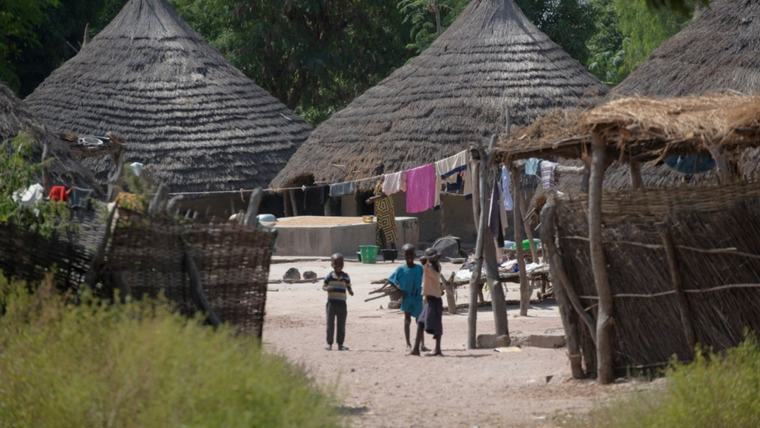
Since Volunteers first arrived in Senegal in 1963, they have supported local priorities through Agriculture, Community Economic Development, Environment, and Health projects. Eight Volunteers share tips for individuals considering serving in the vibrant country.
A culture of connection
Togetherness is at the heart of life in Senegal. Community is woven from shared moments where people show up for one another without hesitation. And for this West African country, presence, care, and continuity speak louder than farewells. Be where the people are as much as you can.
“Then came the time for me to return to the U.S. I was told that the tradition is to leave at dusk when everyone is still sleeping so that the goodbyes are not as hard, especially when you don’t expect to see the person again,” said Anh V.
“One thing I love about my community is the concept of ‘ko ennen dendi’ in Pulaar, which means ‘we are all together.’ When a child is born, all women in the community come to offer their prayers and celebrate together. When a family loses a loved one, the entire community comes together to cook for them and accompany them in their grief for up to a week,” shared Maggie L.
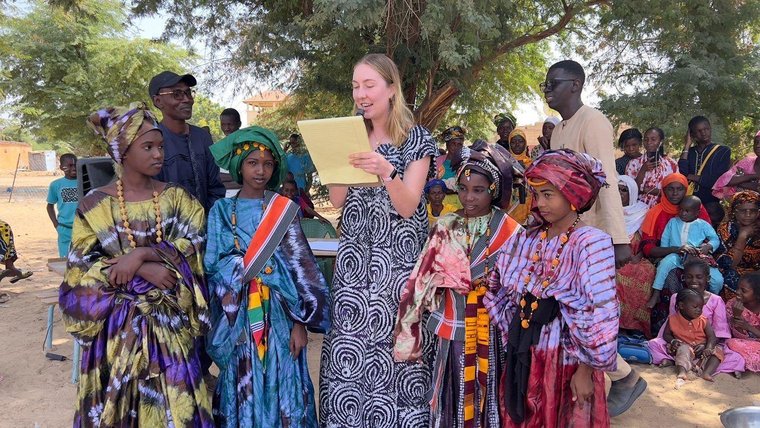
Learn more about common social activities in Senegal.
Guided by faith
Be prepared for open conversations about spirituality, which unfold with respect, interest, and a desire to understand. Underlying this openness is a shared cultural belief that people and experiences arrive when they are meant to—an easy, grounded trust in timing that shapes how many Senegalese move through the world.
“Senegal is a predominantly Muslim country with 95 percent of the population observing Sunni Islam practices. However, the village in which I live is split 50-50, practicing both Muslim and Christian beliefs. I have enjoyed seeing how both groups work together to respect each other's religions while still encouraging their own daily practices,” said Payton L.
“I am a practicing Buddhist. Twice a day, my host family and anyone who comes into our compound can hear me chanting in my room. In the beginning, I was afraid to be discovered, and I prayed in a whisper. In time, I began to feel more comfortable chanting as I would back at home. My host family asked me a lot of questions, as did many of my students, about my faith and beliefs. This led to many profoundly moving conversations around our shared humanity and common goals,” revealed Tracy W.
“Whether you are waiting for a person to show up to a meeting, a family member to return home from work outside the country, a car to pick you up on the side of the road, the fruits on your tree to flower, the belief is always that they will come. The common phrase ‘dina niew’ (‘it will come’) is often repeated to me when I question the absence of something, I believed should have been there by now based on my internal timeline,” shared Kaylee G.
Creative business ideas solve real-world challenges
Pack your creative thinking cap! Senegalese are interested in developing business strategies and income-generating activities that solve their biggest obstacles. Volunteers support Agriculture, Community Economic Development, Environment, and Health projects, but they’re often surprised by the skills and knowledge they gain while collaboratively problem-solving solutions.
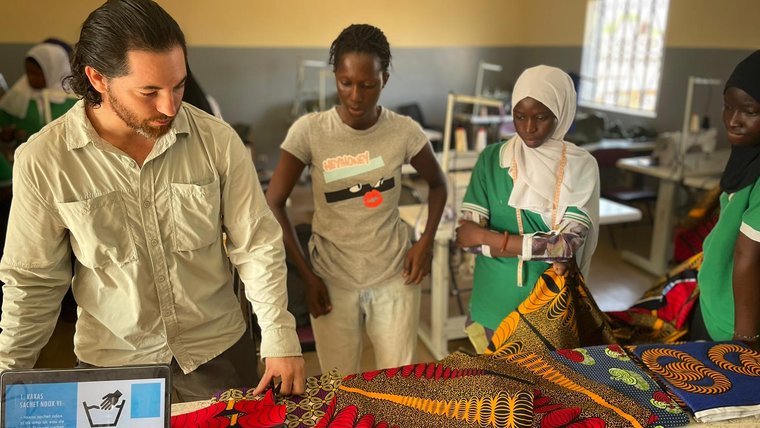
“The community expressed an interest in buying tote bags crafted from recycled water sachets. We saw how locally made cloth bags were an attractive and environmentally friendly alternative to single-use plastic bags. Our goal was to inspire community members to use their existing sewing skills to address the local waste problem and jumpstart social entrepreneurship in their communities,” said Holden M.
“The local residents already had an idea for a waste management project. They came up with a business model that gives local residents two trash pickups per week for less than two dollars per month. In April, [I] secured the initial funds through a small grant to cover the start-up costs, including trashcans and horse carts, which are commonly used to collect trash in Senegal,” remembered Kendall Z.
“Northern Senegal is the milk and meat capital of the country, producing more dairy than any other region. [I] began the [training] session with a detailed explanation in Pulaar, the local language, of pasteurization and the importance of hygiene and quality control. Afterwards, three representatives from local female-owned dairy operations led discussions on the state of the dairy industry, future projections and women’s empowerment. In a male-dominated workforce, these women created enterprises that now support their families and drive their community’s dairy industry,” stated Desja F.
Learn more about Volunteer projects in Senegal.