An official website of the United States government



Revitalizing a rural health center in Togo
Reyneir M. served as a Community Health Volunteer in Togo from 2023 – 2025. In this story, he shares a community-led project to acquire equipment and amenities for a maternity ward at a local health center in Togo.
During my service as a Community Health Volunteer in southern Togo from 2023 to 2025, one of the most significant concerns raised by healthcare staff was the lack of essential equipment in the maternity ward of the village health center. Approximately six months into my service, I began having conversations with the “infirmier chef” (head nurse) and the “sage-femme” (midwife), who explained that they were caring for mothers and newborns without many of the basic tools needed to provide safe, good quality care.
The need for essential equipment
The health center serves a rural catchment area of roughly 4,000 people across several surrounding communities. Staff repeatedly expressed that essential items, such as equipment to accurately measure newborns and pregnant women, sterilization and cleaning equipment, and neonatal support equipment, were either unavailable or outdated. These shortages directly affected maternal and newborn care and limited the clinic's ability to respond to emergencies.
After listening to these concerns and conducting several meetings with local stakeholders, we developed a community-led project and applied for a Peace Corps Partnership Program grant to strengthen maternal and neonatal health services at the facility.
Coordinating stakeholder participation
Throughout the process, I served as the project manager. My role was to coordinate meetings, facilitate communication among stakeholders, secure funding, and oversee implementation of the project. I worked closely with others to identify priorities and determine which equipment would have the greatest impact. Active stakeholder engagement ensured that the project remained community-driven and responsive to local needs.
This initiative was a true collaboration among multiple partners, including the health center staff, community health workers, members of the local Red Cross women's group, representatives from the Ministry of Health, Public Hygiene, Universal Health Coverage Access and Insurance, village leadership, and the Peace Corps. Together, these groups identified priorities, supported implementation, and developed plans to maintain and integrate the equipment into daily patient care.
New equipment and infrastructure
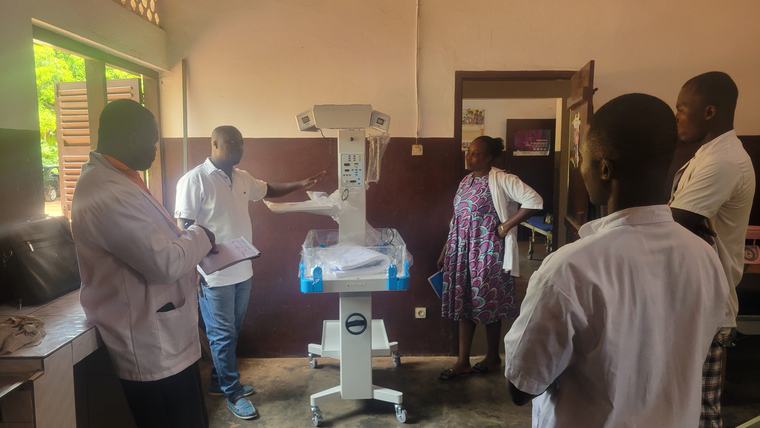
Through the grant, the health center received several critical pieces of maternal and neonatal equipment, including a neonatal resuscitation table, a phlegm vacuum cleaner to support neonatal respiratory function, a delivery table to improve comfort and safety during labor, a sterilization machine to reduce infection risks, speculums and a hysterometer for maternal examinations, an infant height measurer to monitor child growth from birth, and umbilical scissors for hygienic cord care.
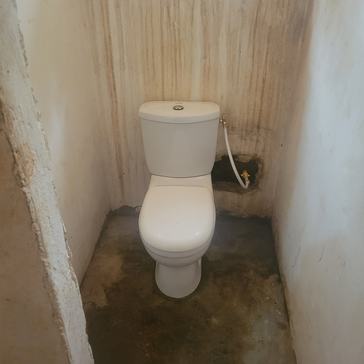
The grant also funded important infrastructure improvements. A toilet was installed for postpartum mothers, and a faucet was repaired so women could wash themselves immediately after giving birth, improving both sanitation and dignity during recovery.
Training for local staff
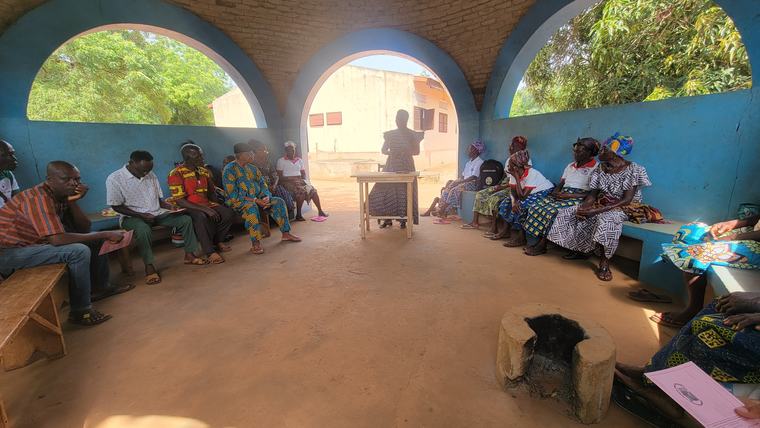
To ensure long-term sustainability, we organized a one-day training workshop focused on updated infant care best practices and the proper use of the newly acquired equipment. Twenty-three individuals attended the training, including community health workers and members of the local Red Cross. Representatives from the Ministry of Health facilitated portions of the training to ensure participants received up-to-date information and guidance. We documented participation to support project evaluation and accountability.
Immediate benefits
Approximately 4,000 people are indirectly impacted by this project, as the health center serves the entire surrounding population. More directly, about 30 healthcare personnel, community health workers, and volunteers benefited from updated training, equipment management responsibilities, and increased capacity to provide quality care.
Although some long-term outcomes will take time to measure, immediate positive impacts were already visible. Within one week of installation, I personally witnessed the neonatal resuscitation table being used to care for a premature infant. Staff shared that even some district-level clinics do not have access to this type of equipment, making its arrival particularly meaningful for the community.
The response from the community demonstrated the significance of the project. Healthcare staff expressed tremendous gratitude, and the village chief visited the clinic to personally thank me for supporting the initiative. These moments confirmed that the investment was not only technical but deeply human.
An ongoing resource for the community
This experience reinforced that healthcare projects are not simply about delivering equipment. They are about empowering communities to identify their own needs, strengthening local systems, and creating sustainable improvements that continue long after a Volunteer's service has ended.
This initiative has revitalized the health center, making it a safer, more respected, and more functional healthcare space for women, newborns, and the community at large. The collaboration between Peace Corps, local health leaders, and the village itself demonstrates the power of partnership and a shared commitment to health equity.
As a Peace Corps Health Volunteer, I was honored to help facilitate this effort and witness firsthand how partnership, local leadership, and community ownership can improve maternal and newborn health outcomes in rural Togo.