An official website of the United States government




You've been selected for an interview. Now what?
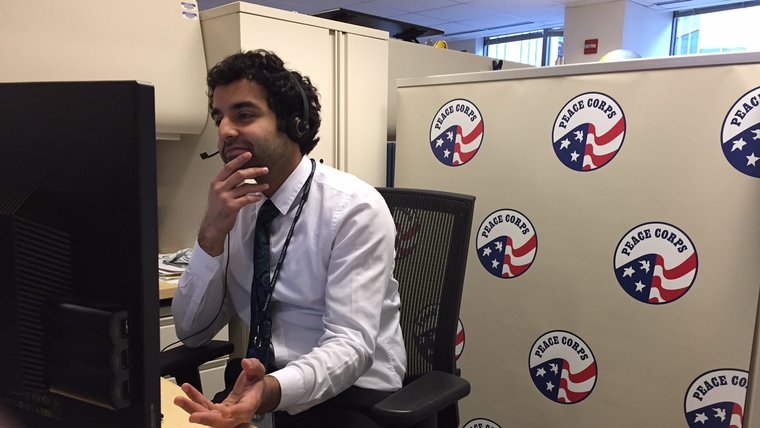
You’ve made it to the interview stage in the Peace Corps application process. Congratulations!
Not everyone gets invited to an interview, so take advantage of this opportunity and be prepared to demonstrate why you are the best fit for this position.
You may already know to be on time and dress professionally. But what do you need to know for your virtual interview? Follow these three tips to be on top of your game.
1. Prepare ahead of time
Luckily, there is no reason you can't be prepared for your interview, because the Peace Corps gives you the question topics ahead of time. Haven’t researched your country of consideration yet? It's time to start your homework. We want to see that you are serious about working with a community overseas, and demonstrating knowledge of the country shows your commitment to serving there.
The question topics are included in the email inviting you to an interview. Read them over, prepare examples, and do a dry run of the interview with a mentor, a close friend, or a Peace Corps recruiter. In your interview, we want to hear specifics: who, what, when, where, and how long. Long term and more recent experiences are ideal examples. We want to know what you learned from past experiences, so do some reflection before the call.
The country pages on our website outline cultural aspects of your country of consideration. Review them and be prepared to explain how you might adapt to different living conditions, amenities, and foods (including how you will find ways to accommodate dietary restrictions like vegetarianism). If you have concerns, share them with the placement officer. This is the time to ask your specific questions, which are unique to your situation. Placement officers enjoy interviewing candidates who are well prepared and ask questions. Don’t be afraid to use notes if needed!
2. Present yourself professionally
This is a professional interview and should be treated as such. This means wearing business casual attire and presenting an overall professional appearance. Position yourself in front of a neutral background and make sure your space is private and quiet. Put your phone on silent and a do not disturb sign on the door to minimize interruptions and distractions.
If you need to interview from a public space, such as a coffee shop or library, use headphones to help reduce background noise and hear your interviewer better.
3. Consider time and technical issues
Have you double-checked your interview confirmation email and noted any time zone differences? Peace Corps headquarters is in Washington, D.C., and most but not all interview times are scheduled in Eastern Time.
Log on at least 10 minutes early. Placement officers are very busy, often with multiple interviews scheduled throughout the day. They may not have an extra 15 minutes to spare for you to download or figure out the video software. However, they can offer phone interviews as a back-up if technology isn’t cooperating on the day of your interview. Let your interviewer know about any technical problems as soon as possible by emailing or calling them.
4. Other tips
- Internalize the Peace Corps mission and three goals. You will come across as a stronger candidate if you can articulate the “how” and “why” of Peace Corps service.
- Feeling a little nervous? It's okay, we’ve all been there. Have a cup of tea or glass of water handy if you need one. Ask your interviewer to repeat questions you don’t understand. Refer to your notes.
- Remember: Peace Corps is pronounced Peace “core”— just like the Marine Corps, the “p” and “s” are silent.” Similarly, make sure you know how to pronounce your country of consideration.
We look forward to seeing and hearing you during your interview—and learning about why Peace Corps is right for you!
Learn more about aspects of the interview process: