An official website of the United States government




What happens when you apply to serve where you're needed most?

If you are interested in Peace Corps service but can't or don’t want to choose a specific country and position, you can apply to serve where you are needed most.
“Taylor and I applied together to ‘serve where needed most.' It was scary at the time, but it was the right choice. The first we heard back was an invitation to interview for the Education program in Lesotho. When we got the invitation, we knew almost nothing about the country. Now, we’d change nothing. We are so happy and proud to be serving together in the ‘Mountain Kingdom.’” Drew W., Lesotho.
Applying to serve where you're needed most allows the Peace Corps to identify a program that matches your skills and interests to current placement needs. Applicants who apply to serve where needed most are often considered for programs that receive fewer applications and therefore have the highest need for qualified candidates.
When you submit an application to serve where needed most, a placement specialist reviews your application and places you under consideration for an open program that aligns with your skills, language and educational qualifications, geographic and sector preferences, and availability date. You will then receive information about the program and country you are being considered for and be assigned a placement specialist who will serve as your point of contact throughout the application process.
Applicants to the traditional 27-month Peace Corps Volunteer program can only have one active application at a time; Peace Corps Response applicants can have two active applications at a time.
If you’re an applicant to the Peace Corps Volunteer program, once a program of consideration is identified, that will be your only program of consideration moving forward. You will not be considered for multiple programs simultaneously. If at any point during the application process you want to change your preferences and/or availability date, communicate these to your placement specialist, who will do their best to identify an alternative program for you.
If you’re an applicant to the Peace Corps Response program, you will be considered for no more than two Response opportunities concurrently. If you wish to apply to the traditional Peace Corps and Peace Corps Response programs at the same time, you may have a total of three active applications (one Peace Corps Volunteer + two Peace Corps Response applications).
Can I express my preferences?
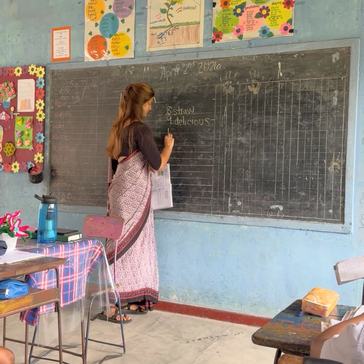
When completing your application, you will have the opportunity to provide geographic and sector preferences. You are encouraged to list all the sectors on your application that you are interested in and have experience with. The greater flexibility you demonstrate with your geographic and sector preferences, the greater chance the Peace Corps will identify an appropriate program of consideration for you.
“In my application, I chose the ‘serve where needed most’ option and additionally requested a Buddhist country to deepen my spiritual practice. I was absolutely stoked when I got the email telling me I would be heading to Sri Lanka!” Katie J., Sri Lanka.
Do I have to submit a new motivation statement and resume once I find out my program of consideration?
Once you receive information about your program of consideration, you do not need to submit an updated motivation statement or resume. Your motivation statement is used by the placement team to understand your general interest in Peace Corps service and your capacity for coping with the various challenges of service. However, at any time during the application process, if you gain additional volunteer and professional experience, you are encouraged to submit an updated resume.
Regardless of whether you apply to serve where needed most or directly to a Volunteer opening, your resume is an important piece of your application that will help the placement team identify a program that fits your skills and interests. Before applying for the Peace Corps, you are encouraged to connect with a recruiter who will work with you to highlight relevant experience and skills on your resume.
Staying flexible
Staying flexible is part of what makes Peace Corps service meaningful. If you’re placed in a program that isn’t exactly what you pictured, remember that flexibility is one of the Volunteer Core Expectations. Choosing to serve where you’re needed most already shows you’re open to stepping into a role where your skills can make a real difference. Many Volunteers will tell you that the countries they had never heard of and the programs they had not initially imagined ended up becoming the experiences that shaped them most.