 An official website of the United States government


Featured Volunteer Profile
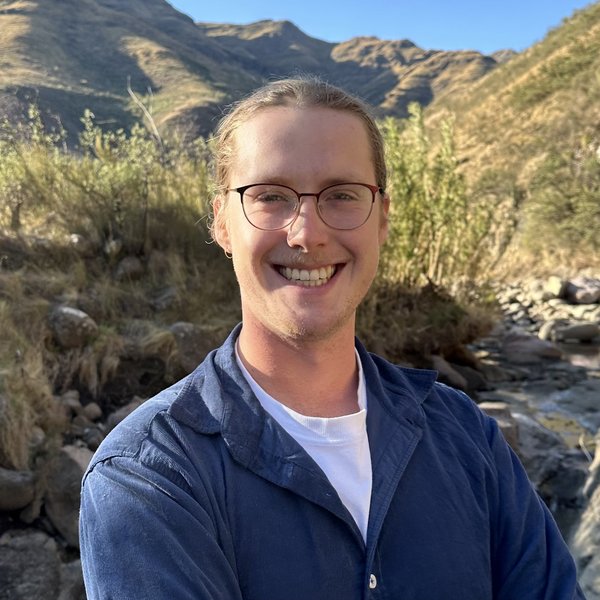
Drew W.
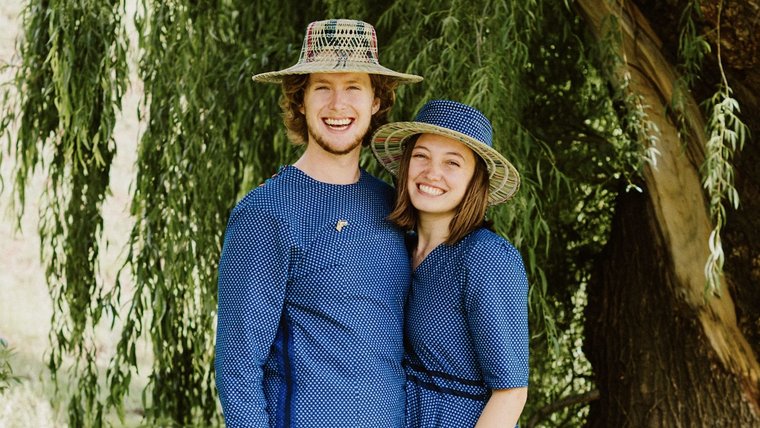
“Taylor and I applied together to 'serve where needed most.' It was scary at the time, but it was the right choice … We are so happy and proud to be serving together in the 'Mountain Kingdom.'”
1. What got you interested in the Peace Corps?
I did not know much about the Peace Corps until I met and traveled for a few days with a Returned Peace Corps Volunteer (RPCV) during my junior year semester abroad in college. She served as an Education Volunteer in Zambia and, at the time we met, was just finishing a graduate degree through a Coverdell fellowship. She lauded the independence and support that the Peace Corps gives its Volunteers to design and implement the projects that their communities want to pursue. She highlighted the incredible relationships she had made within her host family, her school, and her community. She also spoke candidly about the challenges of her Peace Corps service but remained very fond of her time in Zambia and proud to be an RPCV.
After my semester abroad I knew that I wanted to live abroad again after college. I took Arabic throughout college and loved languages, so I was keen to find work that immersed me in a different language and culture after I graduated. I was also interested in international development and foreign policy. My motivations were a mix of a drive for adventure, a need to challenge myself, a desire to gain more intercultural awareness, and a call to serve others. As I learned about the Peace Corps, I realized it was a great fit.
I went through most of college in a long-distance relationship, and my partner Taylor felt similarly about wanting to live and work abroad after graduation. Naturally, we were excited when we learned about the possibility of serving in the Peace Corps as a couple. Taylor and I looked at some other opportunities to live and work together abroad, but nothing was as robust as the Peace Corps. The Peace Corps not only promises to offer extensive linguistic, cultural, and technical training upon arrival; it also facilitates all administrative and logistical aspects of moving to a new country.
Taylor and I applied together to "serve where needed most.” It was scary at the time, but it was the right choice. The first we heard back was an invitation to interview for the Education program in Lesotho. When we got the invitation, we knew almost nothing about the country. Now, we’d change nothing. We are so happy and proud to be serving together in the “Mountain Kingdom.”
2. What projects are you working on?
My primary work is teaching math, English, and life skills to fifth graders. I work alongside a host country national who teaches the other subjects in the class. We share a desk, and when one of us teaches, the other works to manage our 65 students and keep them all on task. (It’s a tall order!) Outside the classroom, I also sit on my school’s fundraising and school supply unit committees.
My secondary projects counterpart is an engineer and community leader who knew about the Peace Corps’ approach to development and reached out to me about working together. (Unusually, my secondary projects counterpart does not work at my primary place of employment.) So far, we have collaborated to mobilize a nearby community to help us build an access road for tractors to reach their fields. We are also currently writing a proposal to an international charity for a big water project.
The plan is to leverage the plentiful waters available in the nearby Senqu River (the country’s major river) to address an ongoing water shortage in our community. We aim to install a pipeline using solar-powered pumps to bring water out of the river, clean it through purification tanks, and then deliver it into the existing water infrastructure in the mountains above our town. This existing infrastructure can then distribute the purified river water throughout the greater area without any additional inputs to serve its growing population of approximately 5,000 people.
3. What strategies have you used to integrate into your community?
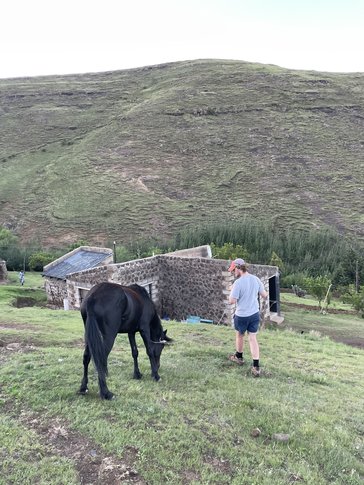
Language is a huge part of integration, so I worked hard during pre-service training (the first three months in the country) to develop “survival” language skills. Pre-service training was a great time to soak up the basics because I was surrounded by trained teachers, a supportive host family, and a whole cohort of Trainees in the same boat as me. By the time I got to site, I knew enough Sesotho to have a baseline for introductions and daily communication, and I was confident enough to use it. Even when community members can speak English, they are so excited to hear us learning their mother tongue that they become even more welcoming.
Furthermore, I have found it significant to do things in my community with members of my community, such as sitting out with my host father while he watches his sheep or running errands in town with my host brother. I like to run, which has been a great opportunity to meet and chat with people around the community. Local children also like to join me, which has given me a great opportunity to talk to them about nutrition, fitness, and healthy habits.
Finally, I have found it important for integration to participate in local celebrations and ceremonies. If a family member or neighbor is getting married, go to the wedding (it’s usually in someone’s front yard). When the young men and women return from their initiation schools (a three-month rite of passage for many people when they reach adulthood), go to the graduation. If there is a teacher party after school, go to it!
4. What is a highlight of your time in service so far?
One highlight was organizing a concert and talent show at the primary school where I teach. When I arrived, the principal at my school volunteered me to join the fundraising and entertainment committee. Every quarter, we plan some activity to raise money for the school to spend on field trips, supplies, or activity fees to participate in national athletics, academic, and choir competitions.
I knew a local taxi driver who was also a DJ and singer. He had age-appropriate music for the kids and wanted an opportunity to perform for them, so he asked me to help set something up. We agreed to combine the concert with a talent show and set the date for a Friday afternoon. We announced the event to the kids and encouraged each class to set aside some time for their own competition. Each class then submitted a list of five groups who would perform in front of the whole school.
The event was a success, most importantly for the kids. The DJ helped us set up the school’s performance hall with large speakers and microphones, in addition to his own equipment. Some kids did karaoke or wrote and sang their own songs, while they did TikTok dances or showed off more unique talents. Everyone had lots of fun watching their classmates show off their talents, and I had lots of fun being the emcee. To top it all off, the kids were overjoyed to listen and dance along to the DJ singing and mixing songs. It made me very happy to organize and participate in such a joyful event.
5. What have you enjoyed most about the community where you are serving?
I have enjoyed how supportive and welcoming everyone is in my community. For example, my co-teacher has worked hard to make me feel included in the classroom and at the school. We chat whenever we are not teaching, and we have learned so much from each other about our respective cultures, beliefs, and opinions. The same goes with my host family: they immediately started doting on Taylor and me and have wanted to know as much about us as they want us to know about them. And although I do not know all the members in my community, everyone I have met has been excited by our presence and eager to welcome us and thank us for teaching their children or grandchildren.
6. How do you spend time when you are not working on a project?
In my free time, I read, run, and hike if the weather’s nice. The Volunteer resource center in each camp town in Lesotho has a nice library of books left behind by decades of previous Volunteers, so there is plenty of print reading material. An e-reader helps me get anything else. Running and hiking are both lovely ways to stay healthy and soak in the beautiful scenery around my community. Recently, I have also been doing more yoga. On the weekends, I spend time with friends in the outdoors, getting lunch from one of the few restaurants in our area, playing card games, or making dinner together.

7. What are some of the most important things you’ve learned from your community?
I have learned more deeply about patience. Timeliness and expedience are not culturally valued in the same way as in the U.S., which was frustrating when I arrived. Taxis do not always leave when they are scheduled to, or you can wait for hours for them to fill before they leave a camp town. Meetings often do not start immediately when scheduled, and participants are happy to work slowly through every point on the agenda. Also, learning a foreign language is hard and took lots of time and effort to make myself properly understood, especially early on. Classroom management, additionally, is very difficult in a class of 50 or 60 kids, and it takes a lot of effort to help each individual student. Patience is the only way to adapt. These situations have forced me to exercise patience, to value my time differently, and to not worry so much about when or how quickly things happen.
8. What are you looking forward to in your remaining time as a Volunteer?
I am hopeful that I can help my community get funding for our water project, and I would be very excited to start working with my counterpart to implement it. I also moved up to the next grade with the kids I had last year, so I look forward to seeing them learn and grow through another school year. I am studying to take the Foreign Service Officer test in June. While I am committed to staying present through the rest of my service, it is as exciting as it is scary to start thinking about life after Peace Corps! Outside of work, I am training to run a marathon, which has been a big personal goal for a few years.
9. Once you finish your service, what will you do differently when you return to the U.S.?
My Peace Corps service has made me much more aware of my consumption and carbon footprint. For example, living without running water means I work to collect water, keep all of it in buckets, and easily track how much of it I use for drinking, cooking, washing, and bathing. Also, no municipal waste management means everyone burns their trash, so I am less removed from the consequences of my consumption. The increased awareness also brings gratitude. When I return to the U.S., I hope to remain more conscious about my energy consumption and more grateful for the daily privileges I always took for granted.



