 An official website of the United States government


Featured Volunteer Profile
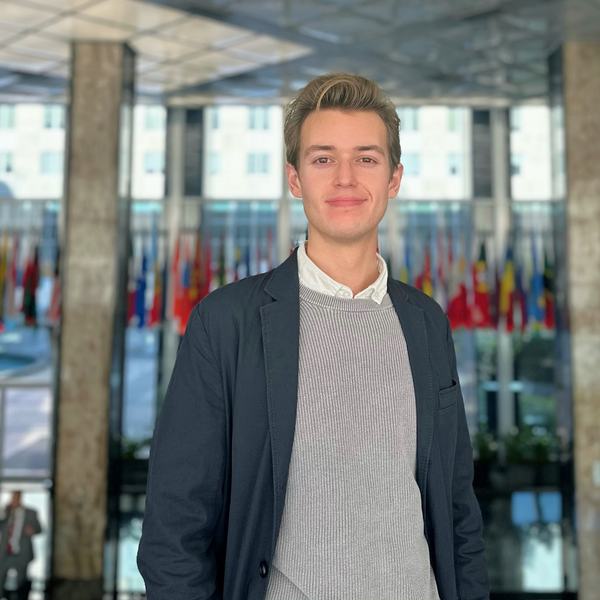
Jaden R.
“Working with one of my NGO partners ... I developed a deeper understanding of how traditional nomadic families are adjusting to rapid urbanization and the difficulties of the transition.”
1. What inspired you to apply for this Peace Corps position?
During my time interning at the U.S. Department of State in Washington, D.C., I began seriously considering joining the Peace Corps. In discussions with colleagues and friends, I soon discovered the large Returned Peace Corps Volunteer (RPCV) community embedded in the department, particularly in the Bureau of Educational and Cultural Affairs. I reached out to several RPCVs, some of whom had served in Mongolia. After those discussions, I came away with one thing: your service will be the hardest and most rewarding thing you ever do. At that moment I knew this was something I had to do.
2. Tell us about a moment that sticks with you from the first week at your site.
The first week of my service was pure chaos. On the first day of my move, I had six people piled into my modest studio apartment. It was loud and I couldn’t understand any of the Mongolian that was being spoken. There was not a free square inch left of the floor. My counterparts diligently shuffled me around from place to place, helping me buy everything I might need. Despite the chaos, the moment that stuck out to me most was when, after a long day of fixing issue after issue, we all came together around my kitchen island with a big pizza and just talked. We talked about my goals, the community’s needs, and how good the pizza was after a long day. At this moment I knew that these teachers had my back and were invested in my success as much as I was in theirs.
3. What projects are you working on?
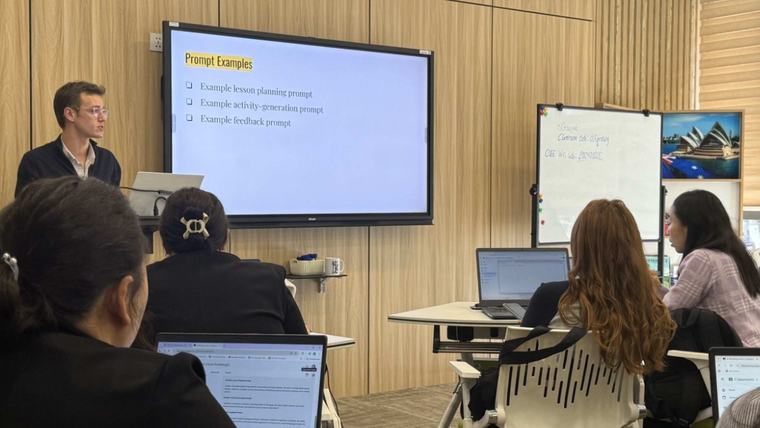
All Volunteers in Mongolia have similar jobs; we primarily work in public secondary schools for around 30 hours a week, teaching English and facilitating school community development activities.
The second component of our job is broader community development, which is determined in partnership with local organizations. My broader community development has centered around three main projects: a solar energy transition initiative, a community-based tourism initiative, and a project aimed at developing a greenspace and community center in a local “ger” district (informal housing zones on the outskirts of the capital city). Through these projects I have been able to better understand my community's needs.
4. What strategies have you used to integrate into your community?
First, observe. Volunteers are meant to integrate into local communities, which requires a deep understanding of the local culture and norms.
Second, remain flexible. As a Volunteer, every aspect of your work requires partners. In many countries, these partners will not have the same approach to work, nor will they have the same priorities. It is important to always adjust to the needs of your community, no matter how frustrating it can be at times.
Last, give it a good try. Foreigners get cut a lot of slack, and effort is often valued much more than perfection. Can’t speak the language well? Give it a shot. Awful dancer (me too)? Move those limbs!
5. What’s a typical day like for you?
A normal day for me is similar to that of a high school teacher in the U.S. I work from about 8 a.m. to 3 p.m., Monday through Thursday, co-teaching English classes and facilitating club activities at school. Fridays I dedicate to my broader community development work with my two NGO partners, monitoring, coordinating, and working on ongoing tasks related to community development initiatives.
6. What is a highlight of your time in service so far?
Working with one of my NGO partners, I was able to sit down with local residents in a ger district. Through these conversations, I developed a deeper understanding of how traditional nomadic families are adjusting to rapid urbanization and the difficulties of the transition. These discussions coalesced into my first-ever published article, where I had the opportunity to highlight often underrepresented voices and the great work of local NGOs working to solve systemic issues that adversely impact ger district residents. This is just one example of all the “firsts” I have been afforded as a result of my service.
7. What have you enjoyed most about the community where you are serving?
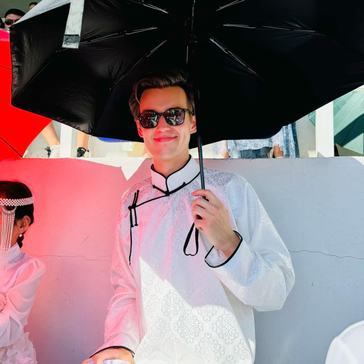
What I enjoy most is the people. I grew up very independent, and I never really relied on anyone but myself. Throughout my service, I have grown to appreciate community and the value of collaboration. It warms my heart to see people so open and willing to help wherever they can. Once people find out I am a Volunteer, they are often eager to support my work and goals in whatever way possible, often offering their services free of charge. Furthermore, I am invited to random people’s homes all the time. There is warmth in my community that I have not found elsewhere.
8. What are some of the most important things you’ve learned from your community?
The most important thing I have learned from my community is that time is relative! When I first got to my site, I was shocked when I was told to meet someone at 10:30 a.m., and when I arrived, there was not a soul in sight! We have an endearing term we use in Volunteer circles, “Монголын цаг,” or “Mongolian time,” that we use any time someone or something is running late. American Standard Time is just that! The same weight is not applied to timeliness around the world.
9. How do you spend time when not working on a project?
I am a homebody and introverted by nature. In my free time, I love baking (particularly sourdough), cooking, reading, watching movies, and most of all, cleaning! When you can get me out of the house, I like to run, hang out with friends, and go shopping. I find that routines are the best therapy and help manage the difficulties that come from living abroad.
10. What are you looking forward to in your remaining time as a Volunteer?
As I am set to finish my service at the end of this summer, I am eager to see the fruits of my labor, particularly regarding my broader community development work. Two projects, which I have been working on for a majority of my service, will be hitting major milestones in July. As I conclude my service, it remains my top priority to continue delivering on the promises I made to my community.
11. What would you say to someone thinking about joining the Peace Corps?
Do it! There’s truth to the old tag line, “It’s the toughest job you’ll ever love.” Never in my life have I worked a job where my one and only goal is to serve. The experience is freeing. You may be on the job 24 hours a day, seven days a week, but it never feels like it.
Learn more about serving as a Peace Corps Volunteer in Mongolia.



