 An official website of the United States government


Featured Volunteer Profile
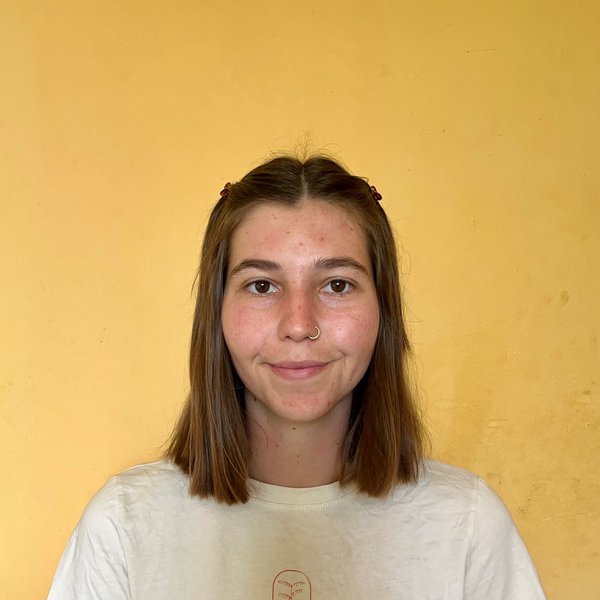
Marin K.
“There’s never a dull moment with the children. From teaching me how to fish termites out of the termite mound behind my garden, asking to draw on my chalkboard, or going on mango hunting adventures, they keep me on my toes.”
1. What got you interested in the Peace Corps?
I recall listening to my grandfather’s stories about growing up, his world travels, and his opportunity to be a Peace Corps Volunteer in the 1960s. (He applied to serve but couldn’t because his wife and young daughter couldn’t accompany him. He was devastated.) My grandfather often talked about the value of travel and the immense knowledge, understanding, and respect gained through deep intercultural experiences. His stories inspired me and got me hooked on the idea of one day becoming a Peace Corps Volunteer.
After graduating from college, and unsure of my next steps, I decided that it was time to apply for the Peace Corps. I was ready to dive headfirst into a culture completely different from my own, an experience that would allow me to pursue my love for service, learning, travel, and environmental advocacy.
2. What projects are you working on?
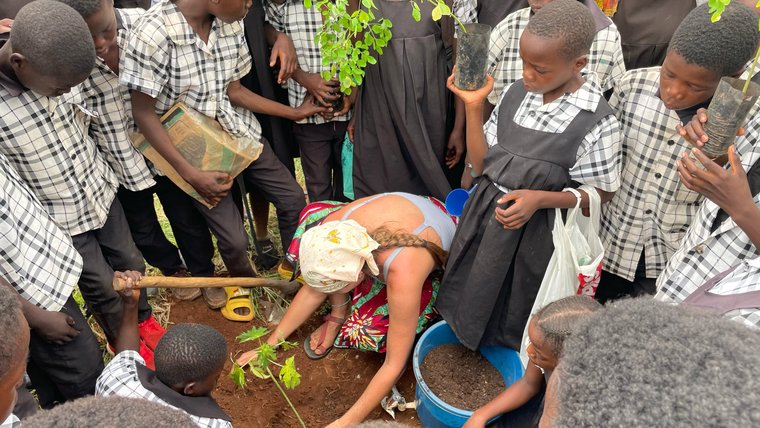
I am currently working on a number of projects in my community and the surrounding area. As a Linking Income, Food, and Environment (LIFE) Volunteer, I co-facilitate demonstrations on composting, organic fertilizers, integrative pest management, tree nursery establishment and management, tree grafting, and more. Within my host family compound, we are working to re-establish an old orchard that was lost in a fire a few years ago. I have also been working closely with and learning from my host father, who is expanding his beekeeping and honey business.
In addition to my regular LIFE-related work, women in my community expressed an interest in learning how to read and write in both English and Chinyanja, the local language. Therefore, I’m partnering with a neighboring Volunteer to teach English classes once a week to the women in my community.
One final project is co-coaching a Grassroot Soccer SKILLZ (GRS) team with a community counterpart. This program uses soccer to empower youth while also building leadership and life skills, and teaching about HIV/AIDS prevention, healthy relationships, and sexual and reproductive health.
3. What strategies have you used to integrate into your community?
Community integration comes with many challenges, and I’m not sure Volunteers can ever consider ourselves as fully integrated within our communities as we would like to be. We will always be seen as different to a certain extent. However, there are ways to work towards integrating to the best of our abilities. I’ve found that simply spending time with people and taking part in events and activities have helped me build a strong connection to my community. This includes simple things like wearing local fashions (chitenje for women) and eating local foods (especially nsima).
Language is another extremely important aspect of integration. I push myself to speak the local language as much as possible, ask questions, and am not afraid to make mistakes. This has helped me learn Chinyanja much faster than I could have imagined.
My last bit of advice when it comes to community integration would be to approach everything with an open mind and willingness to learn. People will recognize and appreciate your efforts, making integration into your community a smoother process.
4. What is a highlight of your time in service so far?
There are so many highlights, but the one I keep coming back to is relationships. What truly makes Peace Corps special are the deep friendships you build along the way. I now have a whole new branch of family in Zambia who have welcomed me with open arms, shared their knowledge and culture with me, and have made me a part of their lives. My Zambian family has taught me more than they will ever know.
I have also found a family within the Peace Corps Volunteer community. Although we have diverse roles, we will forever be connected through our shared experiences, the highs, and lows we’ve endured, and our time spent together. Through the Peace Corps, I have developed friendships that will last a lifetime.
5. What have you enjoyed most about the community where you are serving?
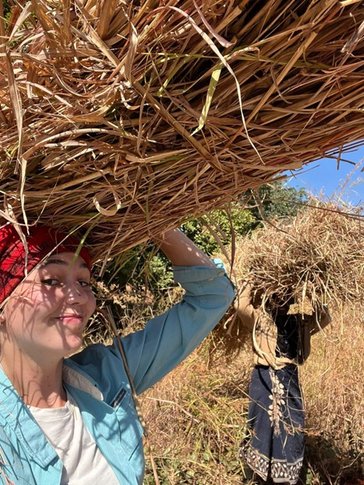
The Peace Corps experience is challenging, but what never fails to put a smile on my face at the end of a hard day is my host family. I have a large host family, which consists of 4 families and their extended families, so I consider myself to have four sets of host parents.
My host dads, who are brothers, and their separate families live around me within the family compound, each taking care of me equally. My host father Tenford is the headman and works with the local health clinic. Ruben has a small beekeeping operation, Allan has a considerable livestock project, and Rodrick is a pastor at the local church.
My host moms are some of the most caring people I have ever met. I love spending time with them, learning how to cook, doing chores, and farming, Zambian style. They never fail to make me laugh, especially when I’m struggling through a conversation in Chinyanja.
There’s never a dull moment with the children. From teaching me how to fish termites out of the termite mound behind my garden, asking to draw on my chalkboard, or going on mango hunting adventures, they keep me on my toes. I have learned so much from everyone in my host family and have had experiences with them I would never have imagined having back in the States. I feel extremely lucky to have been placed in this community, and am excited to learn more from them in the remainder of my time here.
6. What are some of the most important things you’ve learned from your community?
My community has taught me how to survive in rural Zambia without the usual amenities in the U.S. From learning how to collect water from the borehole, to starting a fire or lighting a brazier so that I can cook and eat, my host family has been there every step of the way, helping me adjust to Zambian life.
The children in particular have taught me the importance of resourcefulness, and not taking things for granted. Making mouse traps out of empty cans, rigging up kites, toy cars, and balls out of old bottles, string, and plastic bags are just some examples of the creativity and resourcefulness these children display. They find fun in the simplest things, which is something you see less and less of in the United States, where kids spend a great deal of time with their faces glued to a screen.
Lastly, I have learned about the importance of community. Zambian culture is very community oriented. People share common resources, help each other when times are tough, and work together to solve shared issues. It’s inspiring to see, and a mindset I wish that more Americans would embrace.
7. How do you spend time when you are not working on a project?
During my free time, I enjoy dabbling in hobbies such as painting and photography or pitching my hammock under a shady tree and journaling or diving into a good book. I also like to stay active, whether it’s going for morning runs or walks, or working in my home garden. Additionally, I love to spend time with my host family and take part in everyday community life and events. Helping my host family in the fields or garden, going to watch a football game on a Sunday evening, or simply sitting, chatting, and sharing a meal are some of my favorite times of day. In service, I have found these activities and hobbies to be extremely important in combating boredom and maintaining my mental and physical health when I don’t have work-related things to focus on.
8. What are you looking forward to in your remaining time as a Volunteer?
I look forward to building an even stronger connection with my community, whether it’s through continued language and cultural learning, or working together on special projects. Feeling like I am truly part of the community is something I strive for, and I hope to serve my community as best I can and how they see fit. I also look forward to the personal growth and learning that awaits, as well as the experiences I am yet to have with friends and family. Additionally, I hope to visit more regions of Zambia and experience its diverse landscapes and people, as well as other African countries. Two years may seem like an eternity, but time does go by in the blink of an eye, and I don’t want to miss any of it.
9. Once you finish your service, what will you do differently when you return to the U.S.?
Even though I still have a little over a year left in my service and therefore much growth and learning yet ahead of me, service has already changed what I care about and deem most important in life. I anticipate letting go of material possessions and cherishing the little things, the simple things. I hope to stay more connected with friends and family, near and far, and approach new relationships with an open mind.
Peace Corps service is hard, it forces you so far out of your comfort zone that you learn to adjust and become comfortable being in uncomfortable situations. I will return to the States a more resilient individual, who is able to better navigate challenges I may face.
I also aim to foster a greater sense of community wherever I settle. Service has taught me the power of collective action. Looking forward, I hope to grow a more communal culture back home—a culture centered on collaboration, compassion for others, and a strong commitment to building a resilient and sustainable society.



