 An official website of the United States government


Featured Volunteer Profile
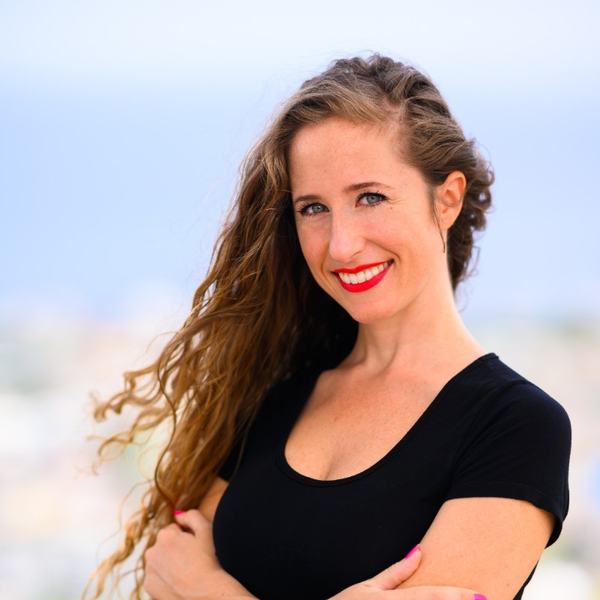
Rebecca W.
“I already had a good deal of resilience and grit through my formal ballet training, always showing up, and pushing through physical or mental pain and discomfort, but the Peace Corps made me unstoppable...”
1. What were your primary responsibilities during service?
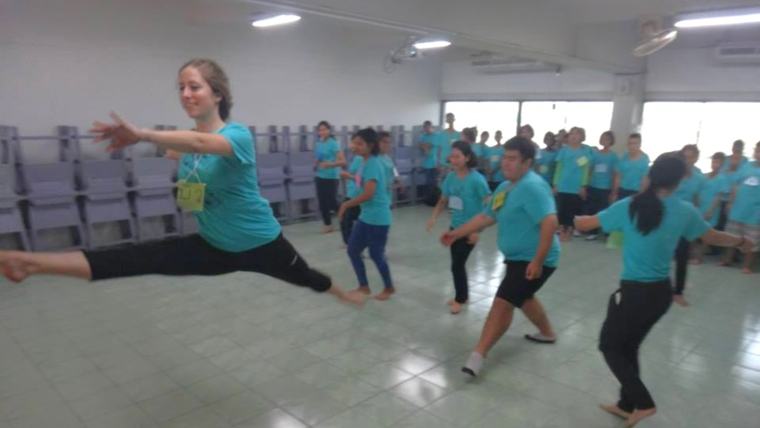
In Thailand, I collaborated with local administrators, health clinic workers, or teachers on development programs for youth. I taught a lot of life skills lessons along with English games. One of my secondary projects was directing the Thai Youth Theater festival – an annual national festival that brought students from all around Thailand to present their theater pieces and engage in cross-cultural learning.
Each day, I would ride my bike for miles past endless rice fields and blue sky from village to village, on my way to different schools. I frequently stopped along the way when people called out, “Gin khaw ru yang? (Have you eaten rice yet?)” In Thailand, that’s how you say hello.
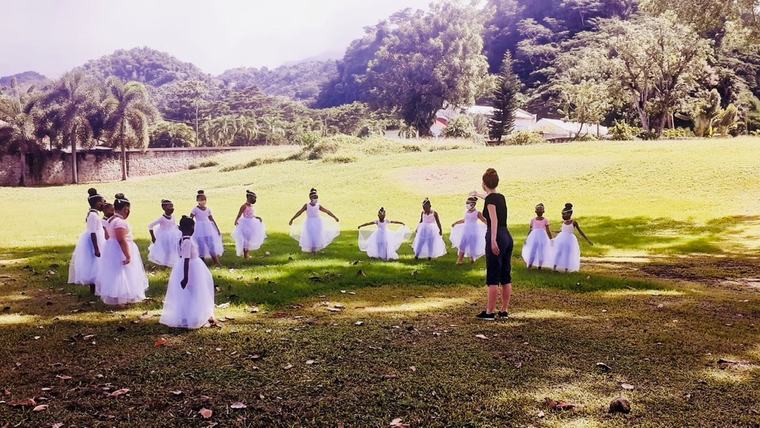
As a Peace Corps Response Volunteer in Dominica, my responsibilities during service were to teach ballet at the Dominica Institute for the Arts and to train local dance teachers around the island. Following my service, I was invited to stay and manage dance programs for the institute, which I did for another 5 years.
2. What projects did you collaborate on with your community?
During my service in Thailand, I served on the Sexual Reproductive Health (SRH) committee and organized coordinated efforts between Volunteers at different sites, including camps, curriculum, and activities to engage and connect students around the country. One of these was a calendar art contest for which students designed artwork based around sexual reproductive health. They came up with some pretty stellar designs! I also worked the local health clinic to implement the SRH curriculum and lead workshops.
In Dominica, I collaborated with many local artists to produce performances. Working at the cultural center was a unique experience as it was the gathering place for creatives. When it was time for a performance, we had painters to paint the backdrops, woodworkers to build sets, costume creators to make tutus, and musicians to perform live music.
During my first year in Dominica, Hurricane Maria hit. I was evacuated and then two months later returned to help with the rebuilding effort. It was a transformative experience for me to help provide stability and a joyful focus when the country was still recovering from disaster. Read more here.
One project was supporting teachers in public schools so they could start offering Caribbean Examinations Council Theatre Arts courses. When I arrived, only one school offered dance as a course at the secondary school level. By the time I Ieft, I had assisted four dance teachers to complete the tertiary level examinations, better preparing them to teach school-age children, and many other schools offered the secondary level examinations to dance students.
I also worked with dancers of other genres, for example, hip-hop dancers. Following my service, I was instrumental in establishing the Dominica Breaking Association as its first secretary, the year that breaking (break dance) became an Olympic sport. These efforts enabled us to get funding from the Olympic committee and UNESCO to support local dancers’ training and travel to other countries for competitions.
3. How did Peace Corps service influence your professional path?
I currently work as the development manager, or fundraiser, for the South Carolina Philharmonic. My service in Thailand and Dominica prepared me for my current position in arts administration through the extensive training we received and hands-on leadership experience. During pre-service training in Thailand we were trained in grant-writing, project management, budgeting, and effective monitoring and evaluation—all skills that I now use daily.

How Rebecca leverages the skills she gained in the Peace Corps
Rebecca developed programs for youth, taught dance, and gained skills in fundraising and project management in the Peace Corps. Hear how she continues to use these skills today.
4. How do you use skills honed during service in your current job?
I am every day grateful for the skills I honed during Peace Corps service in terms of directly transferable skills, but also perspective and mindset. In both of my host countries, it was necessary for me to manage projects from the planning, fundraising, implementation, and reporting stages. I learned the methods that worked for me to maintain organization and ensure timelines and budgets were properly managed.
Equally as useful is the ability to maintain flexibility, keep an open mind, and work with partners to meet the needs of beneficiaries. Some of the communities we work with now are similar to Peace Corps communities in that they face many challenges in meeting goals as efficiently as a community without these challenges. For example, working with at-risk students in the poorest communities, or populations of incarcerated women, can result in scheduling conflicts due to difficulties with transportation or behavioral issues. I commonly encountered similar issues abroad, whether it was a coup d’etat blocking streets or villages whose only road out was washed away by the latest rain, it is necessary in both cases for administrators to be able to pivot and follow another path to achieve objectives.
5. How have you shared the value of Peace Corps service and communities abroad with people in the U.S.?
My experiences and lessons learned in the Peace Corps are part of my everyday life. I’ve adopted some of the cultural values and attitudes learned abroad, therefore my service and personal identity cannot be separated. Whether it’s my morning meditation and approaching obstacles from a more Buddhist perspective learned in the Land of Smiles or submitting to the dominion of God and accepting physical phenomena as was necessary in the untamable Nature Isle, the reason I am the way I am now is because of my Peace Corps service.
Not only do I mention these stories and experiences often, I also try to give opportunities to cultural groups of my host countries (as well as other groups that lack representation) through my work and volunteer work. I currently volunteer as the treasurer of a group that hosts a monthly party on the main street of the capital city of South Carolina, called First Thursday on Main. Through this role, I am able to book artists and performers from different cultures to come and share and represent each month. This type of cultural exchange through the arts transcends barriers like language, religion, and locations, connecting to our shared embodied experiences through dances, music, and creation.
6. What Peace Corps benefits have been useful to you?
I already had a good deal of resilience and grit through my formal ballet training, always showing up, and pushing through physical or mental pain and discomfort, but the Peace Corps made me unstoppable because I now approach the difficulties of everyday life with the perspective of, “yes, this is difficult and stressful but at least right now I have running, potable water and electricity, I don’t have to complete this entire project in a foreign language, I don’t have to fundraise for this in a foreign language, I’m not going to be asked to unexpectedly lead any parades today, I’m not cut off from getting home because the only road is covered by the river, etc.”
7. How have you remained involved with the Peace Corps community following service?
I keep in touch with many of my former students and host community members through social media! I’m also still friends with many Returned Peace Corps Volunteers (RPCVs) and see them often.
8. What do you miss most about your host country?
From Thailand, I most miss the concept of naam jai, which translates to “water heart” and represents the generous and helpful nature of Thai people. It can mean a small gift that someone gives you, as Thais never show up empty-handed, or the willingness to assist in any situation. There was never a moment in Thailand when I would see just one or two people completing a task. In any work situation everyone would help. Now, don’t get me wrong, I love the U.S., but sometimes it’s frustrating to see one person working while others stand around because that particular task is not their responsibility, even if it means teamwork would reduce the effort and stress of that one person. This is the collectivist vs. individualist mindset in action. These types of communal efforts always resulted in high quality projects, less individual pressure, and, after completion of a project early, a big leisurely meal shared by everyone.
In Dominica, I miss how people roll with the punches and live in accordance with nature. Whether it’s a river lime (hang out), grilling a parrot fish that your friend just caught with a spear on the beach, or just enjoying a mango from the yard, Dominica is so lush and bountiful, you come to understand that when humans accept their place on planet earth and don’t try to dominate or exploit nature, our wants and needs are more than satisfied.
9. What’s your favorite phrase in the local language of your host country?
In Thailand I have too many to choose one. I love:
- “Mai bpen rai” - “It’s not a thing, don’t worry about what you can’t control, let go.”
- “Jai yen yen” - Literally, “Cool your heart. Chill out.”
- “Jing jing” - “True, true or for real.”
In Dominica “Sa ka fete?” means “What’s up?” in Kweyol. Or literally, “What’s the party?” Dominica is a carnival country—all year people practice their dances, stilt walking, drumming, and create costumes for carnival so the party atmosphere is always prevalent there.
10. What would you say to someone thinking about joining the Peace Corps?
It’s the toughest job you’ll ever love! Just let go of every expectation and you’ll be fine. Keep a receptive mindset and let partners guide the projects to see where you can best help to build capacity and sustainability.
Learn more about serving as a Peace Corps Volunteer in Dominica.



