 An official website of the United States government




Featured Volunteer Profile
Loea G.
“The children are my best friends here. When I come home from work they are always there to greet me or tell me something that happened in the community while I was gone. They make this simple life in Liberia so sweet.”
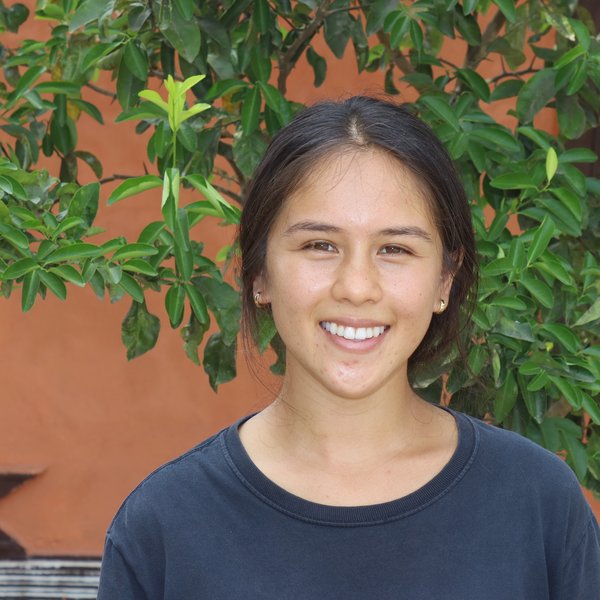
1. What got you interested in the Peace Corps?
While studying at Washington State, I worked for international admissions and helped support international students coming to the States for the first time. Born and raised in Hawai’i and being kanaka (Hawaiian, Filipino, and Mexican), I resonated with a lot of international students because of being so far away from home and immersed in a different way of life. My coworker also told me about his experience in the Peace Corps as a STEM teacher in Ghana. Finally, I went on a few weeklong mission trips with my church and every time I went to another country I fell in love with the people. I had a passion to understand people as they live and not as a tourist experiencing the polished version of a country. Ultimately, I wanted to experience something radically different and felt that it was the right time to do it.
2. What projects are you working on?
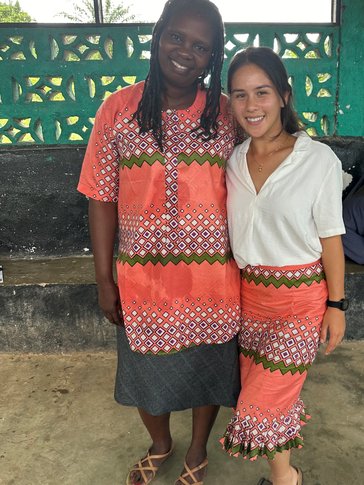
I collaborate with community health supportive supervisors (CHSS) who hold qualifying licenses (such as RN, PA, Certified Midwife). The CHSS serves as a vital link between the community and local clinics, ensuring that families can access needed medical resources. Together, we support community health assistants (CHAs) assigned to various communities to help prevent common illnesses such as malaria, pneumonia, and diarrhea among young children ages of 1 to 5. CHAs also refer pregnant women for delivery, and antenatal care appointments. I work alongside the CHSS to train and mentor CHAs to enhance their skills and effectively manage health issues within their communities.
Outside of my primary work, I’ve made connections with the nearby K-8 school which includes a vocational school (subjects include tailoring, electrical, mechanical, agricultural, and plumbing). I help support the health science teacher for grades 4-8. The hope is to establish a club to educate youth about health and leadership in the community. In addition, the school hopes to create a space for a library so that students have a place to learn outside the classroom.
3. What strategies have you used to integrate into your community?
I enjoy spending time with the children that come to my porch or with nearby neighbors. I don’t have a specific strategy for integrating. I sit outside on my porch until the children come, or when I see someone outside I join them. The sweetest thing about living in a community, is that I’m here doing life beside them and I get to choose to do it with them.
4. What is a highlight of your time in service so far?
One highlight is working in community health. There is always something different in each community I visit and I’ve enjoyed getting to know people in each place. The people that I work with are amazing too—they’re always so willing to learn and be leaders for their own community. Witnessing a pregnant woman become a mother with a healthy newborn is very rewarding.
5. What have you enjoyed most about the community where you are serving?
The children are my best friends here. When I come home from work they are always there to greet me or tell me something that happened in the community while I was gone. They make this simple life in Liberia so sweet.
6. What are some of the most important things you’ve learned from your community?
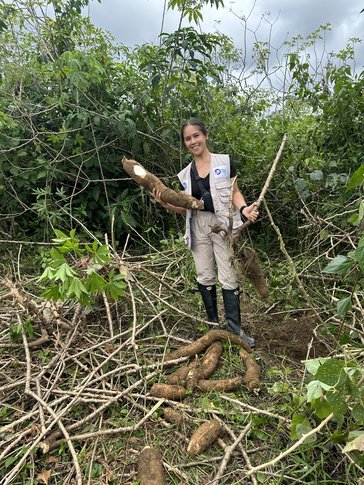
For me, community is not a new concept, but living and being in community here in Liberia is different. The way people show up for one another, even at the expense of their own wants or needs is heartwarming. They will cook and share a meal with a neighbor who is sick or unwell. People will also take in one (or many) children and claim them as their own. I am continuously humbled by the richness found in the community here in Liberia and at home in Hawai’i; I can’t help but think that loving each other like this is the way we were designed to live.
7. What are you looking forward to in your remaining time as a Volunteer?
I’m looking forward to whatever is next. I don’t think there is anything so specific that I can set my eyes on other than being willing to do what I’m already doing. Each day comes with something different and I’m beginning to learn that life here is about each day—not about meal planning for the week or scheduling an appointment; a new day has enough to be grateful for.
8. Once you finish service, what will you do differently when you return to the U.S.?
There are a lot of practices that I hope to adopt upon my return. The most important one is prioritizing time with people and community. It is so easy to think that we can do things all on our own. Though at times I have felt that to be true, my greatest growth has happened when I’m with people.



