 An official website of the United States government


Featured Volunteer Profile
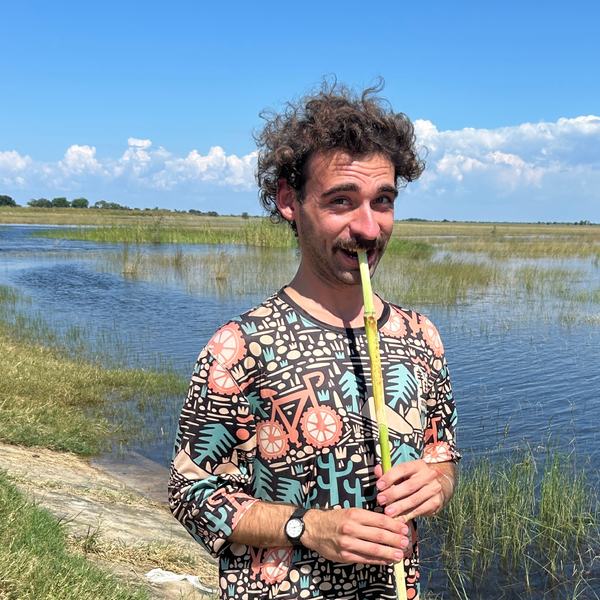
Sam W.
“I look forward to seeing my students improve their English skills. Many struggle with literacy and speak a different language at home. However, since English is Namibia's national language, learning it is extremely important for their lives and careers.”
1. What inspired you to apply for this Peace Corps position?
I pursued the Peace Corps because I had a positive experience in AmeriCorps and had met many Returned Peace Corps Volunteers (RPCVs) in that organization. I chose to serve where needed most when applying. I accepted the assignment to teach English in Namibia because they had a demonstrated need (I had also considered other opportunities to teach English internationally). I was excited to be able to combine that work with Peace Corps service.
2. What is your main job?
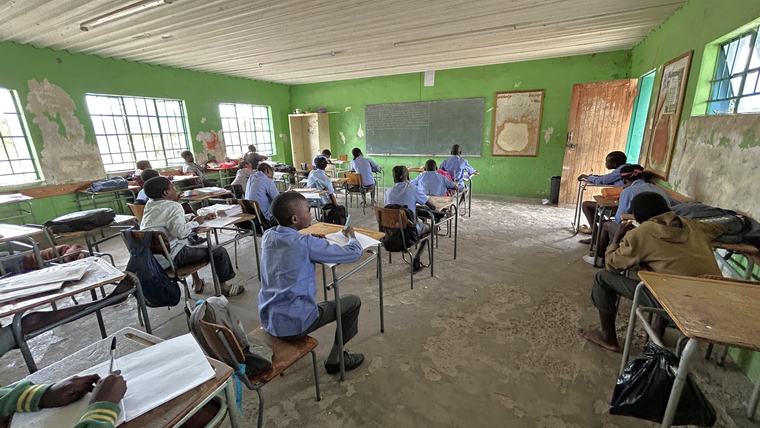
My main job is to teach English to students in grades 5 and 6 at a small rural school. I have 27 5th graders and 17 6th graders, much smaller groups than a typical Namibian classroom, which can have up to 60 students in a single class. Each grade has three, 40-minute periods and two, 80-minute periods of English in a week.
I also teach information and communication to students in grades 5, 6 and 7, which is a once-weekly mandatory media and technology literacy class at my school. I work closely with my counterpart, the other English teacher at the school, to ensure that my lesson plans adhere to the national syllabus and that my learners are prepared for regional exams.
Though English is the national language of Namibia, most families speak various tribal languages at home. Learners in rural villages like mine often struggle because they do not use English outside of the classroom. I work closely with my colleagues to learn the local language so I can better understand my learners' needs and interests.
3. What strategies have you used to integrate into your community?
I am learning one of the local languages, and I try to spend as little time in my house as possible so I am visible to other community members. Many aspects of life in the Peace Corps help me integrate as well: I live in a dwelling similar to that of my neighbors, among my students and their families in the village, and I also use the same methods of transit (taxis or “hiking”) that they use to travel to a town for shopping, since I do not have a car.
4. What is a typical day like for you?
School starts at 6:50 a.m. and goes until 12:50 p.m., with a half-hour break at 9:40 a.m. I teach between two and five periods a day. On Tuesdays, for example, I have a double period in grade 5 English (80 minutes), then a double in grade 6 English, and then information and communication for grade 7 (40 minutes). On Mondays, though, I only teach two periods (grade 5 and grade 6 English).
When I am not teaching, I prepare my lesson plans for the next week. After school, I do chores (e.g., sweeping, cleaning, laundry, etc.). When those are finished, I relax under a big tree by the school entrance and read a book on my e-reader. I shower in the late afternoon, after the sun has warmed the water for my outdoor shower and then cook dinner on my electric stove. I might do yoga or stretch after dinner. Then, I journal, read some more, and go to bed. On Saturdays, I bike 19 km to town to buy groceries and use the Wi-Fi at a nice cafe. Sometimes I meet other Volunteers in town for lunch or dinner.
5. What is a highlight of your time in service so far?
During a recent school break, I had about two weeks with no obligations. I spent a few hours each day bicycling around the roads between my community and town. I ran into many of my neighbors, colleagues, and students, and met many new people as well. Down a long dirt road about 36 km from town, I met a man who recalled a Peace Corps Volunteer who taught at his rural school, as well as a woman who was playing “Work” by Rihanna on her small cell phone. Exploring my area has given me a greater appreciation for how my community fits into my host country as well as the world.
6. What have you enjoyed most about the community where you are serving?
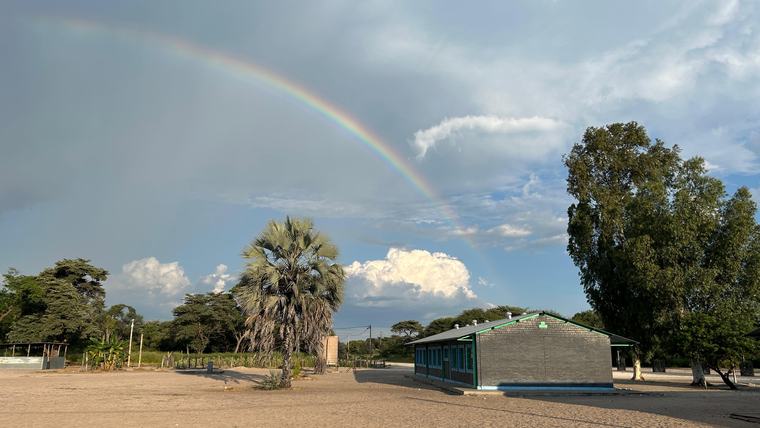
My community is a rural village that sprawls along a paved road for a few kilometers. It is a safe place where people generally just want to hang out and eat. I like the peace and quiet of my rural site but also appreciate that I am a short bike ride from town when I need to run errands. I also like that, because I am an outsider, I am more well known locally, and my neighbors are always looking out for me.
I also do a lot of chores. My site is very sandy, so I have to sweep my house quite often. I also do laundry two or three times a week, since doing laundry by hand is time-consuming and it is important not to procrastinate it or else it can consume an entire weekend morning. I occasionally call other Volunteers and travel to see them on school breaks.
7. Tell us about the strongest relationship you have developed while in county.
I am becoming friends with one of my colleagues who teaches life skills at my school. He is about my age and has a similar outlook on his career. He is a very thoughtful person and is always looking out for me. We talk about the differences and similarities between life in our countries. He bought us ice cream once, which was fun.
8. What are you looking forward to in your remaining time as a Volunteer?
I am most looking forward to seeing my students improve their skills in English. Many students struggle with literacy and speak a different language at home. However, since English is the national language of Namibia, learning it is extremely important for their lives and careers. I am also looking forward to meeting other Volunteers and traveling to their sites to see different communities in my country.
9. Tell us your favorite phrase in the local language and what it means.
My favorite local phrase is “mawe,” which means “oh no.” My students always say it whenever I ask them to speak in front of the class, and they giggle when I repeat it back.
I also enjoy learning the greetings in the multiple local languages of my community because it allows me to connect with different people who normally would only speak English to me. There are four commonly spoken languages in my area that I can say “good morning” in. The phrases are “muzuhile cwani,” “mbuti mwa buki,” “mwabuka bule,” and “na tambuka.”
10. What would you say to someone thinking about joining the Peace Corps?
Peace Corps service often feels mundane, but this is good because it allows you to get a sense of real life in your country. It is not a vacation or an adventure; it is a job. You will feel like a part of the community you are placed in.
My neighbors and colleagues are all very kind and generous people who are always checking on me to make sure I have everything I need. I get to spend a couple hours each day with my students, and we laugh a lot together. It can be lonely being the only American (or even the only foreigner) in your area, but if you invest in connections with the people around you, it will pay off. Peace Corps service is not vacation, but you can and should travel around your country. My colleagues love seeing my photos and hearing my thoughts on various tourist sites in the country. I have seen places and met people I never would have encountered had I not joined the Peace Corps.
Learn more about serving as a Peace Corps Volunteer in Namibia.



