 An official website of the United States government




Featured Volunteer Profile
Claire B.-C.
“I’ve learned to embrace the ebbs and flows of work and meet people where they are at. Sometimes when you go too fast you miss things along the way.”
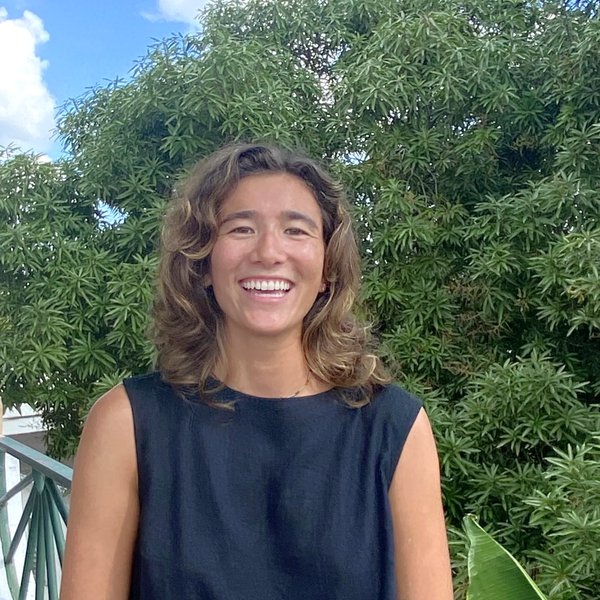
1. What got you interested in the Peace Corps?
After working at a nonprofit to promote systemic change through the legal system I became interested in understanding the issues underlying our initiatives. How did the experiences of the people most impacted by the policy we hoped to advance inform our work? I wanted a more holistic perspective within social justice work and the Peace Corps offered me that chance. Both my parents served in the Peace Corps and I grew up hearing about the valuable lessons and incredible experiences they had. As my curiosity and desire to learn grew, they both encouraged me to consider service as the perfect opportunity.
2. What projects are you working on?
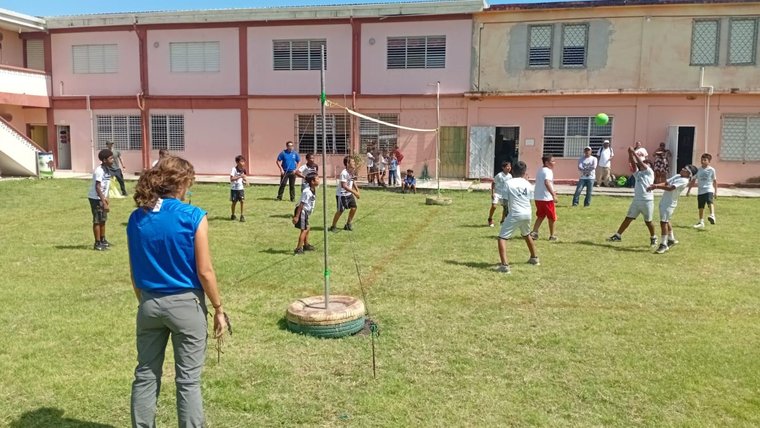
I am a Youth Development Coordinator for the Youth Empowered by Sports (YES) initiative and I am currently working on various community projects. I work alongside the National Sports Council of Belize to co-facilitate local and national primary school sports tournaments and camps. I also co-facilitate life-skills sports clubs alongside my counterpart at my community's primary school.
At my school, we aim to promote more participation from young girls across different sports disciplines and encourage confidence for all students. We successfully created a girls volleyball team for the first time in my school’s history. During our practices we aim to tease out the various life skills inherent in sports. We focus on a different life skill each month, such as teamwork, leadership, and communication, and we reinforce these skills during games. We also encourage parent participation and engagement by inviting them to coach practices and learn about the benefits of sports. My school hopes to create a strong and sustainable sports culture for our students and parents.
Lastly, I work with our town’s volleyball club to host and promote tournaments and practices for youth and adults at our local civic center. After the COVID-19 pandemic there was a large decline in local sports competitions. We hope to rebuild the volleyball community through hosting events, fundraising, competition, and camps.
3. What strategies have you used to integrate into your community?
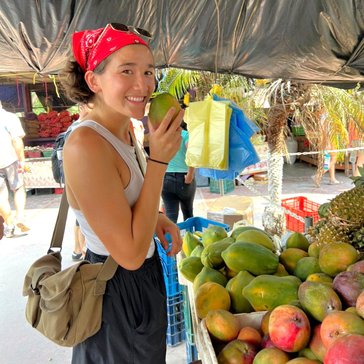
I always say “yes” whenever I am invited to anything. This strategy introduced me to my town's volleyball community, and I now play with them 4 days a week for practice and competitions. By playing on both female and co-ed teams I’ve become acquainted with many people, including local business owners, government officials, police officers, and many other people who share an enthusiasm for sports.
Whenever my teammates, teachers, or local friends invite me to or share an event, I do my best to attend. I also make sure that when I am shopping at the market or walking around town I say “hello” to people and have meaningful conversations. I’ve met so many people from my daily evening walks and now chat with them on my strolls.
4. What is a highlight of your time in service so far?
During my first year of service my counterpart and I made it a goal to create a girls’ sports team at our school. My school had never had a girls’ team play in competition before. During volleyball season we gathered parent donations to purchase a new net, borrowed volleyballs from the civic center, and got a local sponsorship for uniforms. We had a bunch of girls come out for the team and competed in our town’s primary school tournament for the first time. It was amazing to watch the team grow, from just a couple of girls coming to practice the first day, to over 20. The girls not only improved their sports skills but you could see their confidence and the bonds between them grow over the season. We already have girls asking about the practice schedule for the team next school year.
5. What have you enjoyed most about the community where you are serving?
I’ve really enjoyed not only the friendships I’ve made but the day-to-day interactions I have with community members. Whenever you pass someone on the street you greet them. People will strike up a casual conversation at the market. Strangers will lend a hand without being asked if they see you could use help. The generosity and communal bonds are a feature of my community that I really value. When you know most of the people you pass in town or on the streets you really feel like part of a community and that sensation is something special.
6. What are some of the most important things you’ve learned from your community?
The work culture in the United States, where effectiveness equates with efficiency, is not the only way to accomplish goals. So much of the work I do with my community is dependent on the relationships and trust built between people. Punctuality may take a second seat when people have familial or personal commitments, and that is perfectly okay. It is more important to spend time with coworkers, building trust and fostering engagement, rather than sharing a list of your credentials. I’ve learned to embrace the ebbs and flows of work and meet people where they are at. Sometimes when you go too fast you miss things along the way.
7. How do you spend time when you are not working on a project?
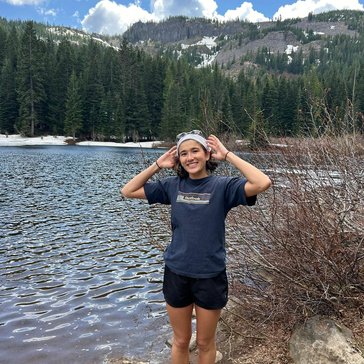
When I am not working on a project I play lots of sports, spend time with friends, explore the country, go for walks, read many books, and learn about local cuisine/foods. Belize is a beautiful country with so many ancient archeological sites and different environments to visit. I live in a border town in the north so I’ve slowly made my way down and around the country to explore.
8. What are you looking forward to in your remaining time as a Volunteer?
I’m really looking forward to continuing the programs we began last school year. My counterpart and I want to make sure they are sustainable and will remain for many years to come. I’m also excited to begin working on other school initiatives like a school gardening club, read-aloud lessons, and family engagement events.
I feel as though the first year of service was all about developing relationships and creating meaningful bonds with community members and counterparts and the second year of service is when many of our projects will be able to grow and take hold. I’m really looking forward to working on secondary projects through working with local clubs to grow sports participation and civic engagement on a local level.
9. Once you finish service, what will you do differently when you return to the U.S.?
Living in Belize has changed the way I see the world, both personally and professionally. Professionally, I am learning so much about how community-based initiatives are developed and accomplished. I hope to pursue a career in law, and I know that to make meaningful and lasting change it is essential to elevate the experiences and voices of those most affected by issues I hope to address. Personally, I’ve learned so much about what it means to live in a space where community and relationships are the ethos that the value of life is derived from, not work. Feeling connected to the people you live around creates a deeper sense of meaning when you go about your day-to-day. I want to bring the sensitivity, curiosity, and generosity that I’ve received from my community into my relationships and the projects I engage in in the U.S.
Learn more about serving as a Peace Corps Volunteer in Belize.



