 An official website of the United States government




Featured Volunteer Profile
Amy G.
“In Moldova, care for individuals with disabilities is limited, and there is a common misconception that they are not able to contribute to society to live a meaningful life. I am passionate about challenging this narrative...”
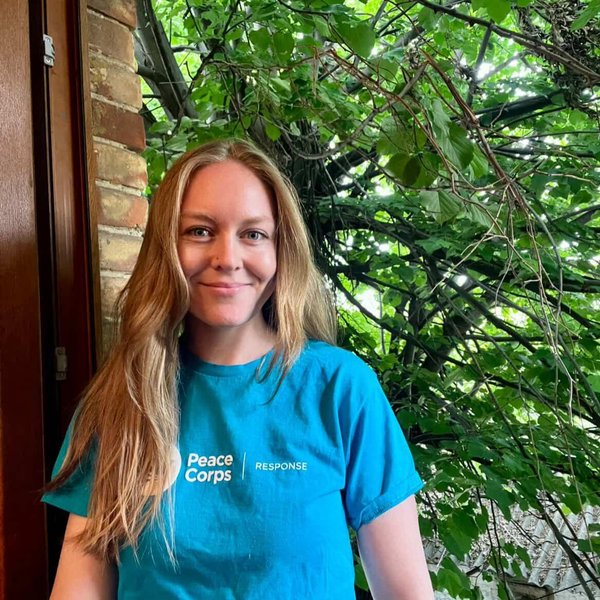
1. What got you interested in the Peace Corps, specifically the Response program?
As a Doctor of Occupational Therapy, I treat patients of all ages and all diagnoses with the intent to promote independent performance of daily tasks and improve quality of life. After hosting educational workshops in Madagascar and Nepal, I was looking for the opportunity to share my passion of occupational therapy in a way that would have a long-term impact. I was drawn to the opportunity to integrate into a new community and work alongside Moldovans to strengthen local capacity.
In Moldova, care for adults and children with disabilities is limited, and there is a common misconception that adults and children with disabilities are not able to contribute to society to live a meaningful life. I am passionate about challenging this narrative by educating caregivers, teachers, medical practitioners, and administrators about the inherent dignity and potential of individuals with disabilities. Drawing on my expertise as an occupational therapist (OT), brain injury specialist, and yoga teacher, I aim to promote a higher quality of life for this underserved population. Furthermore, the timing of my assignment lines up well with the World Health Organization’s 2030 Rehabilitation Initiative, which seeks to develop rehabilitative services in all countries, for all people. I was very excited at the opportunity to engage in health education in support of this global mission.
2. What projects are you working on with your community?
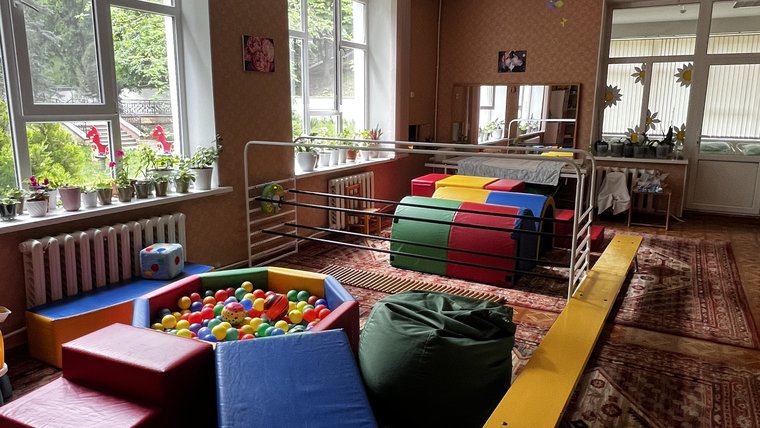
I partnered with my hosts, the Alliance of Moldova Without Orphans (an alliance of 12 NGOs across Moldova) and conducted a nationwide needs assessment to identify supports and barriers to individuals with disabilities. I visited clinics, hospitals, rehabilitation centers, transitional homes, and permanent homes across the nation in various villages and in the capital, Chisinau. I identified the largest barriers to care and collaborated with clinicians, caregivers, and administrators to determine the educational resources that would best support this community.
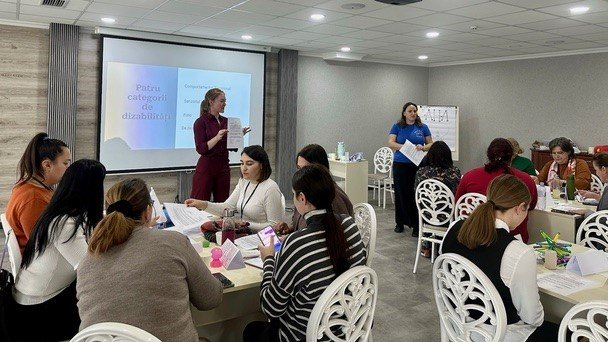
I am now in the process of creating a rehabilitative guidebook for therapeutic care, which will then be translated into Romanian, Russian, and Ukrainian and disseminated back to the community through in-person training workshops. The guidebook includes topics such as the etiology of physical, intellectual, and mental health disabilities, as well as practical assessments and interventions. It dispels the common belief that a disability is a religious curse and offers numerous interactive worksheets on a variety of topics.
Additionally, I am developing a scope of practice for occupational therapy. While a hybrid OT/PT degree does exist at the Universitatea de Stat de Educaţie Fizică şi Sport, the program does not meet international standards. In the entire country, there are only about 11 individuals who are practicing occupational therapists, and these individuals only practice in one setting (pediatric outpatient). To promote professionalism and develop the breadth of OT, I formed the first national organization of occupational therapists, Moldovan Occupational Therapy Association (MOTA), with clinicians, administrators, and professors at the top universities and rehabilitation centers in Chisinau. I accepted their request to be president of MOTA with the intention of soon passing this role on to a Moldovan trained OT. I am currently working to gain recognition for MOTA by the World Federation of Occupational Therapists (WFOT), the leading global organization for our field. This affiliation will pave the way for collaborative efforts to establish an internationally accredited occupational therapy diploma in Moldova and ensure the country is formally represented on the global stage of rehabilitation and professional development.
3. How have you leveraged your previous professional experience in your service?
Working as a clinical occupational therapist has taught me to view each person holistically—to recognize their inherent value and focus on their potential rather than their limitations. In the hospital setting, I evaluate patients and develop individualized plans of care with therapeutic goals tailored to enhance daily function and quality of life. Although I am not clinically treating patients in Moldova, I apply the same evaluation skills to assess the environmental and societal supports and barriers that affect participation in everyday life for individuals with disabilities. The educational resources I am developing here are grounded in the same principles I use in clinical care, including being client-centered, goal-oriented, and functionally relevant.
In 2024, I designed and led a multi-day workshop on occupational therapy in Madagascar. I provided training to OT practitioners and students on the profession’s scope of practice, specialized assessments, and intervention techniques. That experience taught me how to adapt my teaching for learners with varying levels of medical knowledge and how to make my instruction culturally and contextually relevant. For instance, while in the U.S. I might recommend ordering an assistive device like a sock aid online, in Madagascar, I taught students to create one using available materials such as a plastic water bottle, string, and tape.
This approach—creative, resourceful, and grounded in the local context—directly informs the guidebook I am currently developing in Moldova, as well as the workshops I’ve led and will continue to facilitate throughout my service. It reflects my commitment to sustainable, locally adapted rehabilitation education that empowers communities from within.
4. What is a highlight of your time in service so far?
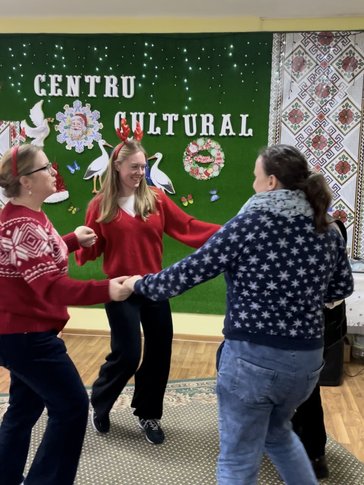
While at the mayor’s office with my community partner, I met a lovely group of ladies who serve their community as social workers and government officials. After we completed our formal meeting, they noticed that I was interested in the Moldovan tapestries and paintings on the wall of their office. They took the next hour to show me items from their own lives—food stamps from their experience in the USSR, traditional tapestries used for celebration, a rug that took 11 months to weave, and old post-Soviet coins and bills. Then they introduced me to the hiora, a traditional dance. They played music and all of us danced in circles, holding hands, until we were bright red in the face and giggling with glee. This experience demonstrated the kindness, warmth, and hospitality of Moldovans.
5. What strategies have you used to meet the challenges of a Response Volunteer experience?
My biggest strategy has been to integrate myself into the local community. I go to a Russian yoga studio twice a week, volunteer at refugee houses, attend ballet and theater performances, and intentionally spend time with Moldovan, Russian, Uzbeki, Ukrainian, Romanian, and German friends I’ve met here in Chisinau.
I’ve also been participating in hobbies that improve my wellness and quality of life. I enjoy going to yoga classes, taking long walks around the lake, reading books, and I’ve also gotten very into watercolor painting. I’ve been especially inspired to paint the spring flowers blooming all around Moldova right now.
6. How will the skills you are developing help you in the future?
Serving in the Peace Corps will help me grow both personally through the perspective I’ve gained, as well as professionally as an occupational therapist. Working in diverse, often under-resourced communities will strengthen my adaptability, cultural sensitivity, and communication skills—traits that are essential in OT. I continue to gain hands-on experience in health education and community outreach, which directly connects to helping clients live more independent and fulfilling lives. The challenges I face will build resilience, patience, and empathy, all of which are crucial when working with people overcoming physical or cognitive barriers. Overall, the Peace Corps will prepare me to be a more compassionate, flexible, and well-rounded therapist.
Want to learn more about serving in Moldova? Connect with a recruiter today.



