 An official website of the United States government




Featured Volunteer Profile
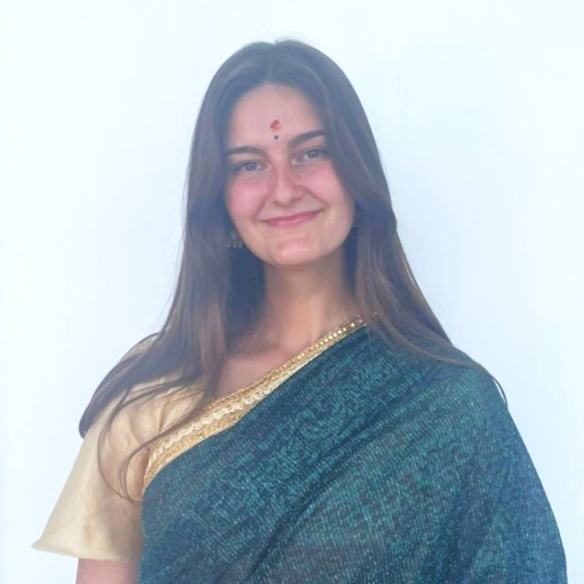
Katie J.
“[My host sisters and I] go on walks together, cook new foods, play volleyball, and do yoga together. If all I did while here was empower those two girls to be strong, independent women, then this would all have been worth it!”
1. What inspired you to apply for this Peace Corps position?
When I was 17, I attended a panel discussion called "A Lifetime of Service" in Washington, D.C. One of the panelists described their time in the Peace Corps, and I decided right then that I would serve after graduating from university. In my application, I chose the "serve where needed most" option and additionally requested a Buddhist country to deepen my spiritual practice. I was absolutely stoked when I got the email telling me I would be heading to Sri Lanka!
2. Tell us about a moment that sticks with you from the first week at your site.
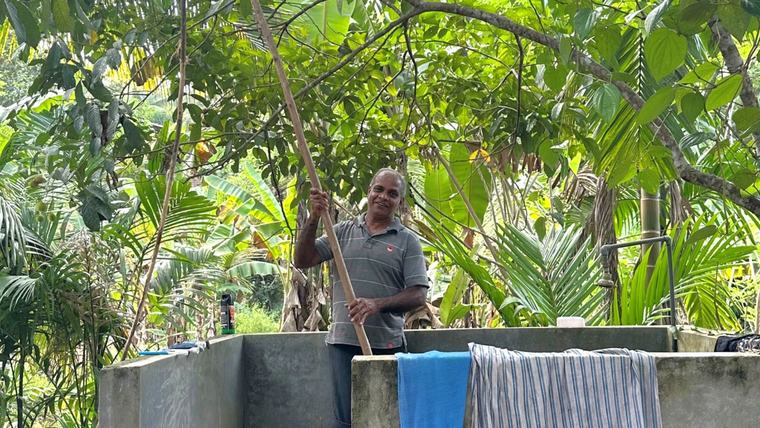
I vividly remember the first day of meeting my host family. My host dad climbed on top of our outdoor shower and started picking red, alien-looking fruits from the tree above him using a long, hooked pole, which I later learned is called a kekka in Sinhala. He tossed them down to me, shouting, "Eat!" I had no idea how to eat them at first but eventually realized I had to crack open the spindly red skin to find the translucent, whitish fruit inside. It was my first rambutan, and I fell in love—with the fruit and the incredible generosity of my host family.
3. What is your main job?
My main job is co-teaching with a local Sri Lankan teacher to improve our students' English-speaking skills.
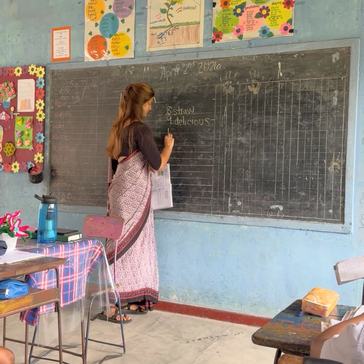
I am also working on two other projects that I am especially passionate about. The first is a cultural exchange and peacebuilding project between the Sinahla/Buddhist and Tamil/Hindu communities, against the backdrop of a recent 30-year civil war between the majority Sinhala government and a Tamil separatist group. Sinhala and Tamil rural areas tend to be segregated. I live in a Sinhala village, and a fellow Volunteer lives 40 minutes from me in a Tamil community. We wanted to create cultural exchange and peacebuilding by introducing our students. First, we started an English letter-writing exchange between our students. Following that, we have brought our students together for English activities and games. It has been beautiful to see children who otherwise never would have met connecting and becoming friends using English.
The second is project is partnering with local and international NGOs to improve the infrastructure at my school. The school lacks things that we take for granted in more developed countries – like clean water, fans, walls between classes, and modern technology.
4. What strategies have you used to integrate into your community?
The main strategy I used to integrate was taking daily walks and talking to everyone I met on the road. Oftentimes, people would invite me in for tea, and I took that as an opportunity to get to know them better and become part of the community – one family at a time.
Every day on my walks, my students and other children in the village will run up to me yelling, "Katie teacher!" and then give me a high five with huge smiles on their faces. It never gets old!
5. What’s a typical day like for you?
A typical day starts at 5:30 a.m.—which feels early, but is actually late compared to my host family, who are up by 4:00! After a workout and breakfast, I wrap my sari, pack my lunch, and walk to school with my nangis (little sisters). At school, I teach with my counterparts. After school, I host English clubs so students can practice in a less formal, game-based setting. I head home for a snack and a sunset walk by the reservoir before dinner and prep for the next day.
6. What is a highlight of your time in service so far?
A major highlight was my English camp. English camp is a Peace Corps tradition in Sri Lanka, where teachers organize an entire day of school full of fun English activities. Our school decided to have a summer camp theme, and five Volunteers from the surrounding area helped us put on the event. We did traditional summer camp activities like campfire songs, games, and even made s’mores.
It was special to see my students—especially those who barely spoke English when I arrived—chatting with fellow Peace Corps Volunteers with such confidence. I could see their world views expanding as they connected with people from different backgrounds.
7. What are some of the most important things you’ve learned from your community?
I have learned the value of patience and slowing down. My favorite Sri Lankan phrase in English is "What to do?" Whenever something goes wrong, people ask that rhetorical question and simply move on. That level of resilience is something I hope to keep with me.
8. How do you spend time when not working on a project?
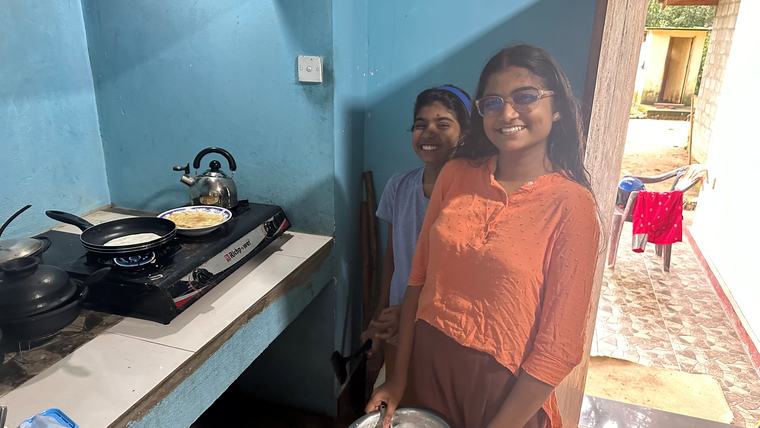
When I am not working on my project, I enjoy cooking with my host family and introducing them to new foods. We have made American pancakes, burritos, tacos, pizza, stir-fry, cookies, and sourdough. It is always a beautiful moment to share something with them that seems so ordinary to me because it is often the first time they have heard of the food, much less eaten it.
Besides cooking, I also enjoy biking around my village and seeing the rice paddy fields change throughout the year. When I first arrived in my village, all the patty fields were neon green. It was one of the most beautiful places I had ever seen. I thought the fields would always look like that, but they don't. They change with the rainy and dry seasons and with the harvest. Now, as I bike around, I like to notice the impermanent nature of everything.
9. Tell us about the strongest relationship you’ve developed.
The strongest relationship I have in Sri Lanka is with my host sisters. Whenever we can, we go on walks together, cook new foods, play volleyball, and do yoga together. Recently, we were on a walk, and they told me they wanted to be like me when they grow up. If all I did while here was empower those two girls to be strong, independent women, then this would all have been worth it!
10. What are you looking forward to in your remaining time?
I am looking forward to doing more joint activities with nearby Peace Corps Volunteers and their students to expose my students to new people and cultures. The village can be so insular, and I want them to get to know their neighbors.
Besides that, I am looking forward to the little moments of connection with my host family, students, and others in the community. I want to soak in the beauty of Sri Lanka and my life here before it's over.
11. Tell us your favorite phrase in the local language.
My favorite phrase in Sinhala is "kamak nae," which loosely translates to "no worries." There is a Sri Lankan song called “Kamak Nae,” and whenever I use the phrase, I sing the melody of the song. Sri Lankans always get a kick out it.
12. What will you do differently when you return to the U.S.?
One thing I will do differently is to always offer drinks and snacks to guests who visit me at my house. I want to take that aspect of the hospitality culture back to the U.S. and be more generous with everything I have.
I also want to get to know my neighbors and invest in the community wherever I live. Something that so many Americans are lacking is a sense that the people around them know and care about them. People can feel so isolated – even when they are surrounded by tons of people. Wherever I live, I want to ensure that there is a sense of community where everyone feels seen and cared for.
13. What would you say to someone thinking about joining the Peace Corps?
I would tell anyone considering the Peace Corps that there is no better crash course in understanding yourself, the world, and the human experience. It is impossible to emerge from such an intense journey without becoming a wiser person.
Beyond expanding your own world view, you offer that same gift to an entire community that might otherwise never have first-hand experience with American values and culture. In an increasingly divided world, building a web of intercultural friendships based on mutual respect is one of the most effective ways to foster peace. By joining, you become part of a long lineage of brave people who stepped out of their comfort zones to leave the world a little better than they found it.
Learn more about serving as a Peace Corps Volunteer in Sri Lanka.



