 An official website of the United States government


Featured Volunteer Profile
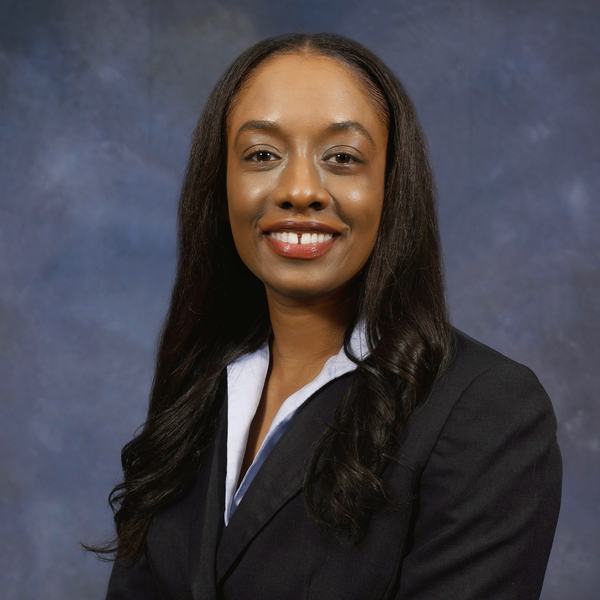
Melanie Z.
“Growing up in Mississippi, it was common to greet people and take a moment to ask how they were doing. Here, taking time to say hello and show genuine interest in people’s lives has helped me build meaningful relationships.”
1. What inspired you to apply for this Peace Corps position?
Joining the Peace Corps fulfilled a lifelong dream, but it was also an intentional decision that aligned with my longstanding commitment to combine my professional expertise with meaningful grassroots service. I was inspired by the commercials that I saw as a child growing up in the Mississippi Delta. The tagline was “the toughest job you’ll ever love.”
Before joining the Peace Corps, I built a corporate career in strategy, stakeholder engagement, and human resources while also serving in nonprofit leadership and volunteer roles focused on supporting vulnerable populations seeking a stronger future, community well-being, personal and professional development for young professionals, youth mentorship, and education.
Growing up in the Mississippi Delta provided a unique foundation for the experiences that I have in Namibia: close-knit community relationships, sharing of resources, and the practice of greeting people in the community. Those same values have helped me connect with my community and contribute to economic empowerment initiatives in an international setting. Being a Peace Corps Volunteer gives me the opportunity to work closely with people who are chasing their dreams and are excited about developing the knowledge and skills that allow them to achieve their goals.
2. Tell us about a moment that sticks with you from the first week at your site.
One of the moments that stands out most from my first week at site was attending a “braai” at the beach with my colleagues. It reminded me of neighborhood barbeques back home in Mississippi. Although the music was different, the atmosphere felt very familiar. People were relaxing after work, sharing food, telling stories, and enjoying each other's company. We had chicken wings, beef, and “roosterbrood,” (Afrikaans for “roasted bread”). It was one of the first moments when I realized that despite being thousands of miles from home, many of the things that bring people together are universal.
3. What projects are you working on?
My day-to-day work within the local town council focuses on community economic empowerment through entrepreneurship coaching, employability skills development, financial literacy, and collaborating on community-based initiatives. Community members come to my help desk seeking one-on-one coaching and mentorship in business planning, career navigation, and strategic decision-making. I also co-facilitate skills-building workshops alongside local stakeholders.
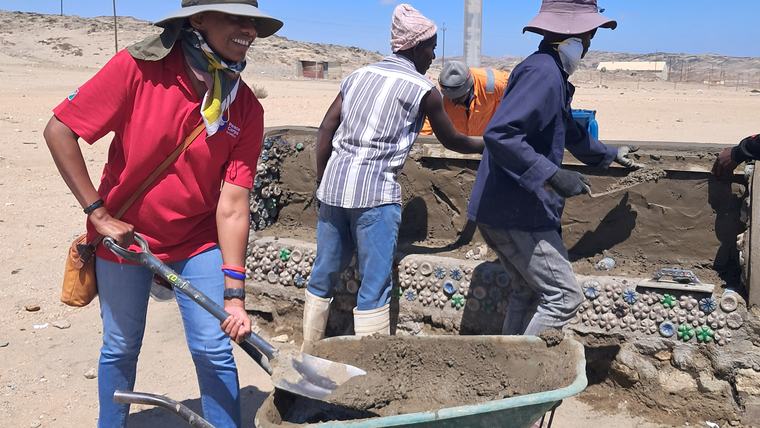
Our local leadership challenged us to prioritize environmental education and stewardship within each project that we launch. This inspired the idea to deliver brick-masonry combined with business skills training to build an ecobrick bench at a local playground, which provides parents with a comfortable place to watch their children play. It also led to an Upcycling Waste pitch competition to teach artisans marketing and pricing the items that they create from local materials, many of which are functional and beautiful, such as doormats made from remnant fabric, and discarded newspapers transformed into beadwork. These projects highlight the creative talent within the community, prioritize protecting the environment, and give community members an avenue toward economic stability.
4. What strategies have you used to integrate into your community?
It is amazing how similar Namibia's culture is to my culture at home. Growing up in Mississippi, it was common to greet people and take a moment to ask how they were doing. Here, taking time to say hello and show genuine interest in people’s lives has helped me build meaningful relationships. Colleagues and community members have also welcomed me at wedding celebrations, graduation parties, and beach barbecues, giving me opportunities to learn more about the culture while sharing my own experiences.
5. What’s a typical day like for you?
No two days are exactly alike. A typical day may involve meetings with town council staff and local stakeholders, coaching sessions with entrepreneurs or jobseekers, workshop preparation, collaboration with community development initiatives, or direct engagement with community members seeking practical guidance. I began with a commitment to listening, earning trust, and building relationships so that people would feel comfortable including me in brainstorming sessions to help them achieve their goals. Every conversation helps me understand my community members’ needs, providing the opportunity for inspiration, problem-solving, or helping someone take the next step toward achieving their personal and professional goals.
6. What is a highlight of your time in service so far?
A major highlight of my service has been seeing community members join forces to transform ideas into visible results. Working alongside local stakeholders and residents to build an ecobrick bench was extremely meaningful. It combined practical brick-masonry training, business skills, and community involvement that drives economic empowerment and environmental stewardship. I also enjoyed collaborating on initiatives that highlight the creativity and talent that thrives here. We recently launched an Upcycling Waste Competition that gave community members a platform to showcase what they are working on so we can support them with tools to generate livelihoods from activities that they are already passionate about. At the same time, some of my most cherished memories came from celebrating personal milestones, like weddings and graduations, with colleagues and friends. These experiences have made me feel appreciated and welcomed.
7. What have you enjoyed most about the community where you are serving?
Definitely the people—and the food. One of the things I enjoy most is the sense of familiarity that comes with living in a close-knit community. I regularly see familiar faces whether I am shopping, traveling, or attending community events. Even when I travel to other parts of Namibia, I often encounter people I know. When I take the bus from the capital, I know many of the people that I see at the bus rank by name and face. We exchange laughs and updates about how life is going. Those relationships have helped me feel connected to my community and have enriched my experience in Namibia.
8. What are some of the most important things you’ve learned from your community?
My community has deepened my commitment to resilience and stewardship. People find practical and creative ways to maintain resources. The lessons that I have learned from them strengthened my appreciation for sustainable practices and remind me that small daily choices have meaningful impacts over time. I have also learned that generosity and determination thrive when people collaborate on tackling challenges.

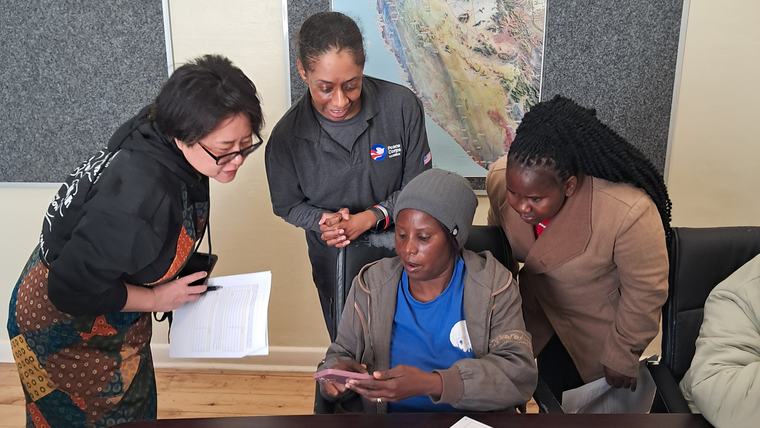
A Peace Corps partner shares her experience
Wetupa N., environmental health practitioner, collaborates with Melanie in Namibia.
9. How do you spend time when not working on a project?
I enjoy reading, keeping in touch with family and friends back home, and spending time with local friends here in Namibia. I am also developing my cooking skills and enjoy trying new recipes. Some of my colleagues have even requested recipes for baked goods such as sweet treats and savory dishes. I follow several cooking creators online and enjoy experimenting with new dishes before sharing them with friends. Cooking has become a fun way to relax, connect with others, and share a little bit of my culture.
10. Tell us about the strongest relationship you’ve developed while in country
One of the strongest relationships I have developed during my service has been with two collaborators who have become close friends. We share a common interest in community development, environmental stewardship, and sustainable opportunities for local residents. Combining our perspectives has driven the success behind our projects, such as the Ecobrick Bench and the Upcycling Waste Pitch Competition by refining strategies to encourage community members to think creatively about transforming environmental stewardship initiatives into economic opportunities.
What began as a professional working relationship gradually transformed into a genuine friendship. We begin our meetings by planning projects, coordinating logistics, and finalizing details, but we always end with laughter, food, and important updates about our lives. We have become a “dream team” that provides encouragement during challenges, celebrates accomplishments together, and offers support whenever needed. One of my favorite memories was attending a graduation party with them and building relationships with family and friends. These are the moments that remind me how beautiful relationships are built one day at a time, often while working toward a shared goal. They have nurtured my understanding of Namibian culture and I am grateful for the trust and support that we have built throughout my service.
11. What are you looking forward to in your remaining time as a Volunteer?
In my remaining time as a Volunteer, I look forward to nurturing the relationships and initiatives that have become such an important part of my service. I also want to be intentional about navigating the partnerships and professional growth that this experience has created, so that the wealth of knowledge that I have gained will continue to guide me long after my service concludes. The people here have welcomed me into their community and I want to continue making the most of every remaining opportunity that I have to show how deeply they are appreciated.
12. Tell us your favorite phrase in the local language.
One of my favorite phrases is “Ons trek almal in dieselfde rigting,” which means “we are all pulling in the same direction.” The first time I noticed the phrase was from a post on a community member’s social media page. The message resonates with me, not only because of his unwavering encouragement and support, but also because it reflects how successful projects often come together in Namibia and around the globe. Whether the goal is supporting environmental stewardship, economic stability, or promoting community development, success depends on stakeholders, community members, and leadership cooperating on a shared goal. That spirit of collaboration is definitely one of the most meaningful lessons of my Peace Corps service.
13. What will you do differently when you return to the U.S.?
I will return with a deeper commitment and appreciation for resourcefulness, intercultural collaboration, and the power of practical community-driven solutions that grow out of strong relationships built on trust and wisdom. This experience has strengthened my view that leadership rooted in strategic problem-solving, alongside the people most affected by the outcome, is the most sustainable path to progress. Listening carefully and understanding others' perspectives inspires commitment across the board. It requires patience, creativity, and resilience, which are virtues that Peace Corps service develops in every person who steps forward. I will also savor the day-to-day beauty in my environment, not just the landscapes, but also the people that I’m navigating life with.
14. What would you say to someone thinking about joining the Peace Corps?
Be patient with the lessons you are learning from this experience, especially the ones you learn about yourself. Living in a new environment will bring both your strengths and your challenges to the surface in ways that extend far beyond your technical skills. Embracing the lessons that this opportunity will provide with humility, curiosity, and a willingness to grow will become one of the most transformative experiences of your life, both professionally and personally, and the skills and perspectives that you will gain will stay with you long after your service concludes.
Learn more about serving as a Peace Corps Volunteer in Namibia.



