 An official website of the United States government


Featured Volunteer Profile
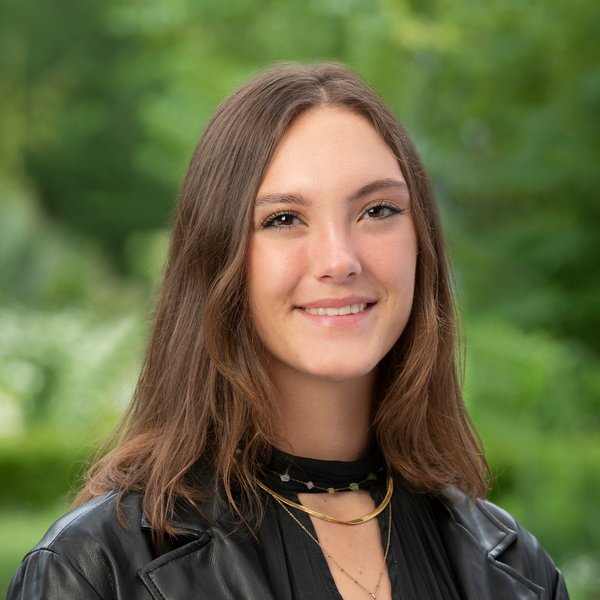
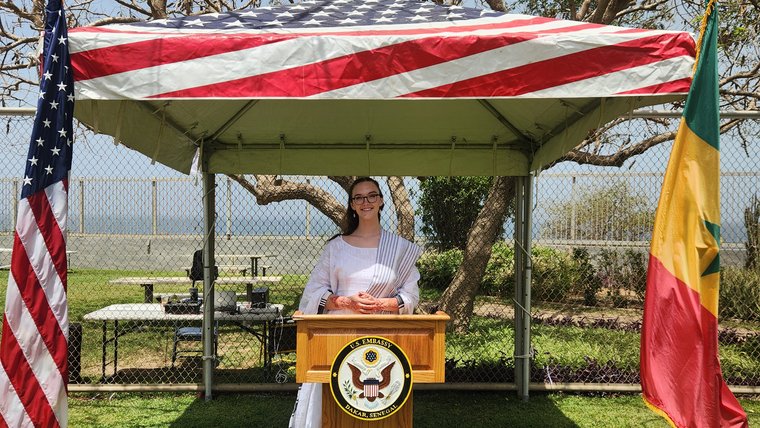
Payton L.
“Whenever I leave my community, I usually find myself watching the sunrise over fields of beans and peanuts while sharing fresh beignets with someone from a neighboring village, talking about the weather, and enjoying the horse cart ride!”
1. What got you interested in the Peace Corps?
When I was 14, my cousin was celebrating his engagement with close friends and family. My dad joked that I should stay away from a family friend who served with the Peace Corps years prior, for fear that I too would move halfway across the world. Well, an hour and one conversation later, all I could do was tell anyone with an open ear that when I grew up, I was going to do the Peace Corps.
Fast forward five years. I took a class on the Ethiopian famine, which left me boiling with anger, sadness, and disappointment. The feelings didn’t subside until I worked with an academic advisor the next day to switch my major to global health. In that moment, I realized how precious the ability to make a difference is and how badly I wanted that opportunity. I worked alongside Returned Peace Corps Volunteers (RPCVs) at my university to confirm the application process and never looked back. I knew I wanted every challenge and every reward that came with the life-altering experience of being a Peace Corps Volunteer.
2. What projects are you working on?
I am currently concluding a 10-month-long, grant-based endeavor that has significantly augmented a maternity ward to better equip health professionals to provide care for young children and women. This project opened many doors for me, including the opportunity to give multiple health talks with targeted community members. For example, in one social outreach initiative 25 high school girls learned how to make reusable menstrual pads while simultaneously discussing sensitive topics like menstrual health. I also support a local women's group where we meet to discuss relevant health care information for women who are pregnant or postpartum.
Another project is a high school English club, which has attracted a large student base and accomplished multiple goals. These goals include the establishment of a tree nursery to encourage healthy eating. As a bonus, in the future the trees will grow into shade trees for the high school. We are also establishing a pen pal exchange with a high school in North Carolina to broaden the perspectives of Senegalese and American students alike.
3. What strategies have you used to integrate into your community?
Acceptance. There are hundreds of ways that I practice this daily. Accepting that my local language skills are far from perfect and keep trying anyway. Accepting that my to-do list, though completely unfinished, is less important than going to a wedding I didn’t know was happening until 20 minutes ago. Accepting a completely foreign diet and using the new dishes as an opportunity to strengthen my relationship with my host mom through cooking.
For me, accepting that every day is fair game for a challenge has made integration easier because I am more open to the happy accidents and surprises that bring me and others joy. However, setting boundaries has also made my integration more achievable and sustainable throughout service. Communicating my needs allowed me to protect my peace, which helps me to be the best version of myself. These are just two strategies I employ to keep myself consistently integrating while not burning out.
4. What is a highlight of your time in service so far?
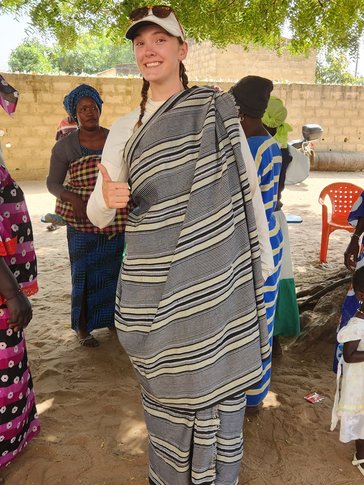
Senegal is a predominantly Muslim country with 95 percent of the population observing Sunni Islam practices. However, the village in which I live is split 50-50, practicing both Muslim and Christian beliefs. I have enjoyed seeing how both groups work together to respect each other's religions while still encouraging their own daily practices. For example, my day begins and ends with the mosque's call to prayer and the church bells ringing; these two religious institutions take turns ringing in the day and bidding the world goodnight as a symbol of togetherness in this community of differing faiths.
I have been able to celebrate the Christian Easter and the Islamic Tabaski within one community. Participating in both of these religions within a single village has been an incredible demonstration of unity. Wishing neighbors an easy Ramadan fast while discussing the next Assumption of Mary celebration with other neighbors is a distinctive part of my service in this country that I deeply cherish.
5. What have you enjoyed most about the community where you are serving?
What was originally the most inconvenient and frustrating part of living in my village has become my favorite part: a horse cart! Being in a rural site means the closest paved road is about three miles away, or 45 minutes via horse. At first, this distance felt isolating and made me feel like I would be trapped in my village or dependent on other people's availability to take me places. However, this dreaded horse cart ride has become one of my favorite parts of this community.
I have learned how to travel like a local, walking along the dirt path early in the morning until someone going my direction stops to give me a ride. Whenever I leave my community, I usually find myself watching the sunrise over fields of beans and peanuts while sharing fresh beignets with someone from a neighboring village, talking about the weather, and enjoying the horse cart ride! This mode of transportation has also introduced me to many new people in nearby villages, who I would otherwise never have spoken with. It’s also allowed me to practice my language skills. What I once viewed as the village's biggest restriction is now an aspect of village life that I appreciate the most.
6. What are some of the most important things you’ve learned from your community?
In America, we tend to glorify the hustle and bustle of constantly working towards a goal. Until coming to this community, I never realized how much self-worth I placed on tangible productivity. It took months of my village telling me to slow down before I realized just how much I was missing by keeping my eyes glued to a computer or a worksheet. The truly important things were happening all around me, but I was so focused on the next “output indicator” that I hardly noticed. Learning to take a step back and enjoy the process of work here has changed the way I perceive myself in both professional and leisure settings.
Similarly, the community taught me the value of the term “handmade.” I never thought to question the effort that goes into a single handful of peanuts until I helped my host family in the fields. Planting, harvesting, cleaning, shelling, recleaning, and packing peanuts is a process that takes an entire household days to complete. This is one of many fully manual processes that make everything from eating to construction possible in this community. My new appreciation for the time and effort required to complete a project here has made me more inquisitive about what I take for granted in the lifestyle I am accustomed to.
7. How do you spend time when you are not working on a project?
I have invested a lot of my free time in what I call “The Three R’s”: running, reading, and relations. Morning runs have become an essential part of my day, allowing me to challenge myself physically and establish a routine. Maintaining a consistent schedule has helped me break my days into manageable chunks while encouraging the girls in my village to be physically active. Reading has recently renewed itself as my favorite hobby. There are many social settings where people are quietly watching TV; reading helps me participate in these moments while simultaneously enjoying my preferred media. This bleeds into the relations part. Senegal is a country full of teranga, or hospitality, which means a walk to the market may end in a surprise lunch at a friend's house. For me, leaning into these relationships has brought a sense of purpose not solely defined by projects or goals in my Peace Corps experience.
8. What are you looking forward to in your remaining time as a Volunteer?
After completing my first full year as a Volunteer, I am excited to celebrate another year of annual holidays with host my family, this time with an understanding of what to expect. The first year went by quickly and was filled with questions. In my second year here, I am excited to participate fully in the traditions of my family and community without the hesitation of a newcomer.
I am also excited for the projects to come! With a year behind me, I am more established in both my language and my role in this community. After numerous conversations with key community figures, I aim to coordinate a cross-sectoral summit focused on economic development for women in early 2026. I also look forward to expanding club engagement into the local middle school while continuing current clubs at the high schools. Overall, I am excited I get the opportunity to do all of it again, with the knowledge and relationships I have now.
9. Once you finish service, what will you do differently when you return to the U.S.?
There are hundreds of things I expect to do differently when I go back to America. Enjoy an actual shower instead of the bucket I use now, and I’ll never take a grocery store for granted again. However, I hope to continue to practice the lessons I have learned here. I want to spend more time with my family and take the long way to work to enjoy the scenery. Senegal has shaped who I am and made me proud of the individual I am today; someone patient and slow to anger; and someone more invested in how my actions impact those around me than in my own individual goals. I have learned these characteristics from those around me who welcomed a stranger into their lives with compassion and selflessness. In the U.S., I want to treat others as my host family, friends, and community have treated me in Senegal.
Want to learn more about serving as a Volunteer in Senegal? Connect with a recruiter today.



