An official website of the United States government

Official websites use .gov
A
.gov website belongs to an official government
organization in the United States.

Secure .gov websites use HTTPS
A
lock (
) or https:// means you’ve safely connected to
the .gov website. Share sensitive information only on official,
secure websites.

Search
Connect with the Peace Corps
If you're ready for something bigger, we have a place where you belong.
Apply to the Peace Corps
The application process begins by selecting a service model and finding an open position.

Let us help you find the right position.
If you are flexible in where you serve for the two-year Peace Corps Volunteer program, our experts can match you with a position and country based on your experience and preferences.
Serve where you’re needed mostCommunity Forest and Environment Advocate
 Environment
Job highlights
- Gain hands-on experience in the sustainable management of natural resources and intercultural communication.
- Learn Nepali language skills from dedicated Language and Cross-Cultural Facilitators.
- Enjoy living in the Himalayan mountains and the colorful traditions of 125 ethnic groups who call Nepal home.
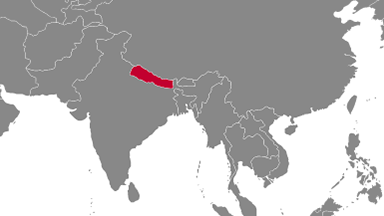
Nepal • Asia
In partnership with: Community forest groups, secondary schools
Applications are now closed. View current openings.
Apply by
June 15, 2026Know by
August 1, 2026Depart on
January 14, 2027Duration
2 years, plus 3 months trainingAbout the project
Communities in Nepal are looking for support as they strengthen the sustainable management of natural resources and inspire younger generations to get involved.
Nepal is among the countries most susceptible to environmental risks due to its topography, the dependency on the environment for livelihoods, and the limited adaptive capacity of rural communities. As temperatures increase, weather-related events such as forest fires, flooding and landslides are becoming more frequent. The effects of these environmental shocks are exacerbated by rapid and unmanaged urbanization, and an imbalance between infrastructure development and biodiversity maintenance—ultimately resulting in soil erosion and a lack of solid waste management. Forests are integral to rural life in Nepal; they provide wood for fuel, timber for construction and furnishings, as well as medicinal and aromatic plants for human health. As such, Nepal’s government is concentrating on the sustainable production and supply of forest products, improvement of biodiversity, increased contribution of forests to national economic development, and the protection of forest ecosystems.
As a Community Forest and Environment Advocate, you will collaborate with community members to strengthen local capacity, especially among youth, to sustainably manage the environment and natural resources that rural people depend on. Together, you will promote youth leadership, gender equity, and mobilization within historically marginalized communities for positive environmental outcomes.
Learn more about what Volunteers do in country by visiting our Nepal project page.
Required skills
Qualified candidates will have one or more of the following criteria:
Bachelor's degree in any field.
Language: There are no pre-requisite language requirements for this position.
Required behavioral competencies
These competencies are essential for all service assignments and are assessed in the application and interview process:
Motivation for and commitment to service
Adaptability and open-mindedness
Problem solving and resourcefulness
Behavioral maturity and professionalism

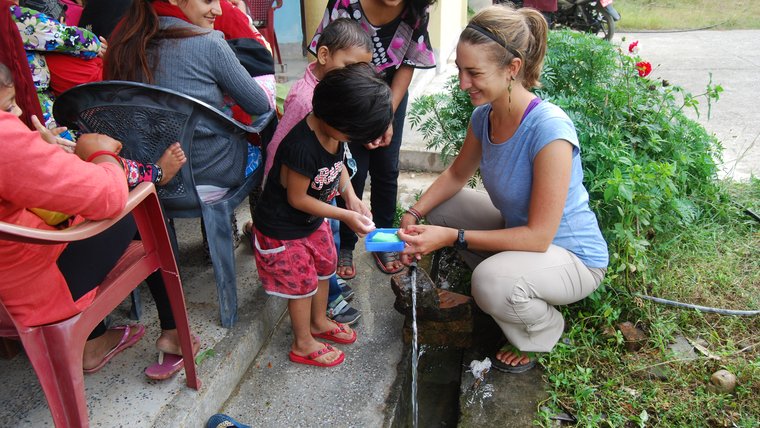
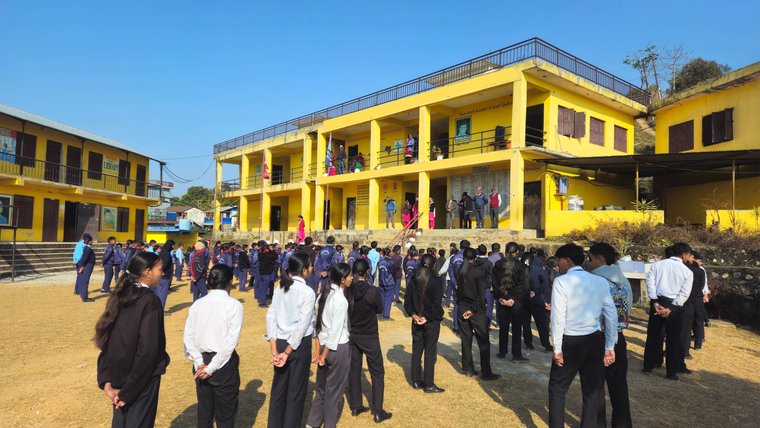
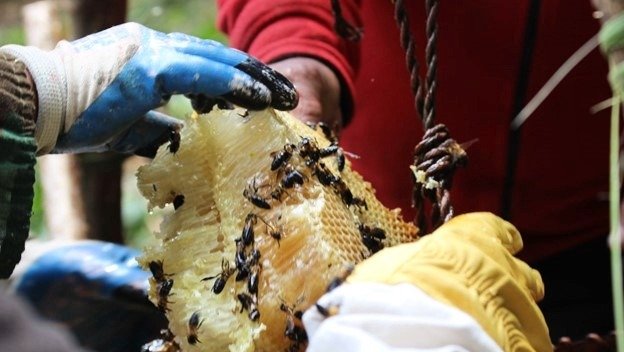
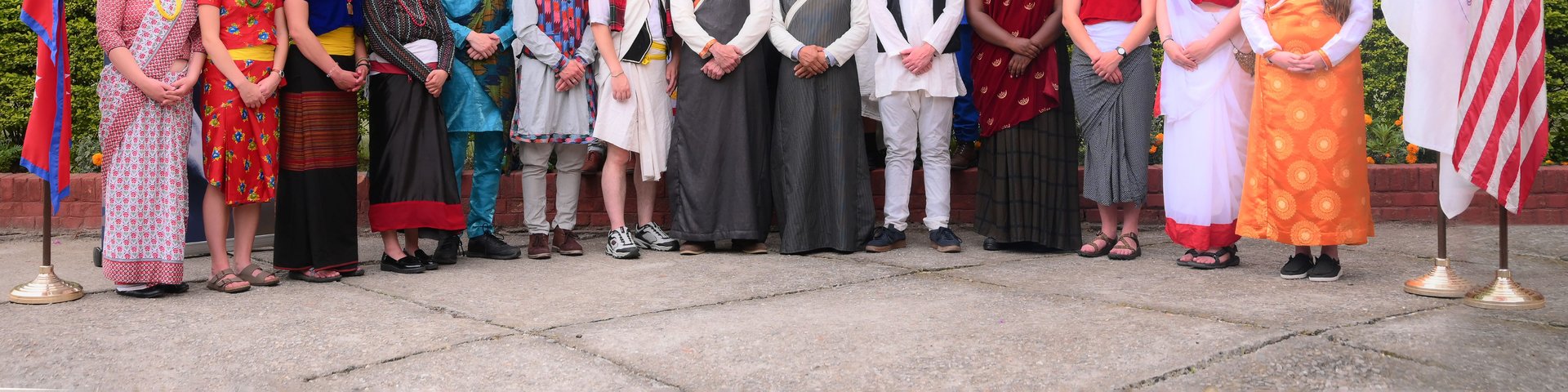
Photos from Nepal



How you and the community will make an impact together:
Support primary and secondary teachers in teaching environmental education.
Plan and facilitate environment-focused clubs or camps for youth.
Support schools and communities to adopt improved solid waste management practices.
Assist community forest user groups on best practices to rehabilitate, conserve, and sustainably manage natural woodlands.
Train families on constructing and using energy-efficient cookstoves.
Support community forest user groups to develop forest-based income generating activities and improve basic business skills.
You may also work on additional projects that meet the community’s interests and priorities, such as establishing book club or cultivating mushrooms and fruit trees.
Volunteers will live in the Bagmati and Gandaki provinces with a host family but can expect a private a room. Volunteers usually walk several miles every day on hilly terrain to work in both hot and cold weather, and during the monsoon season from June through September.
Learn more about the living conditions, including detailed information on culture, communications, housing, and health/crime statistics on our Nepal country page. You can also delve into stories about local communities by reading our blog or Volunteer stories.
Meet a Volunteer in Nepal
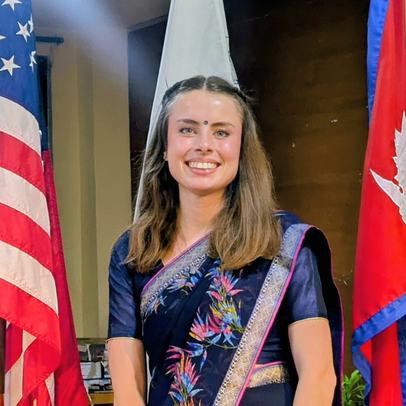
Shay K.
Community Forest and Environmental Advocate
"I know I can always stop by the neighbor’s house to help sort beans, sit at the tea shop to talk with women in my village, or join my counterpart herding goats and always feel welcomed."
See full Volunteer profile
As a Community Forest and Environment Advocate, you will be trained to support government supervisors and multiple community counterparts to contribute to improving the environmental situation of people in rural communities. Peace Corps/Nepal will teach you Nepali to help you comfortably live in and connect with the community. You will also receive language resources to learn key phrases in a local language used in your assigned area.
After 10 weeks of training, you will move to a rural or peri-urban community where you will collaborate with secondary schools and community forest user groups to assess the local needs and develop solutions that sustainably manage natural resources and increase the environmental resilience of people in rural communities.
Only heterosexual couples can be accepted for this program. Each person must apply separately and must qualify for a position in either the same or a different sector than their partner. Couples will live together during training but may separate occasionally for field-based activities. Couples who are selected for the same sector will live together but work with different local partners which may be in the same community or in neighboring communities (not more than 30 minutes apart). Cohabitating couples are highly encouraged to present themselves as married throughout service due to cultural expectations.
To learn more about serving as a couple in Nepal, visit the country page.
Application process
From application to departure takes around nine months. Learn about the application process for Volunteer opportunities.
Medical/legal clearance
You will need to be cleared medically and legally in order to serve in Nepal. Review information on medical clearance and legal clearance to learn about the process.