An official website of the United States government



Tips for serving in Nepal from 9 Peace Corps Volunteers
Serving as a Peace Corps Volunteer in Nepal is an unforgettable experience—equal parts challenging, rewarding, and transformative. Nine Volunteers provide tips to make the most of your life in the Himalayas.
Listening to local priorities
Peace Corps Volunteers in Nepal contribute to a wide range of community-driven projects across the Education, Agriculture, and Environment sectors. Once at their permanent site, it's important for Volunteers to collaborate with community members to identify local priorities. There’s no telling what you will learn as you creatively problem solve together!
“My primary project consists of working with smallholder farmers and their families, prioritizing women and caregivers of children under the age of five. Throughout the country, my fellow Volunteers and I work on projects like soil fertility improvement, establishment of kitchen gardens, fruit and nut tree cultivation, mushroom cultivation, pest and disease management,” shared Jessica H.
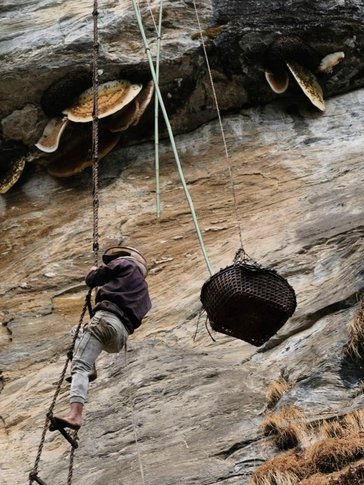
“So much of the Peace Corps experience is staying open to possibilities, being flexible, shifting focus as I better understand the community and their needs. Promoting [cliff] honey hunts was not on my list when I began service; but helping to promote a unique cultural tradition—a source of income and local pride—now tops that list,” said Sally C.
“I helped to make a biogas plant at a neighbor’s house. Biogas facilities are important ways to close the sustainability loop: raising livestock by feeding it materials collected from around the farm, collecting livestock waste (mainly water buffalo poop, called gobar), eating the livestock’s meat as well as vegetables grown by the family, making human waste, putting the livestock and human waste into a methane gas producer, then using the methane gas for cooking purposes and the solid waste as a fertilizer for vegetables that will go back into feeding the family and livestock,” shared Rachel H.
“I supported a pen pal program at our school to help students practice reading and writing English by exchanging letters with American students. However, even letters written in basic English were hard for them to understand and many students ended up copying the work of fellow students. It revealed another local need that I could support,” said Prashil D.
Learn more about Volunteer projects in Nepal.
An emphasis on food
Food holds deep cultural significance in Nepal, shaping social interactions, ceremonies, and everyday gatherings. Beyond simple nourishment, mealtime is an opportunity to show hospitality, honor traditions, and strengthen the sense of community. Make an effort to share a meal or snack with your neighbors, host families, and colleagues.
“In Nepal, the daily routine revolved around food. A common greeting from a neighbor was, ‘Khanna khannubhayo?’ (Have you eaten yet?). A negative reply would draw skepticism and, often, an invitation for a quick snack or cup of tea. Larger meals were typically eaten in the late morning and again in the evening. Families sat together and shared a wide variety of vegetables, meats, lentils, rice, and different kinds of achaar (pickled vegetables and fruits),” reflected Teagan B.
Learn more about the food and living conditions in Nepal.
A relationship with water
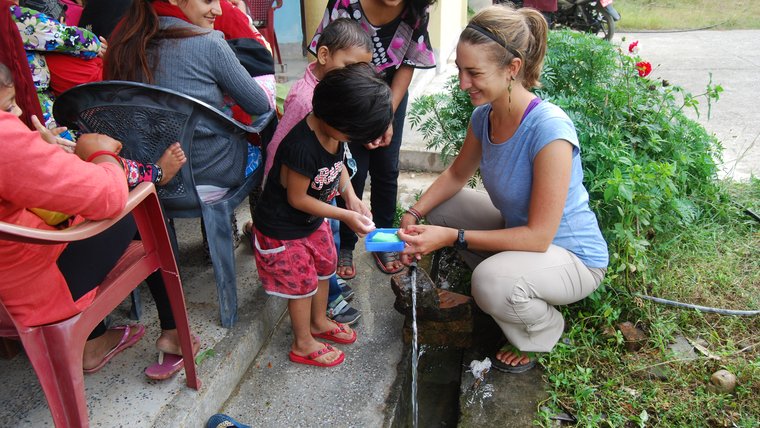
From carrying buckets from local taps to adjusting daily routines around seasonal shortages, water quickly becomes a central part of everyday life for Volunteers. And when the monsoon arrives, Volunteers learn to navigate powerful rains that shape transportation, agriculture, and community rhythms across the country. Conserve natural resources when you can and take cues from the locals.
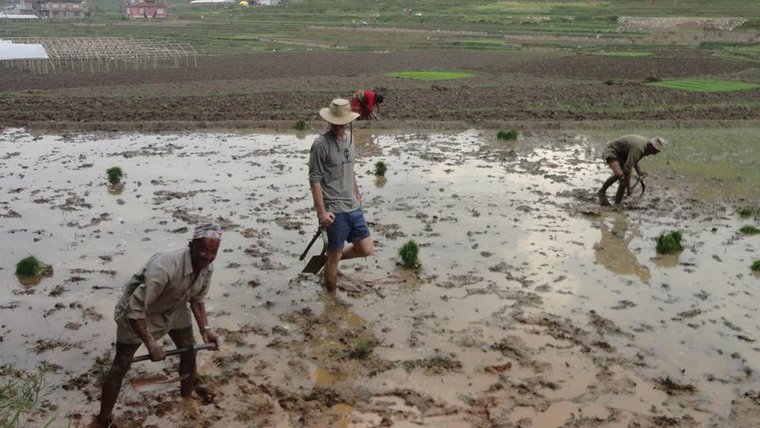
“When we arrived in my village, the water from the tap nearest my house was diverted to the fields, so we had to carry water for drinking and bathing up a set of stairs and across the narrow paths through the rice paddies from a good distance away,” shared Adrienne B.
“People start expecting rain around May. When the rains begin, planting starts. Last year, the big rain came in early May. Corn went in soon after. Then came a dry spell, which worried everyone. Then, in early June, the rains returned—and kept coming, nearly every night, for four months. By September, the rains taper until the celestial tap is turned off completely. Corn is harvested and the big festivals arrive—Dashain, then Tihar,” said Steven R.
Connections despite language barriers
Volunteers learn Nepali from dedicated language and cross‑cultural facilitators but reaching an intermediate or advanced level naturally takes time and consistent practice. If you’re worried about connecting with your community in the early days, remember that many Volunteers have felt the same way. There are countless nonverbal ways to show effort, build trust, and begin forming meaningful relationships. Practice Nepali as often as you can and ask your community to not be afraid to correct you so that you can improve.
“I placed the pillow behind her back. She held my hand as she leaned back. She didn’t let go as she relaxed into the giant pillow, closed her eyes, and produced a wide grin. Sometimes you don’t need language—not a verbal one anyway—to show kindness and gratitude, and to build a friendship,” Karen B.
“Soon after I arrived in my village, I began to feel a connection to the Nepali people. While I struggled a bit with the language, I picked up gestures and mannerisms with ease. When I got my nose pierced like Nepali women do, community members said, ‘“Wow, Radhika (my Nepali name) got her nose pierced! Now she really is Nepali,’” said Rachel S.