An official website of the United States government




Promoting digital literacy in Nepal
I was born in Nepal and moved to the United States at the age of 5.
But my parents never allowed me to forget our culture, heritage, or motherland. “Yo maan ta mero Nepali ho (My heart is Nepali)” is a simple sentence that captures my enduring love for Nepal.
Even as a child, I carried a deep desire to one day return to Nepal and create a meaningful impact in the country where my life began.
A Nepali community in North Carolina
My family settled in North Carolina, where we were warmly welcomed into a close-knit Nepali community. I began volunteering at the Nepal Center of North Carolina (NCNC) and met a Returned Peace Corps Volunteer who also volunteered at NCNC to maintain his connection to their country of service. Every story of his planted a seed, and Peace Corps service slowly became something I saw not just as an opportunity, but as a calling.
An electronics business
In high school, I started an electronics repair business, focusing on computers, laptops, and mobile phones. I developed strong hardware and software troubleshooting skills, and growing this business also taught me patience, problem-solving, and independence.
After college, I applied my computer skills in technical support and software roles. Although these roles were professionally rewarding, I wanted to directly impact people’s lives. That longing brought me back to Peace Corps.
Sharing my skills with Nepal
I applied to a 6-month Peace Corps Response opportunity teaching computer science and computer repair, which perfectly aligned with my skills. In April 2025, I received the news that I had been accepted!
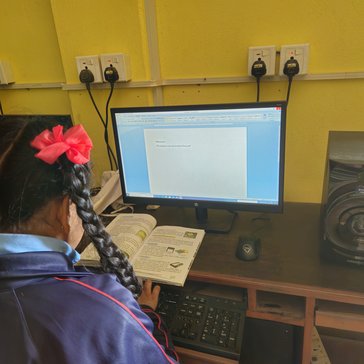
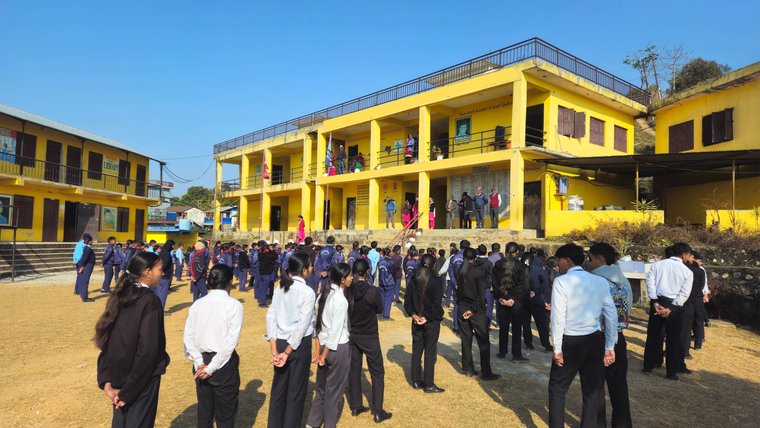
I arrived in Nepal the next month alongside seven other Volunteers. After two weeks of training, I was assigned to the Kaski District, where I work at a government school. Each day begins with morning assembly, followed by teaching computer classes for grades 5, 8, 9, and 10.
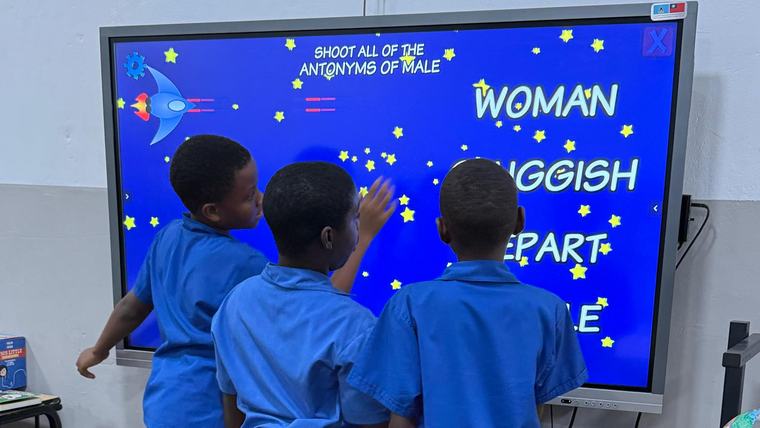
Fifth graders learn the basics—what a computer is and what its parts do. Eighth graders go deeper, studying the history of computers, common applications, introductory HTML, and QBASIC. Ninth grade goes into block programming, web technologies, social media, cybersecurity, and more advanced HTML. Tenth grade brings everything together: networking, ethics, computer security, contemporary technologies, number systems, database management systems, modular programming, C programming, and QBASIC. Most days are long but incredibly fulfilling.
Sustainable change through an extended commitment
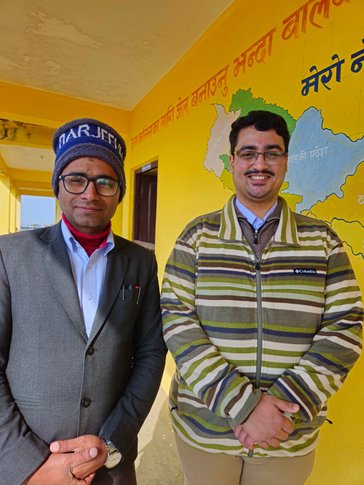
I supported a pen pal program at our school to help students practice reading and writing English by exchanging letters with American students. However, even letters written in basic English were hard for them to understand and many students ended up copying the work of fellow students. It revealed another local need that I could support.
Six months no longer felt like enough time to create the kind of sustainable impact this community deserved. Meaningful change—especially in education and technology—requires trust, consistency, and time. I decided to extend my service from 6 months to 27 months—the length of traditional Volunteer service. Extending my service was my way of committing more deeply to the students, the school, and the community that had welcomed me so warmly.
It was not easy to spend more time away from my family. In fact, that was one of the hardest parts of service. The separation has also taught me independence and emotional resilience. My host family has helped fill that void. Life here is simple but deeply connected. Everyone knows everyone. People genuinely care for one another. This level of community integration is something I had never experienced before, even during short visits to visit relatives here.
Ongoing impact
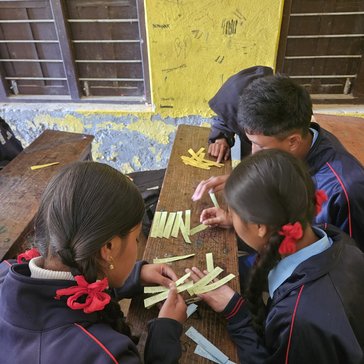
One tangible impact of my service has been the improvement of school computer labs. Today, most of our computers are working, with only about 14 non-functional machines remaining. We aim to have two fully functional computer labs before I complete my service in August 2027.
This experience has strongly shaped my future goals. I aspire to become a foreign service officer, continuing to work with Nepal, and representing communities like the one I now serve.
Giving back is not a single act—it is a lifelong commitment. One that began with my parents’ teachings, was nurtured by the Nepali community in North Carolina, and continues here in Nepal, where my heart has always belonged.
This blog post is an adaptation of an article originally published on 1/22/26 in The Himalayan Times