An official website of the United States government




Renewable resources: growing up with JFK's biggest fans
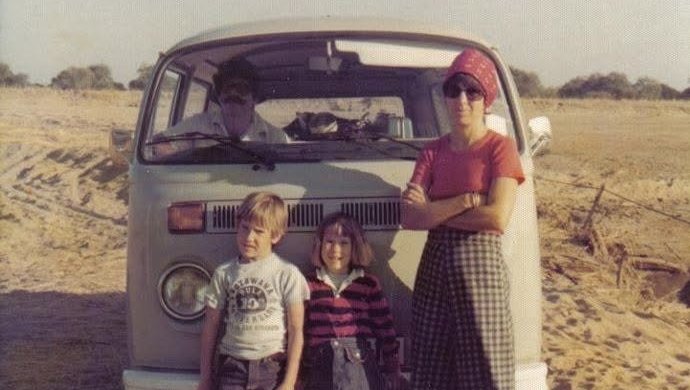
Ever since I can remember, John Kennedy’s name has been a household word.
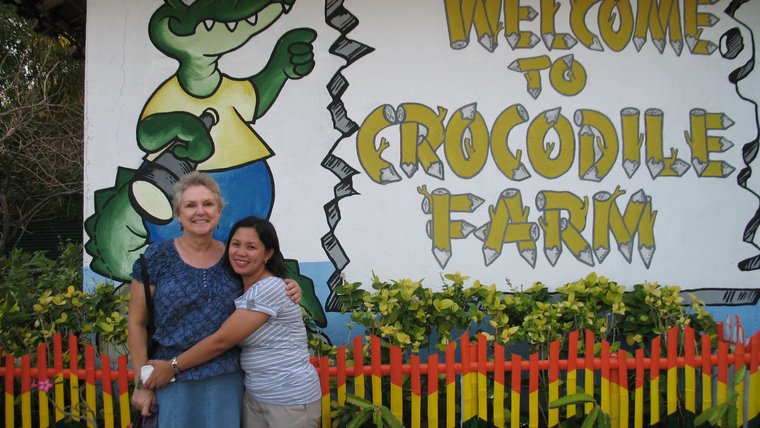
Often, one or the other of my parent’s would pause in the middle of a story about their Peace Corps experience and sigh, “Good old JFK.” My mother, formerly Pamela Cohelan (Philippines, 1963-1965), and my father, David Benson (India, 1963-1965), both served under Kennedy. They were Volunteers in the days of Peter Pan collars and sing-alongs to “Michael, Row the Boat Ashore.” Growing up among their stories and their commitment to development work, there was never a time when I didn’t dream of joining the Peace Corps myself. When I was accepted to Peace Corps almost thirty years after they served, my parents were thrilled. When they heard I was going to Nepal, they began planning their trip.
Some things about being a second-generation Peace Corps Volunteer were great. My parents understood my sometimes lonely letters home. They could talk about sustainable development and the occasional frustrations of village life. They laughed with me in recognition of generic Peace Corps stories, dangerous pit-latrines and overcrowded buses. Other things about having Peace Corps parents were less positive. “We never had packages sent to us,” my parents scoffed at my pleadings for magazines and junk food.
Peace Corps parents, Peace Corps daughter
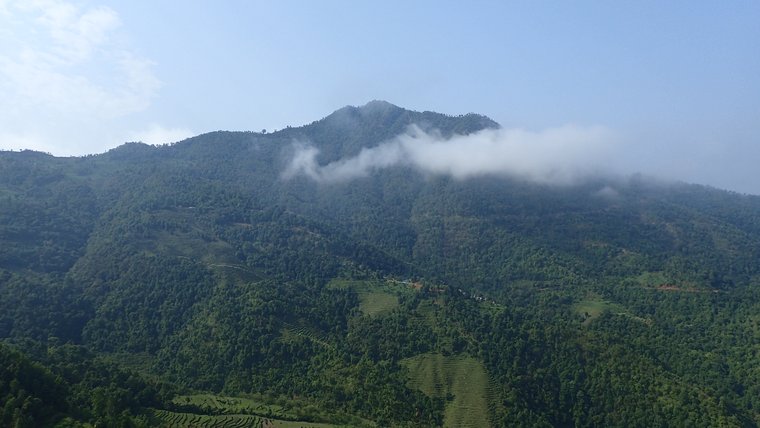
When they visited me, they stayed in Nepal for a month. Unfortunately, it was the monsoon season and many of the classic mountain vistas were obscured by haze. We managed to get our fill, however, by flying north from Kathmandu to Jomsom. Flying internally in Nepal is always an experience, but the Jomsom run is famous. The town lies on the Tibetan plateau at 12,000 feet. Flying there, in a ten-passenger Cessna, the Annapurna Himalayas appear suddenly, and you find yourself looking out the window at a massive wall of black rock and blue-green glaciers. Twisting your neck to look way, way up you see the peaks above you, shining in the thin air. This was at once the most terrifying and exhilarating experience I had in Nepal. My mother, with her unconditional love of mountains, forgot her fear of flying and wept with awe.
We landed in Jomsom and trekked north for two days, then turned around and headed south where Pula Bhirmuni, my village under the edge of a cliff, lay a week’s walk down the Kali Gandaki valley. We trekked through monsoon rain and heat that drove us to stand, fully clothed, under path-side waterfalls. Miraculously, we avoided leeches.
We ate simple food, fought off throngs of summer flies, and pined for the out-of-season dessert that made decades of tourists give this route the nickname “the apple pie trail.” “Things are different during the trekking season in the fall,” I moaned. My mother was a teacher, though, and could only take extended vacation in the summer. So, we made do. My father practiced his rusty Hindi on a barefoot Sadhu from India who asked us, “Yeh rastha Muktinath heh?” referring to the ancient Hindu temple way up north in the mountains. My father pointed to path, then pointed north, “Yeh rastha!”
Life as a Volunteer
When we arrived in my village, the water from the tap nearest my house was diverted to the fields, so we had to carry water for drinking and bathing up a set of stairs and across the narrow paths through the rice paddies from a good distance away. It was unusually hot, and mosquitoes kept us awake through the sweaty nights.
The women in the village were so impressed that I had a family, though. Many hadn’t been convinced that I was not simply some unconnected entity here because I had nowhere else to be. A young, unmarried woman voluntarily so far away from her family was too bizarre for many of them to imagine. My mother wore a salwar chemise (a traditional outfit of a long tunic and baggy pants), which was a huge success. We spent a day down in the rice paddies with the women. The tiny, terraced fields were emerald with the new rice growth and were bordered with golden, blooming soybeans. Amongst the laughter and singing of the women we tried our best to work the rice. The women shrieked with mirth, “Aasa!” they screamed my village name, “your mother can do this better than you can!”
From Nepal, my parents continued to India, where they visited my father’s old Peace Corps site. Thirty years after his service ended, they were given a wonderful reception. Everyone still remembered him and his chicken projects. I hope that there are some people in Pula Bhirmuni who remember me when I go back some day. I have children of my own now who clamor to hear my Peace Corps stories. Maybe they will be third generation Peace Corps Volunteers, children raised on images of their mother making a home for herself in a little stone house in the shadow of the mountains in Nepal.