 An official website of the United States government



Living Conditions in Nepal
General considerations
To learn more about living and working in Nepal, applicants are encouraged to connect with a recruiter to discuss any specific considerations that could affect their service. In addition, please visit the U.S. Department of State's Nepal travel information pages for the latest on travel advisories, local laws, and special circumstances.
Applicants who undergo an interview will have additional opportunities to raise questions or concerns. If, upon learning more information, an applicant would like to be considered for a different assignment from the one they have been assigned to serve in, the Peace Corps can often find an alternate option that may be a better fit.
Communications
Volunteers can receive mail sent from abroad via the Nepali postal system. The collection of mail is managed by the Peace Corps office in Kathmandu and Volunteers are notified once mail is received on their behalf. Volunteers are then responsible from picking up their mail at the Peace Corps office in Kathmandu.
Friends or family should never send money, tickets, or anything of value through the mail.
Packages
Packages sent via the U.S. Postal Service (USPS) can take a month or more to reach Kathmandu from the U.S. The collection of mail is managed by the Peace Corps office in Kathmandu and Volunteers are notified once mail is received on their behalf. Volunteers are then responsible from picking up their mail at the Peace Corps office in Kathmandu.
Any cost involved in the package release will be passed on to the Volunteer and will be deducted from his/her monthly living allowance. Please note that the customs charge is based on the specific items shipped and the value listed on the declarations form. The customs charges can be quite expensive, up to 90% of the value of the items in the packages. Peace Corps is not liable for any loss or damage that may occur to packages during shipment and customs inspection. We recommend Volunteers instruct senders to purchase insurance for packages at the origin.
Peace Corps Nepal cannot receive packages sent via FedEx, UPS, DHL or other expedited courier services as it requires the recipient to go to customs in-person to release goods. Therefore, please have sender use USPS when sending packages to Nepal.
Packages and bulky flat mail are routinely opened by customs officials, but are usually resealed with tape, stamped by a customs agent, and forwarded. We suggest that the sender enclose a packing list, send it separately, or even write the contents on the box so that a Volunteer knows that they have received everything. Use good judgment and avoid having items of high value mailed to you if possible.
Internet
Internet facilities and locations with Wi-Fi can be found in major towns in Nepal. Many offices, restaurants, and houses in urban settings do have Wi-Fi installed. However, rural villages have poor Wi-Fi coverage and unreliable internet connectivity. Depending upon your site placement, you might not have access to internet at your home and might need to travel to the nearest town, usually within an hour's walk from your site.
Cell phone coverage is almost universal in Nepal and many Nepalis use cell phone data for internet connectivity. Cell phone companies also sell USB modems that Volunteers may purchase to access the internet at their sites or use data available in the cell phone after paying a certain amount.
Although not mandatory, you may bring a portable laptop computer to assist you with your work and internet surfing. Volunteers are responsible for the cost of insuring and maintaining them. The Peace Corps provides a limited number of computers at the Information Resource Center (IRC) of the Peace Corps office for Volunteers’ use.
Housing and site location
Currently, Volunteers are placed in the mid-hill regions of Nepal, with elevations ranging from 500 to 2000 meters above sea level. The communities that Volunteers live in will be relatively small agricultural villages or trading towns. Most of the work sites are located in small agricultural villages.
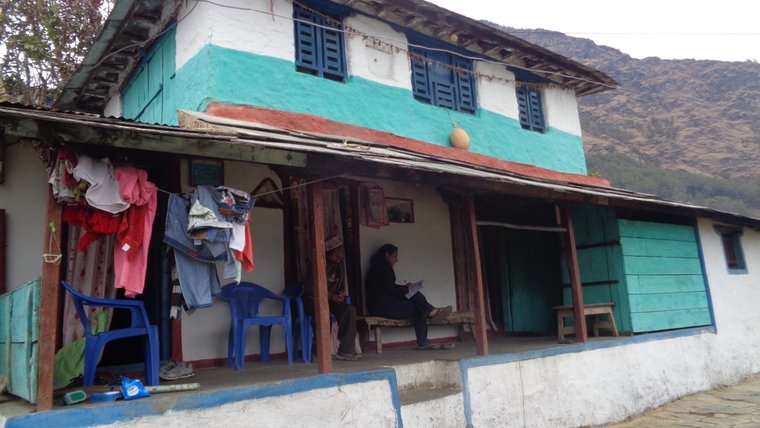
In remote villages, the houses are mostly made up of mud, mortar, and stone. However, concrete cemented houses are available in small trading towns. Peace Corps Nepal conducts rigorous safety and security assessments of Volunteer placement sites and houses. The final sites and houses for Volunteer placement must meet minimum safety and security and medical standards as established by Peace Corps Nepal.
Volunteers are not posted in higher elevations of the Himalayan range where a significant amount of snow falls. Living conditions will be simple, thus flexibility and a sense of humor regarding living conditions will ease transition to the Volunteer lifestyle.
There is no guarantee of continuous electricity, mobile network, or running water throughout the country. Volunteers are required to live with a Nepali family throughout their service. This level of immersion promotes Volunteer inclusion in the daily life of the community, facilitates language learning, ensures safety, and is essential for productive work at the grassroots level.
It is vital that Volunteers form close bonds with individuals and families in the community, so they clearly know who you are and what you are doing. They will also help keep you apprised of changing community issues or help you when you have a problem. As most Nepalis are very welcoming, all it takes is your commitment to integration.
Climate and geography
Nepal lies between 80°4’ and 88°12’ east longitude, and from 26°22’ to 30°27’ north latitude, covering territory of approximately 147,181 square kilometers that extends roughly 885 kilometers from east to west. Nepal has three physiographic zones, i.e., low land (terai), hill (pahad), and mountains (himal), which cover 17%, 68% and 15% area of the country respectively. The altitude of Nepal ranges from 59 to 8,848 meters above sea level. Altitudinal variation provides diversity of flora and fauna in the country.
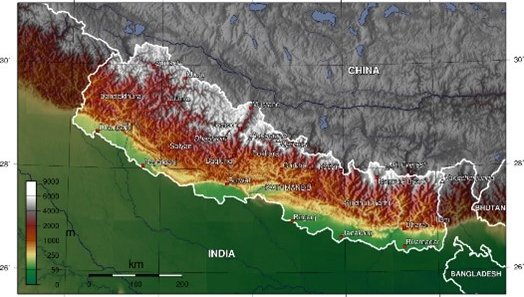
There are six major climatic zones in Nepal—tropical, subtropical, temperate, subalpine, alpine, and tundra/nival/trans-Himalayan. Nepal has four seasons: autumn (September, October, November), winter (December, January, February), spring (March, April, May), and monsoon (June, July, August). Summer and late spring temperature maximum range from about 28 °C in the hills to more than 40 °C in the Terai. The higher elevations have much colder temperatures. The monsoon season occurs from June through August/September. Nepal receives almost 80% of total annual rainfall during the monsoon season. Flooding and landslides are major safety and security concerns during the monsoon season.
Currently, all Volunteer placement sites are located in mid-hill regions of Nepal.
Language
Language plays an important role for Volunteers to be effective and productive at site. Language assists Volunteers in community integration, which is the key milestone for Volunteer service. The main goal of Peace Corps Nepal’s language learning program is to enable Volunteers to become independent language learners capable of continuing to improve their language and intercultural skills throughout their service.
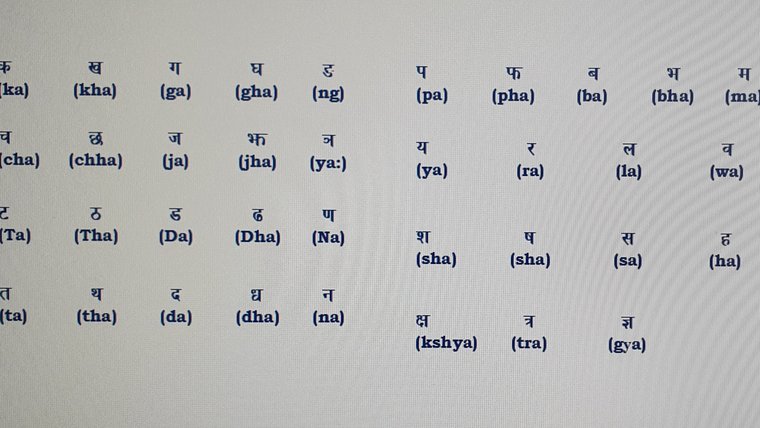
Nepal is a multilingual country with more than 123 spoken languages. The national language is Nepali, and the script is Devanagari. As Nepali is a widely spoken language, your pre-service training focuses mainly on Nepali language learning. However, you might require knowledge of additional local languages based on your permanent work site placement. Once your permanent site is announced, Peace Corps Nepal provides additional language support on local languages, including Magar, Gurung, Tamang, and Doteli.
Peace Corps Nepal follows a competency-based curriculum for language learning. This approach includes various teaching methodologies to accommodate different learning preferences, including audio lingual, total physical response (TPR), and other interactive activities (e.g., games, simulation, handouts, real objects, assignments, etc.). To assist Volunteers advance/enhance their Nepali language after pre-service training or gain language skills in a local language at their permanent sites, we provide optional language tutoring support at site as well.
Living allowance and money management
Volunteers receive a monthly allowance in Nepali rupees that is sufficient to live at the level of the local people. The allowance covers food, household supplies, clothing, transportation to and from work, utilities, recreation and entertainment, and incidental expenses.
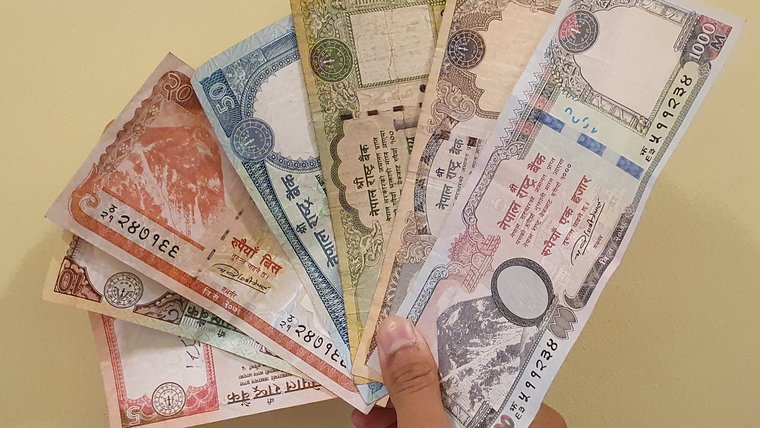
Peace Corps Volunteers are expected to live at a level that is comparable with that of their host country counterparts. The Peace Corps discourages Volunteers from supplementing their living allowance with funds from home.
During training, the Peace Corps takes care of most expenses and provides a small “walk around” allowance. After pre-service training Volunteers receive a “settling-in” allowance, intended to support the purchase of household items for long-term use (e.g., towels, linens, etc.). Volunteers receive their allowances via electronic funds transfers into local bank accounts, which are accessible by traveling to local bank branches. ATMs are also limited to larger cities and towns. Credit cards can be used in Kathmandu and some tourist areas. There is a risk of potential identity theft associated with using credit cards in Nepal. Volunteers who travel in the region, however, find that having a credit card is essential.
Food and diet
Nepal is known for its diverse cuisines. Each ethnic group has its original dish representing its culture and uniqueness. Volunteers will live with host families to assist them in adapting to Nepali daily life, which includes diet.
The daily diet of Nepalis is very different from the typical U.S. diet and adapting to it is one of the challenges Volunteers face. The daily staple in Nepal is daal bhaat: a plate of rice, a lentil sauce, and side dishes of vegetable greens and spicy chutneys.
Non-vegetarians prefer meat dishes as side dishes with daal bhaat. Similarly, vegetarians and vegans prefer vegetables with daal bhaat such as cauliflower, spinach, beans, etc. Each household’s daal bhaat is slightly different, but for Americans, eating daal bhaat twice a day (the Nepali norm) can get monotonous. Daal bhaat is a fact of daily life, and one that can be accommodated but not completely dispensed with.
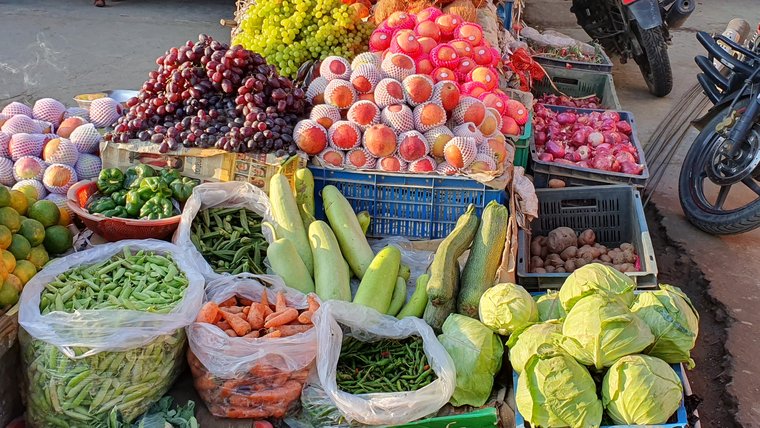
Eggs, milk, meat, and some fruits may be difficult to obtain, particularly in more remote locations. Crops grown in the Hill region include potatoes, corn, millet, pears, apples, peaches, oranges, apricots, and green leafy vegetables.
Imported foods such as cookies, canned fruits/fishes, fresh fruits and vegetables, and packaged soup may be available in some of the larger towns.
The main meats are mutton (goat), water buffalo, and chicken. Fish is available throughout the country, but mainly in the Terai region.
Nepal offers many varieties of diets for vegetarian. The local cuisines of Nepal include both vegetarian and non-vegetarian foods. Meat-free cuisine is not a new concept in Nepal.
Transportation
Public buses and airplanes are the modes of transportation for long-distance travel in Nepal. Bicycles, taxis, buses, rickshaws, and tempos (three-wheeled motorized vehicles) are the modes for local transportation. Volunteers are not allowed to operate cars and motorcycles. Some Volunteers choose to ride bicycles and a stipend is provided to those who wish to purchase a basic local bicycle during their service. When riding a bicycle, Volunteers are required to wear helmets which are provided by Peace Corps Nepal.
Travel in Nepal, whether by foot, bicycle, taxi, bus, or airplane, is potentially hazardous and therefore can be very stressful. Delays and cancellations due to bad weather, road or airport conditions, mechanical failures, or lack of personnel are to be expected. Bus travel is particularly difficult, as buses can be dirty and overcrowded and often are not properly maintained. Volunteers must remain flexible on schedules and timing of transportation as there are often delays.
All Volunteer permanent work sites have access to public vehicles (public bus/van) and are no more than 4-hour drive to the nearest town or district center. More information on transportation within Nepal and safety measures will be provided during pre-service training.
Social activities
Nepal is a country with an abundance of cultural diversity. There are more than 100 ethnic groups and 123 languages spoken in Nepal and each has its own customs, festivals, rituals, and other social practices. There are also regional and caste differences. Despite these differences, relationships are very important in Nepali culture.
Depending upon your site placement, you will experience a wide variety of social and cultural customs that are specific to different ethnic groups.
No matter where you live, people will want you to participate in their social activities. If you are invited to attend a festival, wedding, or other social event, it is an indicator that you have been accepted into the community. Such events can be a very good opportunity to build trust, enhance social bonds with your community and help fulfill the second and third goals of the Peace Corps.
Volunteers are expected to adapt themselves to Nepali social conditions, learn local language, and respectfully interact with host community members. Volunteers come to Nepal on the Peace Corps’ passports, not as tourists or expatriates, but as representatives of the U.S. in Nepal.
Professionalism, dress, and behavior
Professionalism in the Peace Corps requires an awareness of the host community workplace culture, community values, and your self-presentation. To maintain a positive, culturally appropriate professional standing within a host community or workplace, Volunteers may need to adjust their style of dress, hair style, facial hair, make-up, piercings, manner of greeting others, etc., to demonstrate respect for local culture and customs. How you present yourself, in both informal and professional settings, is a reflection of you as an individual and of you as a representative of Peace Corps and the United States. In the U.S., dress (and other elements of personal appearance) may be seen as an expression of personal freedom and identity. In many host countries where Peace Corps Volunteers serve, the way you dress and present yourself may be interpreted as an expression of regard—or disregard—for those host community members around you.
Volunteers are encouraged to spend time in their communities, to develop their language skills, and to get to know the individual members of their community to better understand their traditions, culture, and local norms. As mutual trust is established over time, there may be opportunities for Volunteers to adjust their personal appearance and dress outside of the more rigid local standards. However, Volunteers are encouraged to discuss these potential adjustments with staff and other cultural mentors.
The dedication and professionalism of Volunteers has fostered broad support and respect of Nepali citizens for the Peace Corps in Nepal. Beginning with your arrival to Nepal, your appearance and behavior reflects on you, your peers, and the Peace Corps. To ensure a welcoming and inclusive environment for all, Volunteers are expected to demonstrate empathy, cultural humility, disciplined curiosity, and the assumption of best intentions when interacting with Peace Corps staff, fellow Trainees, Volunteers, and host country community members. We expect all Volunteers to use good judgment when deciding on attire appropriate to different settings.
Appearance plays a vital role in gaining the respect of, and showing respect to, people in Nepal. Nepalis are relatively conservative in their dress and Volunteers are expected to dress as their working counterparts do. If a Volunteer’s appearance becomes a matter of concern to local people or to Peace Corps staff, Peace Corps Nepal reserves the right to request changes in dress that respect the local culture. For example, revealing clothing is seen as culturally inappropriate to traditional Nepalis.
For official business, we expect Volunteers to dress appropriately in business-casual attire. While optional, some Volunteers prefer to adopt Nepali traditional clothing for formal occasions, including a daura suruwal, a sari, or a kurtha suruwal. In casual settings, Volunteers should not wear anything that would make other people uncomfortable. Clothing should not include profanity or appear distracting or revealing. Our goal is to promote a comfortable, inclusive environment for all Volunteers, staff, and Nepal communities. Click here to review Peace Corps Nepal recommended dress codes for Volunteers.
Few Nepali men have long hair, locs, or shaved-in patterns, and some may consider it inappropriate for the workplace. Beards are uncommon, unless short and neatly trimmed, and are not generally accepted. Visible body piercings (other than earrings for women) and tattoos for both men and women are generally not accepted in professional settings. Please be prepared to cover tattoos whenever possible. The clothing culture is different in Kathmandu Valley, or Pokhara, than in the rest of Nepal, particularly the rural towns and villages where Volunteers will live. While you may see foreigners wearing more revealing styles of clothing in Kathmandu (showing midriffs, shoulders, and upper legs), this is not culturally appropriate.