 An official website of the United States government




Featured Volunteer Profile
Shay K.
“I know I can always stop by the neighbor’s house to help sort beans, sit at the tea shop to talk with women in my village, or join my counterpart herding goats and always feel welcomed.”
1. What got you interested in the Peace Corps?
Growing up I had the chance to hear the stories of a Returned Peace Corps Volunteer who served in Malawi. Hearing her stories of learning to wrap her hair like her host mom and walking to the nearest town for electricity while we learned to make small beads from paper like women in her village did, blew me away.
In college I completed a summer internship with an NGO supporting a community in rural Uganda, and I absolutely loved getting to know the community there. I knew I wanted to keep experiencing life around the world outside of a tourist context but wished I had more time to learn the language and live in the community. As I looked into options for after university, and after speaking with Returned Peace Corps Volunteers, the Peace Corps seemed like the perfect path. Peace Corps gave me the opportunity to see and experience daily life in a new place while continuing work I care deeply about. It was an easy decision to apply.
2. What projects are you working on?
I spend three days a week teaching environmental lessons to students in grades 5–8, focusing on environment stewardship, such as recycling, erosion prevention, and ways to responsibly care for land. At the school I also support solid waste management efforts including school clean-up campaigns and education around proper trash disposal.
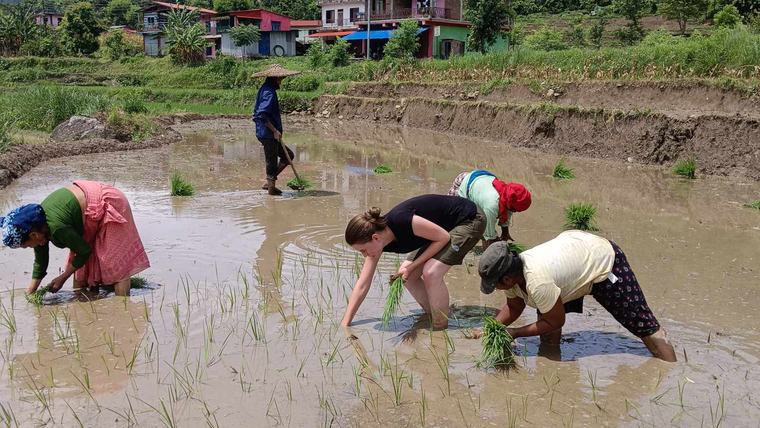
When not at school, I’m in the community talking with people about how they care for their farmland and helping with chores such as rice harvesting, watching for monkeys who try to steal crops, or goat herding. During these tasks I also have the chance to bring up topics such as ways to safe and responsible disposal of waste to improve adoption of new waste management practices.
3. What strategies have you used to integrate into your community?
Most of the integration strategies center around me being willing to try something new. I’m always eager to join in to help with chores like planting rice or shucking corn. When I first got to my village I didn’t let the language differences, and my uncertainty as I learned Nepali stop me from trying to make conversation.
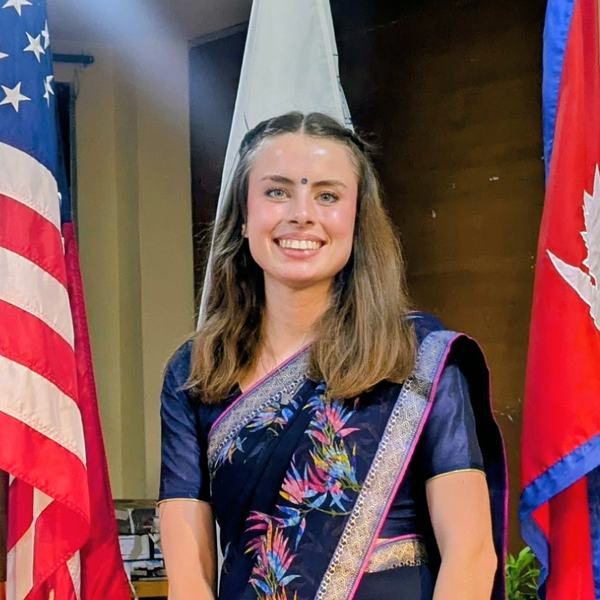
Being willing to try things, even if I would never try them in America, like learning Nepali dances or tying a sari, has been incredibly helpful, as it shows I’m at least trying to participate, even I’m not any good at what they’re trying to teach me.
I also developed really close relationships with my host family who often invite me to join them going to the shops, festivals, or meetings. As a result, I was quickly considered part of my host family because I so often attend things with my Aama (mother) or host siblings.
Finally, I visit with various community members as I take my daily walks through the village, which has helped me develop stronger relationships with people I might not otherwise see frequently or at all.
4. What is a highlight of your time in service so far?
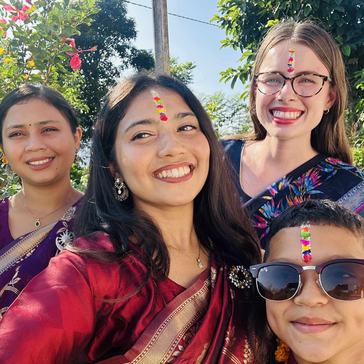
A highlight of my service so far has been celebrating holidays with my host family and community. Nepal has lots of holidays that I never knew about and getting to learn about them and celebrate with my community has been an amazing experience. Having the chance to share some of their favorite traditions, holiday memories, and foods has also given me some of my favorite memories. I’ve celebrated holidays like Nepali New Year, Teej, Dashain, and Tihar. My favorite moment was getting to participate in the last day of Tihar, known as Bhai Tika, when sisters pray for a long life for their brothers and siblings exchange a 7-color tika ornament. Celebrating Bhai Tika officially made my host brother my brother (according to my host family), which made it extra special. I felt truly connected to my host family and community.
5. What have you enjoyed most about the community where you are serving?
I have enjoyed getting to know community members and have appreciated how welcoming they’ve been as I’ve adjusted to life in the village. They’re always eager to help me learn something new, like how to plant rice, or share stories about their lives and families. I know I can always stop by the neighbor’s house to help sort beans, sit at the tea shop to talk with women in my village, or join my counterpart herding goats and always feel welcomed. Getting to join my community for everything from house chores to festival celebrations has made me feel like part of the community.
It has been a challenge both at the school and within the village to tackle long-standing issues that people have seen as overwhelming and an entrenched part of life, like plastic waste. However, it has also been amazing to see them get excited about different projects and ideas to address these concerns, like my work at the school with the children or the new garbage truck that our village recently received, which have been exciting highlights of my time in the village.
6. What are some of the most important things you’ve learned from your community?
Community members have taught me what it really means to have a village to support you; Nepal’s culture is very collectivist. Every day I’m amazed at how community members go out of their way to help and look out for each other, which has made me more aware of my own actions and ways I can help my community.
They’ve also helped me learn and embrace imperfection; they don’t mind that I don’t know the words or dance to a specific Nepali song, they’re just excited that I’m dancing with them.
We also often joke about “Nepali time,” which refers to the fact that more often than not meetings or events start much later due to a variety of factors, including logistics and different concepts of time. This often means that my Saturday morning community meetings that are scheduled for “after morning meal” have a different start time every week because everyone eats their morning meal at different times and people often walk down paths that often aren’t completely cleared. As I learn patience, I also learn to appreciate the small things in life. You don’t always have to rush to the next big thing; you can enjoy the breeze while sitting under a mango tree just as much.
7. How do you spend time when not working on a project?
When I’m not working on a project I’m often chatting with neighbors and my host family to practice my Nepali or helping the children with their English for school. I also enjoy making my host family’s favorite snacks. So far I’ve learned how to make Nepali foods like roti (flatbread) as well as a spicy snack mix called chatpate made of puffed rice, vegetables (for various vitamins and minerals), peanuts and mixed nuts (for protein), all tossed in a sour and spicy sauce. Chatpate is my current favorite food. However, I’ve also introduced a few snacks I enjoy in America like puffed rice treats, s'mores, and chips and salsa, which my host family has also really enjoyed. My community also has a gorgeous forest which I enjoy taking walking in to find interesting new landmarks. When I have a moment where I’m alone I’ve also been reading new books, especially stories that take place in Nepal.
8. What are you looking forward to in your remaining time as a Volunteer?
I’m looking forward to working with my community to fully implement usage of their new garbage truck and solid waste management plan. My village was already working on this project when I arrived, and I am so excited to support their goals and watch it come to fruition. As a Volunteer, I have the bittersweet knowledge that the impact of some of my work will only be felt after my service but with this project I can see the impact already and know it will continue to serve the community for years to come.
I also am looking forward to continuing my work at the local school, both providing environmental education and also getting to know the children more, encouraging creativity, and supporting the younger students as well as the older students I teach.
I’m also looking forward to countless more festivals and celebrations with my community and enjoying their company and friendship during my time in the village.
9. What will you do differently when you return to the U.S.?
I hope to maintain the patience I’ve been practicing and stop rushing through things as much as I used to. The collectivist culture of my village has also inspired me to be more aware of my community in the U.S. and what I can do to support them and be intentional in my relationships with the people in my life. I want to be an active participant in my community. I continue to learn plenty of recipes and try new foods that I plan to take back to America with me (e.g., Nepal’s national dish, dal bhaat (lentils and rice).
Learn more about serving as a Peace Corps Volunteer in Nepal.



