 An official website of the United States government


Featured Participant Profile
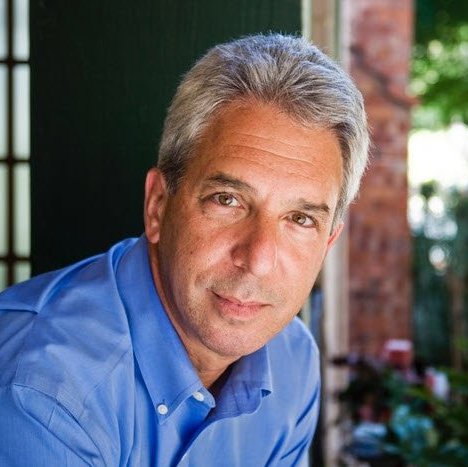
John H.
“...this re-commitment to meaningful service as a regular part of my life helps fill my week with a real sense of purpose ... I come away hoping I have made a positive difference in someone’s life, and that’s a wonderful feeling.”
1. What got you interested in the Peace Corps, specifically the Virtual Service Pilot?
My wife and I served as Peace Corps Volunteers in Costa Rica from 1995 to 1997 when we were in our mid-40s. It was an incredible experience that completely altered the trajectory of our lives and careers. Near the end of our service, as we were considering what was next, we decided to take a lesson from our Peace Corps experience and ask a different question: Rather than “what do we want to do?” we asked ourselves “how do we want to live?”
That led us to find work that was meaningful, not just financially rewarding. We eventually started a consulting company that over the past 20 years has helped hundreds of social benefit organizations increase their effectiveness and impacts. I’m now semi-retired and have been following Peace Corps Response and Virtual Service opportunities for several years, searching for an opportunity to serve again.
The idea of Virtual Service was intriguing: a relatively brief 5- to 6-month-long service commitment that did not disrupt my current projects, which involve a fair amount of travel. Being able to teach virtually made it much easier to commit to a regular schedule of volunteer work. For the VSP assignment I’m just finishing, I also had the satisfaction of supporting a project in my previous country of service that built on work I did as a Peace Corps Volunteer years ago.
2. What projects are you working on?
I’m teaching conversational English to 11th grade students in a technical high school in Costa Rica. Twice a week I have two classes of four students each. The students are studying computer technology and are all at the top of their class. They had to earn the opportunity to participate, so they never miss a class.
My counterpart in the school is wonderful and responsive and always available to help with insights about the students’ challenges and abilities.
We’ve explored dozens of topics like travel, favorite foods, music, dancing, career goals, pets, and daily life. The conversations are lively and spontaneous, often including discussion of cultural differences, and the students are especially curious about what life is like in the U.S., of which they know little.
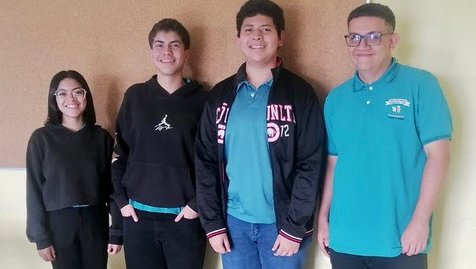
I was concerned in the beginning that lesson planning would take up a lot of time, but the reality has been that I only spend about 1-2 hours per week thinking about topics, finding resources, and adapting them. Every second week I have a one-hour check-in with my in-country Peace Corps coordinator, and I spend a few minutes just before each class to check in with my school counterpart. Except for the occasional power outage, internet connection issues, or tech problems, everything runs smoothly.
3. What is a highlight of your VSP experience so far?
Seeing the enthusiasm, engagement, and confidence of the students grow has been a highlight. They are curious, energetic, and highly committed to learning. As they’ve gotten more comfortable with me and with the virtual class, they not only help each other, but have started to facilitate the conversations themselves. For any teacher, the thrill of teaching is seeing your students take some bit of knowledge imparted and run with it.
4. What strategies have you used to meet the challenges of a short-term, remote experience?
From my original Peace Corps experience, I learned that having a good rapport with my host country counterpart would be critical for success, especially when working remotely. The in-country Peace Corps staff member did a good job of introducing us, and I made a point of having lots of casual conversations with my counterpart as we got started. For my first class, I created a slideshow with lots of pictures to share about where I live, my family, my hobbies, and my first Peace Corps service in Costa Rica.
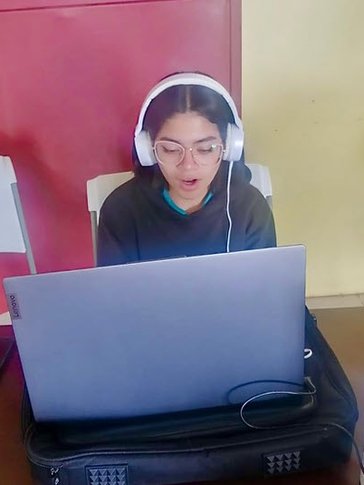
My counterpart and I set clear expectations at the start for the students’ participation and discussion. Most of our communications happen over a messaging platform. It was also important to have lesson plans that made learning fun and were varied to accommodate different learning styles. For instance, I found some clever animated videos to watch, then had each student follow a different part of the video and describe what they had seen. For another class, each group worked together to make a video about life at home, in their town, and at their school—the enthusiasm and creativity they put into it was amazing!
As the classes progressed, it was important to adapt quickly to the pace, skill levels, and interests of the students in order to keep interest high and make sure everyone was advancing. I asked my counterpart for input from students and used that information to make some changes. To measure progress, I worked with the in-country Peace Corps coordinator to design and conduct a survey at the half-way point to get feedback and suggestions from the students. That led to making the class formats more casual, more varied, and to invite input from students on topics.
5. What benefits are you gaining from your participation?
I’ve gotten energy and insights from working with people of a different age group. A first-hand look at how high school students see the world, their opportunities, and the challenges they face is both encouraging and sobering. A reminder of how much things have changed as well as how many things are shared across cultures. It’s also a great reminder of how another part of the world views the U.S.
There’s also great satisfaction from seeing the students’ increasing confidence and comfort with speaking English. They were very stiff and formal at first, but after several months their body language relaxed, they laugh and joke with each other a lot, they’re much more comfortable asking questions, and their curiosity about me is endless.
Probably the biggest personal benefit I’ve gained from the experience is the opportunity to improve and refresh my own language skills. Although my Spanish is pretty strong, I haven’t used it on a regular basis for 25 years. The classes require a lot of translating, as student vocabularies are not extensive. My counterpart speaks very little English, so it’s great for me to be able to practice my Spanish and to learn new words from the students. In return, I impressed the students with my extensive vocabulary of Costa Rican slang, which I think both inspired them and helped build trust.
6. How has your previous Peace Corps and/or professional experience influenced your VSP experience?
Having done my original Peace Corps service in Costa Rica made it easier for me to understand the cultural and situational challenges the students face. It also gave me the awareness of the importance of patience for unexpected hiccups. In the virtual setting, those challenges included variable internet connections, occasional power failures, and school scheduling issues.
My professional experience with presenting, facilitation, and strategy work in the context of business and social ventures gave me lots of ideas about how to build engaging lesson plans and make space for each student’s skill level and learning style. Being explicit from the beginning about what I expected of the students and what they could expect of me created a strong foundation for working together productively. I know that some people learn by listening, some by speaking, some need lots of repetition, others get it quickly. One initial ground rule was to keep cameras on throughout class, so I could see their body language and how they were forming words. When I saw someone struggling or dominating the conversation, I could adjust quickly. I also made sure to ask a lot of questions to encourage their thinking, rather than just doing vocabulary and pronunciation drills.
7. What will you bring away from your experience as a VSP Participant?
I expected to find the experience rewarding but have been surprised at how enriching and enjoyable the experience has been. After sitting through too many mind-numbing Zoom calls over the past 3-4 years, I was concerned that the interactions would be stiff and without the opportunity to develop rapport. Instead, I find that I look forward to each class, that the hour flies by without distraction, and I start the rest of my day with increased energy.
In addition to all that extra energy, I’ve gained new knowledge about myself and the world. Being “back” in Costa Rica has reminded me of so many of the valuable lessons I learned from my previous Volunteer experience, like how to integrate into a new community, how to deal with conflict in a culture that is very non-confrontational, the importance of language for self-expression, and how to deal productively with ambiguity. I’ve gotten a better understanding of my own strengths, as well as when and how to ask for help with the things I’m not so good at.
Perhaps most importantly, this re-commitment to meaningful service as a regular part of my life helps fill my week with a real sense of purpose. And, as with my first Peace Corps service, I come away hoping I have made a positive difference in someone’s life and that’s a wonderful feeling.



