 An official website of the United States government




Featured Volunteer Profile
Michael G.
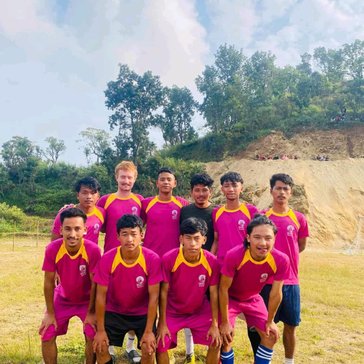
“...[N]ightly soccer matches have become a staple of my time here and the foundation of the relationships I have with friends. We’ve competed in many tournaments, and it’s been incredibly fun, competitive, and rewarding.”

1. What got you interested in the Peace Corps?
Growing up my parents always emphasized serving others, acting with compassion, and striving to do good for the sake of doing good. These values played a vital role in my decision to join the Peace Corps. I knew I wanted to serve our country but was unsure if I was prepared to serve in our armed services. I knew I wanted to learn a new language and live abroad. I also wanted to work for an organization that aligns with my values of doing good for others and working closely with beneficiaries. The Peace Corps was an obvious opportunity to fulfill this goal.
2. What projects are you working on?
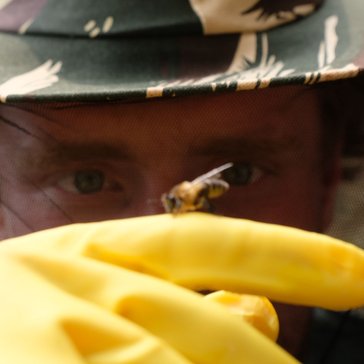
Presently, I am working on three projects. My community and I are working on a beekeeping program to promote modern beekeeping practices, distribute beekeeping materials and supplies, and strengthen community-wide capacity to use beekeeping as an income-generating activity. I am very excited about this project because local lead farmers and my counterparts have prioritized training for local youth in order to foster empowerment and entrepreneurship. Additionally, my community and I have created an agricultural cooperative to help found and manage a coffee and tea plantation. Lastly, I started a strawberry and blackberry garden and nursery to promote berry cultivation community-wide, with the hopes that community members integrate berries into their diet to promote greater dietary diversity—with the added benefit of potentially being among the first local commercial berry producers.
3. What strategies have you used to integrate into your community?
There’s no true recipe for successful integration. However, learning to be uncomfortable and not worrying about making little mistakes, particularly with language, has served me very well. It can be so easy to stay in your comfort zone and not take a chance or risk making a silly mistake, but every time I have, it’s paid off. It can be daunting to approach a stranger and speak their native tongue, having just learned it, but I have always been met with caring eyes and earnest attempts to understand and communicate. Saying “yes” to participating in community events, whether it is a funeral, wedding, planting activity, or local holiday, shows I am invested and care for the community! Daily walks, playing soccer with folks my age, and rarely saying “no” to the small adventures have all been recipes for a fruitful integration into my community.
4. What is a highlight of your time in service so far?
It’s difficult to identify just one highlight of my time in service so far; I find that the fondest memories I have stem from the simplest and even mundane moments. I have developed strong friendships and relationships with my community members, fellow Volunteers, and have enjoyed fleeting encounters with strangers on long bus rides. Hearing my Nepali name shouted from some distant hilltop, the welcoming reactions of students and teachers when I help with English lessons and our English club at school, or simply being called “babu” (male child) or “solthi” (brother-in-law) by my community members are moments that that remind me of the friendships I have and belonging I feel within my community!
That being said, nightly soccer matches with friends in my community are an enormous highlight! I played soccer in a tournament during a visit to my permanent site, one month prior to moving there, and we ended up winning the championship. That was an introduction to those who would become my counterparts, friends, and community members. Since then, nightly soccer matches have become a staple of my time here and the foundation of the relationships I have with friends. We’ve competed in many tournaments, and it’s been incredibly fun, competitive, and rewarding.
5. What have you enjoyed most about the community where you are serving?
The great relationship I have with my host family is what I enjoy most. I have a large host family and large extended host family in the community, all of whom have taken it upon themselves to develop strong relationships with me. Being acknowledged as one of my host mother’s sons, as my nephews’ uncle, and as a brother has been a pinnacle of my experience in the Peace Corps thus far. To hear my Nepali Aama (mother) refer to me as her “chhora” (son) to her friends always makes me happy, knowing that I have forged a family thousands of miles from my home and loved ones back in the States.
6. What are some of the most important things you’ve learned from your community?
In my community, and in Nepal, there’s a heavy emphasis on fellow community members coming together to accomplish tasks. Whether that be in the rice and millet fields, helping neighbors plant fruit trees, or looking after the elderly, community members always look after one another. While this is not uncommon in the States or elsewhere, this attitude runs deep in Nepali society. The “aphno manche (my people)” culture, as it’s called, encourages each member of a community to meaningfully engage with others, for the sake of reciprocity, a sense of obligation to the larger group, and the shared understanding that helping one another yields greater results. This value allows every community member to have access to resources and opportunities, and participate in a shared development beyond the individual level. There’s an immense amount of power in people coming together and seeking the same objective, knowing there’s a cadre of support in their neighbors and friends.
7. How do you spend time when not working on a project?
I enjoy reading, journaling, talking to my friends at site and at home, and exercising. I like to do things that are enriching for my mind and body and find a lot of solace in these activities. Going for long walks or runs has been a source of great joy and fulfills my sense of adventure when I am not working on a project.
I have picked up gardening in Nepal. I have a nice strawberry and blackberry garden that I really enjoy working on. It’s been enormously rewarding to garden and teach myself a new skill. It’s also nice to bring fresh fruits home for my host family and neighbors!
8. What are you looking forward to in your remaining time as a Volunteer?
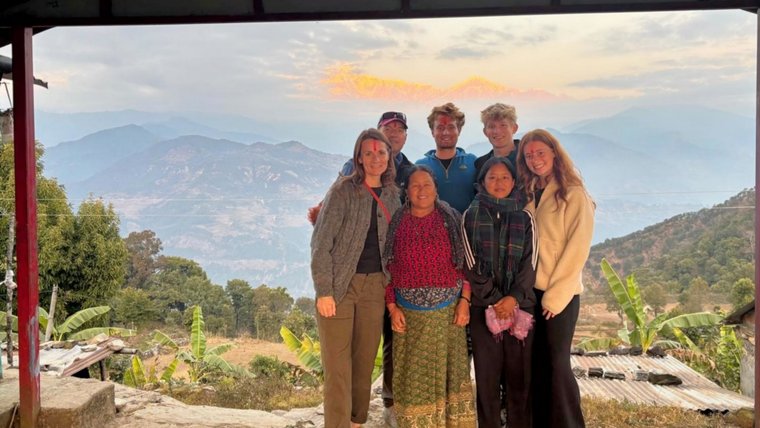
I am looking forward to quite a lot in my remaining time as a Volunteer. One of the simplest things I am looking forward to is the post-monsoon views of the Himals (Himalayan mountains). Like many villages around Nepal, my community is flanked by some of the largest mountains in the world. When I step out of my room and onto the porch, they are always a sight to behold. Words and pictures fail to depict the Himalayas in a way that does them any justice. I’ve yet to grow accustomed to seeing them in their full glory, right from home!
9. What will you do differently when you return to the U.S.?
I plan on gardening and beekeeping when I return to the States! I didn’t have a garden or beehive of my own back home but presently have a nice strawberry garden on my host family’s land that I continue to develop and improve. While the garden has project-based aims, it has been enormously rewarding and very fun to maintain and work on. Gardening and beekeeping have been an exceptional source of stillness and presence during my time in Nepal thus far. I feel that bringing these skills I am learning back home will enable me to find moments of stillness in a faster-paced lifestyle and give me an excuse to get outside.
Learn more about serving as a Peace Corps Volunteer in Nepal



