 An official website of the United States government




Featured Volunteer Profile
Teresa C.
“The most important thing I have learned is to slow down. Life in the countryside will teach you that your worth is not tied to your productivity.”
1. What got you interested in the Peace Corps?
I was reading a book that casually mentioned the Peace Corps. I had no knowledge of what the Peace Corps was, but something about it was interesting to me, so I did a quick Google search and decided to apply. I was always fascinated with working abroad and working with youth abroad especially piqued my interest. It was only after I applied that I learned my father had an impactful experience with a Peace Corps Volunteer in his home country, the Dominican Republic. He was excited to support me on this new journey, knowing that I may make an impact the way someone once did for him.
2. What projects are you working on?
I have been working in a school and in the community, creating opportunities for youth to express themselves creatively. A project I recently collaborated on was a sports camp featuring volleyball, softball, and soccer. Each sport focused on different life skills, such as teamwork, conflict resolution, and communication. The hope is that this project grows into a space for youth to express themselves and also be more involved in their community.
3. What strategies have you used to integrate into your community?
I think the most important thing is to have an open mind. I find the most connections I have made have been through shared meals and leading with curiosity. I like to ask questions about traditions or culture and let locals teach me about their everyday customs. I am an observer first, learning from my community.
4. What is a highlight of your time in service so far?
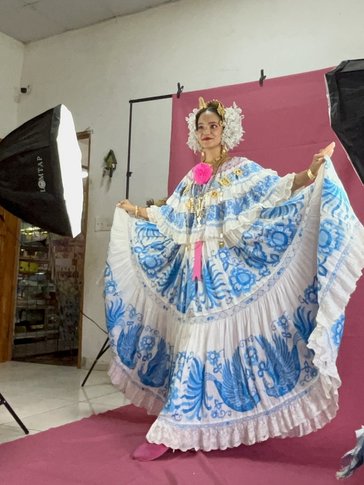
My highlight so far has to be dressing up in a traditional “pollera” or gown for my birthday. As I was dressed in this formal traditional gown I was taught about each individual piece and its cultural significance. I feel like it brought me so much closer to my community and made me feel welcomed and honored that they allowed me to participate in their world in this way. The biggest impacts on me have been the small gestures that show people’s gratitude, and the friendships I am making along the way.
5. What have you enjoyed most about the community where you are serving?
The thing I enjoy most about my community is the sense of family. I have been welcomed to eat at many tables (or hammocks) and been welcomed as a member of the family. I walk down the street and something as simple as a greeting brightens my day. It is the sense that I really have people who care for me and the work I am doing just as much as I care for them.
6. What are some of the most important things you’ve learned from your community?
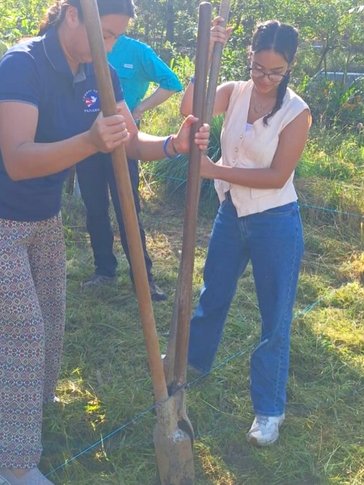
The most important thing I have learned is to slow down. Life in the countryside will teach you that your worth is not tied to your productivity. There is beauty in a slow life, and you learn to not take things for granted. The biggest thing I’ve learned is to be an active listener, and to examine how I show up for those I care about.
7. How do you spend time when you are not working on a project?
I like to spend time at the park sharing a snack or a soda with the kids. Engaging them with a soccer ball was a great way to build connection with them. I get to learn how to play and they get to know me more and build that mentor connection with me.
8. What are you looking forward to in your remaining time as a Volunteer?
I look forward to completing more projects and collaborating with more community members. It will be nice to see that I am leaving an impact on my community. I am enjoying every minute because two years flies by fast!
9. Once you finish service, what will you do differently when you return to the U.S.?
I will do everything differently. This experience has changed me for the better. I have made unforgettable connections and most importantly I have seen changes and growth in myself and my mindset. I will learn to slow down and enjoy the little things in life.



