An official website of the United States government

Official websites use .gov
A
.gov website belongs to an official government
organization in the United States.

Secure .gov websites use HTTPS
A
lock (
) or https:// means you’ve safely connected to
the .gov website. Share sensitive information only on official,
secure websites.

Search
Connect with the Peace Corps
If you're ready for something bigger, we have a place where you belong.
Apply to the Peace Corps
The application process begins by selecting a service model and finding an open position.

Let us help you find the right position.
If you are flexible in where you serve for the two-year Peace Corps Volunteer program, our experts can match you with a position and country based on your experience and preferences.
Serve where you’re needed mostAgriculture and Nutrition Coordinator
 Agriculture
Job highlights
- Gain Nepali language skills and agricultural experience with the country’s sustainable, integrated practices.
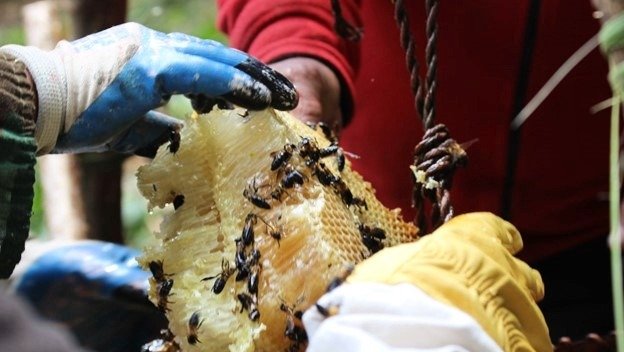
- Learn to live with pollinating bees, grow more food, and diversify your diet.
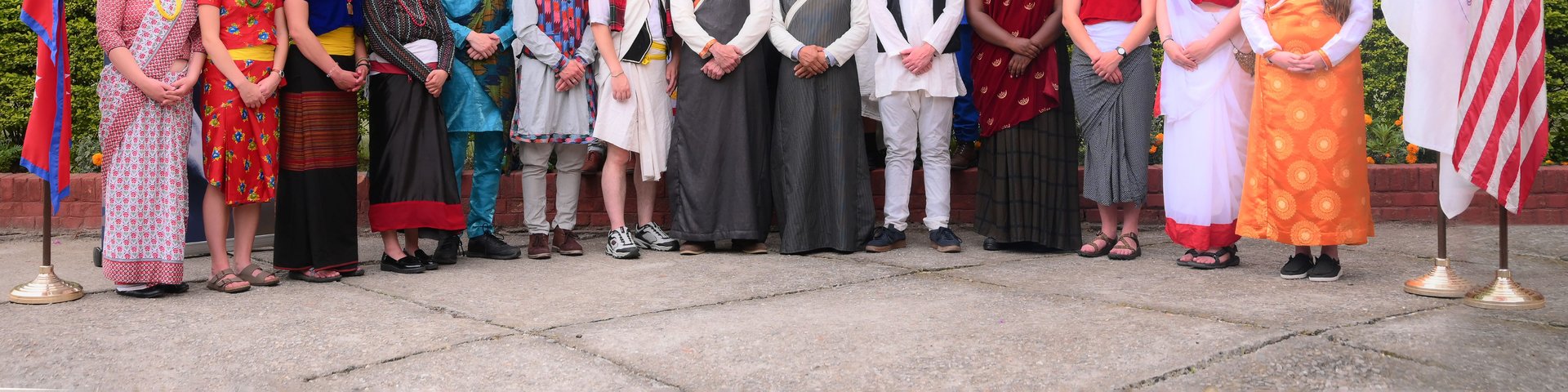
- Discover the diverse traditions of over 80 ethnic groups who call Nepal home.
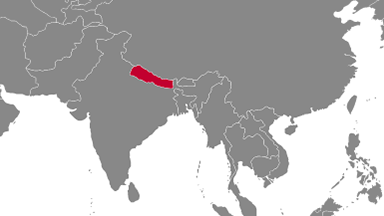
Nepal • Asia
In partnership with: Smallholder farmers and the local school
Applications are now closed. View current openings.
Apply by
June 15, 2026Know by
August 1, 2026Depart on
January 14, 2027Duration
2 years, plus 3 months trainingAbout the project
Are you a passionate gardener or beekeeper? Communities in Nepal are seeking support to promote agricultural diversification for improved nutrition.
More than 65% of Nepal’s population depends on agriculture for their livelihoods, yet the country faces a severe food deficit, with more than half of its districts facing food insecurity. Stagnant agricultural production and population growth have contributed to an increase in widespread hunger and malnutrition. In fact, nearly one-third of Nepali children under the age of 5 are experiencing forms of malnutrition. While Nepal’s diverse agroecological landscape offers promising opportunities, unpredictable but frequent environmental shocks and stresses, labor outmigration, soil degradation, and pollution challenges persist. Moreover, limited commercialization and agricultural extension support have led to low productivity and profitability from farming. The government is committed to doubling the number of fruit trees across the country over the next five years, engaging rural farmers in the organic farming business, and implementing a “food for healthy life” campaign at the grassroots level.
As an Agriculture and Nutrition Coordinator, you will collaborate with the local community to apply efficient technologies that enhance production of diverse, nutrient-dense crops.
Your contribution will increase the number of rural, smallholder farmers to achieve sustainable food, nutrition, and livelihood. You will also increase the youth’s knowledge of sound agriculture and nutrition practices.
Learn more about what Volunteers do in country by visiting our Nepal project page.
Required skills
Qualified candidates will have one or more of the following criteria:
Bachelor's degree in any field.
Language: There are no pre-requisite language requirements for this position.
Required behavioral competencies
These competencies are essential for all service assignments and are assessed in the application and interview process:
Motivation for and commitment to service
Adaptability and open-mindedness
Problem solving and resourcefulness
Behavioral maturity and professionalism

Photos from Nepal



How you and the community will make an impact together:
Train smallholder farming families in fruit and nut tree cultivation, supporting them to establish small-scale, diversified fruit tree orchards.
Coach farming families to cultivate high-value/low-volume crops, such as ginger, turmeric, and mushrooms.
Provide training on beekeeping and support families to establish improved beehives.
Conducting one-on-one training for women of reproductive age and/or key household decision-makers on cooking nutrient-rich recipes.
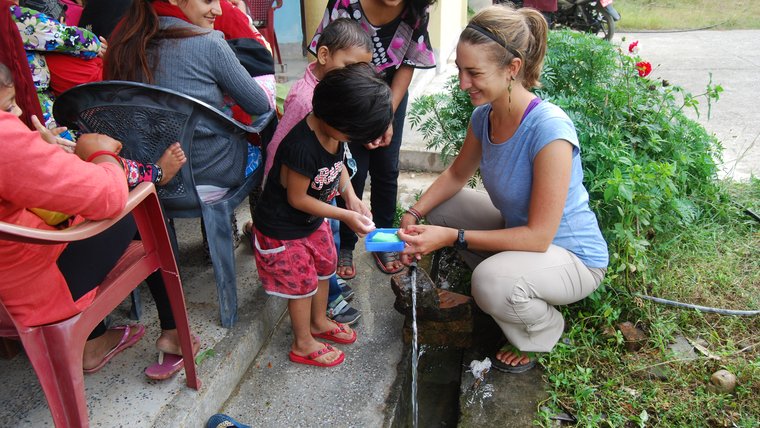
Support school-based programming to enhance student knowledge and skills in gardening and nutrition.
You may also work on additional projects that meet the community’s interests and priorities, such as constructing potato storage structures or supporting a menstrual health and menopause awareness campaign in the community.
Volunteers will live in Bagmati, Lumbini, Gandaki and Kashi provinces with a host family but can expect a private room. Volunteers usually walk several miles every day on hilly terrain to work in both hot and cold weather, as well as during the monsoon season from June through September.
Learn more about the living conditions, including detailed information on culture, communications, housing, and health/crime statistics on our Nepal country page. You can also delve into stories about local communities by reading our blog or Volunteer stories.
Meet a Volunteer in Nepal
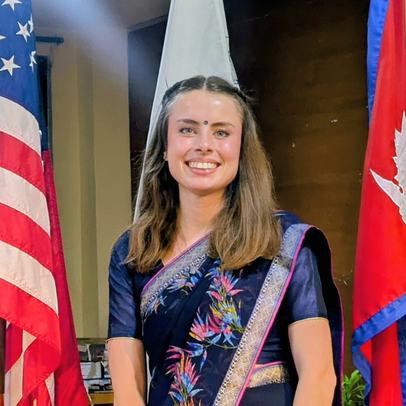
Shay K.
Community Forest and Environmental Advocate
"I know I can always stop by the neighbor’s house to help sort beans, sit at the tea shop to talk with women in my village, or join my counterpart herding goats and always feel welcomed."
See full Volunteer profile
As an Agriculture and Nutrition Coordinator, you will be trained on cultivation practices and the basics of beekeeping. Peace Corps/Nepal will teach you Nepali to help you comfortably live in and connect with the community. You will also receive language resources to learn key phrases of a local language used in your assigned community.
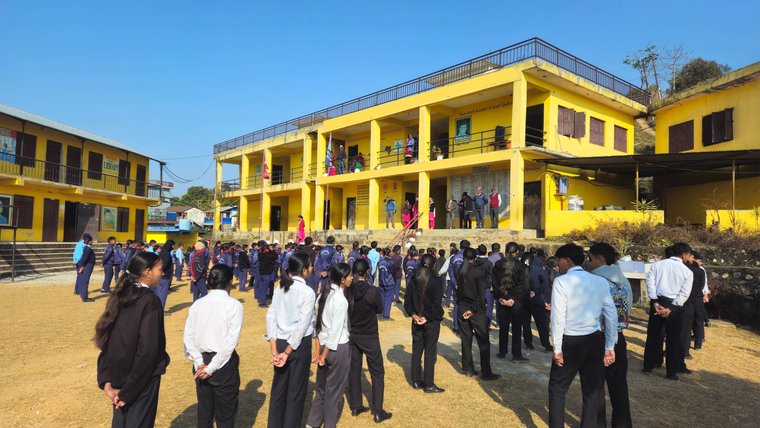
After 10 weeks of training, you will move to a small rural community where you will collaborate with smallholder farmers and the local school. You will work with the community to assess the local needs and develop solutions based on improved agricultural management practices, technologies, and dietary guidelines.
Only heterosexual couples can be accepted for this program. Each person must apply separately and must qualify for a position in either the same or a different sector than their partner. Couples will live together during training but may separate occasionally for field-based activities. Couples who are selected for the same sector will live together but work with different local partners which may be in the same community or in neighboring communities (not more than 30 minutes apart). Cohabitating couples are highly encouraged to present themselves as married throughout service due to cultural expectations.
To learn more about serving as a couple in Nepal, visit the country page.
Application process
From application to departure takes around nine months. Learn about the application process for Volunteer opportunities.
Medical/legal clearance
You will need to be cleared medically and legally in order to serve in Nepal. Review information on medical clearance and legal clearance to learn about the process.