An official website of the United States government

Official websites use .gov
A
.gov website belongs to an official government
organization in the United States.

Secure .gov websites use HTTPS
A
lock (
) or https:// means you’ve safely connected to
the .gov website. Share sensitive information only on official,
secure websites.

Search
Connect with the Peace Corps
If you're ready for something bigger, we have a place where you belong.
Apply to the Peace Corps
The application process begins by selecting a service model and finding an open position.
Let us help you find the right position.
If you are flexible in where you serve for the two-year Peace Corps Volunteer program, our experts can match you with a position and country based on your experience and preferences.
Serve where you’re needed mostScience Teacher
 Education
Job highlights
- Learn Kiswahili, a language spoken by 200 million people across East Africa, from dedicated Language and Cross-Culture Facilitators
- Receive training to effectively manage large classrooms and teach internationally
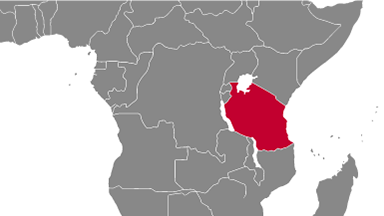
- Gain a deeper understanding of the 120 ethnic groups that call Tanzania home
Applications are now closed. View current openings.
Apply by
March 15, 2026Know by
May 1, 2026Depart on
September 4, 2026Duration
2 years, plus 3 months trainingAbout the project
Do you have a desire to spark a love of science in today’s youth? Secondary schools in Tanzania have a place for you.
Tanzania has a significant need for teachers at rural schools, particularly in math and science. The Government of Tanzania’s Ministry of Education recognizes the need for students to develop skills in these subjects to support the development of problem-solving skills both in and out of the classroom. However, the government has recently faced challenges in employing civil servants, including STEM teachers, due to its limited budget; a lack of immediate replacements when teachers retire; some teachers choosing to leave the profession to look for more lucrative opportunities; and a low output of science, technology, engineering, and math (STEM) teachers at universities due to few students studying STEM subjects in secondary school.
As a Science Teacher, you will teach general science, chemistry, biology, and physics to large classrooms of students, ages 12 to 20. Alongside school staff, you will strengthen the capacity of local teachers to teach science subjects.
Learn more about what Volunteers do in country by visiting our Tanzania project page.
Required skills
Qualified candidates will have one or more of the following criteria:
Competitive candidates will have one or more of the following criteria:
• Bachelor of Arts/Bachelor of Science degree in Secondary Education with concentration in any science
OR
• Bachelor of Arts/Bachelor of Science degree in any discipline with secondary certification in science
OR
• Bachelor of Arts/Bachelor of Science degree in General Science, Biology, Chemistry, Physics, or Engineering
OR
• Bachelor of Arts/Bachelor of Science degree in any physical science or any biological science or equivalent
OR
• Bachelor of Arts/Bachelor of Science degree in any discipline with a minor or equivalent (15 semester/22 quarter hours) in Biology, Chemistry, or Physics
Language: There are no pre-requisite language requirements for this position.
Required behavioral competencies
These competencies are essential for all service assignments and are assessed in the application and interview process:
Motivation for and commitment to service
Adaptability and open-mindedness
Problem solving and resourcefulness
Behavioral maturity and professionalism

Photos from Tanzania



How you and the community will make an impact together:
Prepare lesson plans and teach science using a variety of engaging student‑centered methods.
Design sustainable learning aids using locally available materials.
Organize experiential learning activities, such as field trips or guest speakers.- Support remedial groups and after-school tutoring.
Develop and participate in communities of practice with local educators.
Organize learning opportunities outside the classroom, such as science fairs.
You may also work on additional projects that meet the community’s interests and priorities, such as youth life skills camps and HIV prevention outreach.
Volunteers will live in rural communities within Peace Corps/Tanzania’s current regions of operation: Dodoma, Iringa, Kilimanjaro, Njombe, Tanga, and the island of Zanzibar. Volunteers are just a few hours away from small- to mid-size towns with banks, a variety of shops, markets, local restaurants, and guesthouses. Most Volunteers are housed on the school compound, while others are housed in the village within walking or biking distance to their assigned school. Access to and/or consistency of electricity and running water in homes is not a guarantee.
Learn more about the living conditions, including detailed information on culture, communications, housing, and health/crime statistics on our Tanzania country page. You can also delve into stories about local communities by reading our blog or Volunteer stories.
Meet a Volunteer in Tanzania
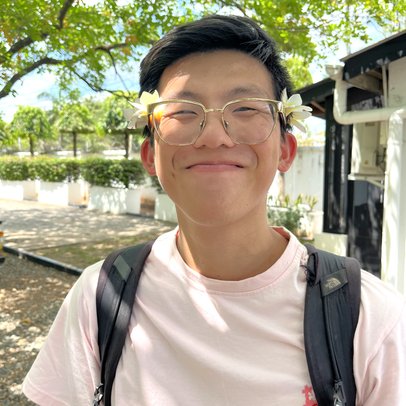
Andy C.
Secondary Math Teacher
"I was constantly amazed by the creativity and resourcefulness of the Tanzanian people around me—repairing instead of replacing, repurposing instead of discarding, and finding solutions with what’s available."
See full Volunteer profile
As a Science Teacher, you will be trained on the local curriculum, lesson planning techniques, classroom management practices, and national assessments. Peace Corps/Tanzania will train you in Kiswahili to help you live comfortably in and connect with the community.
After 10 weeks of training, you will move to a rural community where you will collaborate with local educators and school staff to assess needs and develop solutions based on available resources.
Only heterosexual couples can be accepted for this program. Each person must apply separately and must qualify for a position in either the same or a different sector than their partner. Couples will live together during training but may separate occasionally for field-based activities. Couples who are selected for the same sector will live together but work with different local partners which may be in the same community or in neighboring communities (not more than 30 minutes apart). Cohabitating couples are highly encouraged to present themselves as married throughout service due to cultural expectations.
To learn more about serving as a couple in Tanzania, visit the country page.
Application process
From application to departure takes around nine months. Learn about the application process for Volunteer opportunities.
Medical/legal clearance
You will need to be cleared medically and legally in order to serve in Tanzania. Review information on medical clearance and legal clearance to learn about the process.