An official website of the United States government




Sharing the sky: A talk with Peace Corps counterpart Dr. Jiwaji
They wanted to connect with us.
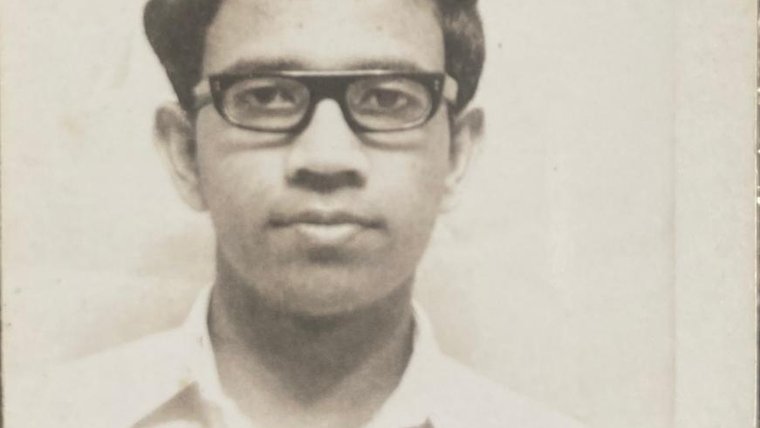
Dr. Noorali Tayabali Jiwaji has a habit of looking up. As a retired physics professor and current astronomer, he’s long been fascinated with the way things work and what the cosmos can teach us. Currently, he works as a physics and astronomy consultant for the Open University of Tanzania and is the founding member and chairman of the Astronomy and Space Science Association of Tanzania.
He discussed his work and his passion for the stars with Eloise, who met him through her work in Tanzania, where she is an Education Volunteer. When Eloise asks Dr. Jiwaji about his early influences and the seed of his later interests, it doesn’t take long for him to mention that in secondary school he had two Peace Corps teachers.
“I was always a good student,” Dr. Jiwaji says, “but I was certainly influenced by Mr. Doucet, the Peace Corps Volunteer who taught physics and Mr. Burger, who taught biology, both in 1966 and 1967.”
Both were teachers in Dr. Jiwaji’s secondary school and impacted him far beyond sparking an interest in science.
“The Volunteer teachers wanted to connect with the students. They were interested in us, and we were interested in them. Mr. Doucet had an interest in photography and set up a photo club where he’d teach us the basics of photography—how to frame an image, how to develop the film in the dark room and how to use an enlarger to process photos.”
Dr. Jiwaji shakes his head and laughs before adding, “Mr. Doucet also taught us to drink coffee. Tea was normal for us, but the Volunteers would have groups of students over to talk and drink coffee.”
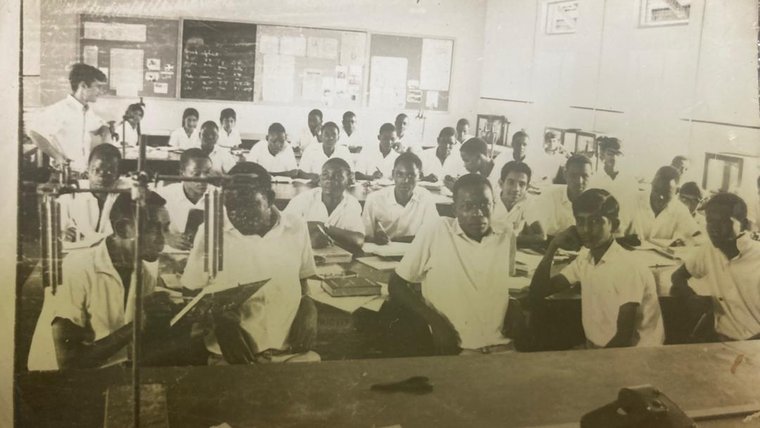
After leaving secondary school, Dr. Jiwaji attended the University of Dar es Salaam, where he studied physics and education. Later, he became a teaching assistant and notes that his interest in teaching was also inspired by his Peace Corps teachers.
“They were Volunteers who came to Tanzania just to teach us. They gave me the desire to also pass on knowledge to others. Just like they did.”
Dr. Jiwaji goes on to emphasize the importance of international STEM (science, technology, engineering and math) teachers in Tanzania, “STEM is not well developed in Tanzania and increasing the interest in STEM is important at all levels of education in Tanzania.”
When asked what he’d say to Tanzanian youth interested in the STEM subjects, he says, “be ready to truly understand. Don’t just memorize facts, ask questions. If you can’t ask good questions, you don’t really understand.”
When asked what he’d like to say to his old Peace Corps teachers, the Doctor’s voice softens. “I remember everything about them—their closeness to our school, their humanity, and their willingness to make sure everyone understood.”
As the Peace Corps celebrates its 65th anniversary, it’s worth celebrating the legacy of knowledge, inspiration, and humanity that Peace Corps teachers hand off to the people they interact with in their host countries. Dr. Jiwaji is a remarkable example.