An official website of the United States government

Official websites use .gov
A
.gov website belongs to an official government
organization in the United States.

Secure .gov websites use HTTPS
A
lock (
) or https:// means you’ve safely connected to
the .gov website. Share sensitive information only on official,
secure websites.

Search
Connect with the Peace Corps
If you're ready for something bigger, we have a place where you belong.
Apply to the Peace Corps
The application process begins by selecting a service model and finding an open position.
Let us help you find the right position.
If you are flexible in where you serve for the two-year Peace Corps Volunteer program, our experts can match you with a position and country based on your experience and preferences.
Serve where you’re needed mostCommunity Health Educator
 Health
Job highlights
Applications are now closed. View current openings.
Apply by
January 1, 2026Know by
May 1, 2026Depart on
September 4, 2026Duration
2 years, plus 3 months trainingAbout the project
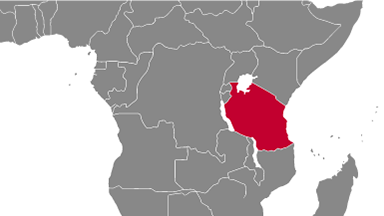
Karibu Tanzania! Present since 1961, Peace Corps Tanzania is one of Peace Corps’ oldest programs. Community Health Educators support, complement and enhance existing community health services in rural areas. They co-facilitate community mobilization and the training and capacity building of People Living with HIV (PLHIV), caregivers of under-five children and pregnant women. They promote good health and nutrition for pregnant/lactating mothers, infants, and young children.
Peace Corps Volunteers (PCVs) work with local health facilities, community groups and schools. Project interventions focus on lifesaving activities including care and support for PLHIV, maternal and child nutrition, water, sanitation and hygiene, and prevention of malaria and other common childhood diseases.
Peace Corps Tanzania promotes women and girls’ empowerment. During service, Volunteers look for ways to work with community members to promote women’s empowerment and they report on these activities and results achieved.
Volunteers always work in partnership with community leaders and community members. They collaboratively assess local knowledge, resources and needs in order to determine the best and most appropriate interventions and to select sustainable projects to undertake during their two-year service.
Examples of Volunteer activities include but are not limited to:
Conducting sessions with community groups addressing common health issues.
Working with peer educators to commemorate global days (i.e. Malaria Day, World AIDS Day).
Working with health teachers to conduct health education lessons at local schools.
Hosting youth clubs at local schools (i.e. health club, gardening club etc.).
Designing and developing inexpensive instructional materials (i.e. health murals).
In collaboration with a community counterpart, Volunteers also undertake secondary projects that address additional community needs. Examples of secondary projects include working with PLHIV on income generating projects, promoting healthy behaviors through sports for boys and girls, improving school or health center facilities, supporting rainwater catchment projects, rehabilitating latrines, and/or working on local capacity building projects.
While much of the work takes place during weekday daytime hours, some activities, particularly in the community, may occur on weekends. Key dates such as the International Malaria Day and World AIDS Day are opportunities to implement social-mobilization activities, and many Volunteers work with their village government to prepare community-wide awareness events. Volunteer integration in the community is a critical component of Peace Corps service, as is being present in the community, building trust, and developing relationships with neighbors and key community members, such as teachers and religious leaders.
Important note: all Peace Corps Volunteers, regardless of sector, are expected to implement life-saving HIV treatment services under the U.S. President’s Emergency Plan for AIDS Relief (PEPFAR) waiver. These activities include much of what is listed above, but here is the list of areas included under the waiver for Peace Corps Tanzania:
Education sessions with People Living with HIV (PLHIV), including children and adolescents and their parents/caregivers, on:
Nutrition and well-being
Positive living (healthy relationships and other life skills)
Antiretroviral therapy (ART) adherence
Disclosure or bereavement support
Psychosocial support, including resilience
Working with community health workers (CHW) to visit homes of PLHIV.
Demand creation for HIV testing for targeted populations (individuals with TB, pregnant women and partners of HIV+ individuals), with provision of or referral to HIV testing services.
Provide education on Prevention of Mother to Child Transmission (PMTCT).
Home visits: Supporting Community Health Workers (CHWs) for home visits/adherence with PLHIV.
Learn more about what Volunteers do in country by visiting our Tanzania project page.
Required skills
Qualified candidates will have one or more of the following criteria:
Qualified candidates will have a degree in the health or social science sector. Eligible degrees include the following:
Nutrition
Psychology
Sociology
Social Welfare (Social Work)
Environmental Health and/or Water and Sanitation
Health Promotion
Public Health or Community Health
Community Development
Biology
Physiology
Occupational therapy
Physical health / Exercise science
Community Medicine
Medical Doctor
Nurse or midwife (associate's degree)
Community nurse (associate's degree)
Or
any degree that includes health courses
Language: There are no pre-requisite language requirements for this position.
Required behavioral competencies
These competencies are essential for all service assignments and are assessed in the application and interview process:
Motivation for and commitment to service
Adaptability and open-mindedness
Problem solving and resourcefulness
Behavioral maturity and professionalism

Photos from Tanzania



How you and the community will make an impact together:
Tanzania has a diverse geography and climate. It can be hot and dry in central Tanzania, hot and humid in coastal areas, and the highland and mountainous areas have cool to cold temperatures seasonally.
During the hottest months (November-February) temperatures in the lowlands range from 90-105 °F, and 70-80 °F in the highlands. During the cold season (June-August), temperatures range from 60-75 °F in the lowlands and coast, and from 40-50 °F in the highlands. There are short rains in November or December and longer rains between March and May.
Volunteers are placed primarily in underserved rural communities. These communities can be within a few hours of small to mid-size towns, with banks, a variety of shops, markets, local restaurants, and guesthouses. Travel to Dar es Salaam can take anywhere from five hours to three days by road. Volunteers generally use public buses as the main mode of transportation.
The host village provides Volunteer housing. It is typically a stand-alone house. Volunteers may use pit latrines, outdoor bath facilities, and fetch water from a village water source, or they may have a toilet and bath facility in their house with running water, depending on the community. Access to and/or consistency of electricity and running water in one’s home is not a guarantee. Volunteer housing is assessed to meet agency safety, security, and health requirements. In all circumstances, Volunteers will want to learn and exercise the core competencies: adaptability and flexible thinking, emotional agility, and problem solving in response to the inevitable challenges of living in a new environment.
Personal appearance is of great importance in Tanzania. Female Volunteers are expected to wear modest dresses and long skirts (with covered knees, upper arms, and shoulders) and nice flat shoes or sandals. In Zanzibar or in other coastal Muslim communities, females tend to be more accepted when they cover their heads, which is the custom for women in those communities. When exercising, females should wear a sarong or cloth tied over shorts or yoga pants. Male Volunteers should wear slacks, collared shirts, and loafers or other closed toed shoes when presenting themselves professionally. A Volunteer’s professional appearance, work habits, and positive attitude towards colleagues and community members will go a long way towards helping them gain the respect of their community.
Volunteers may witness variations in dress among locals. What’s stated here is the traditional, most widely accepted forms of dress and it is the expectation during Pre-Service Training (PST) and likely throughout service. You should think of your presentation and dress as an important tool to facilitate your integration into the communities where you will serve, especially at times when your local knowledge and language are just beginning to build. Volunteers will learn and practice the core competencies of intercultural engagement and Volunteer accountability by adhering to dress code norms.
Volunteers will encounter different social and cultural norms that require flexibility and understanding. For example, the American sense of privacy in terms of information sharing or physical space does not exist in Tanzania. Volunteers are frequently asked personal questions and people will wonder why a Volunteer might want quiet moments alone. As a foreigner, there is also the added element of curiosity from children as well as adults.
Peace Corps provides a settling-in allowance that can be used to purchase furnishings necessary to make Volunteer houses comfortable on a modest scale. Volunteers get a stipend to purchase a bike to assist in their work activities and to make transportation easier.
Feminine hygiene products are provided to Volunteers via the Peace Corps Medical Office or through an allowance where Volunteers purchase them on their own. Those products may not be the same variety or brands that would be purchased in the U.S.
Learn more about the living conditions, including detailed information on culture, communications, housing, and health/crime statistics on our Tanzania country page. You can also delve into stories about local communities by reading our blog or Volunteer stories.
Meet a Volunteer in Tanzania
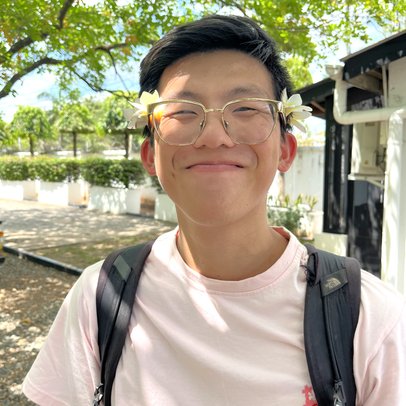
Andy C.
Secondary Math Teacher
"I was constantly amazed by the creativity and resourcefulness of the Tanzanian people around me—repairing instead of replacing, repurposing instead of discarding, and finding solutions with what’s available."
See full Volunteer profile
Only heterosexual couples can be accepted for this program. Each person must apply separately and must qualify for a position in either the same or a different sector than their partner. Couples will live together during training but may separate occasionally for field-based activities. Couples who are selected for the same sector will live together but work with different local partners which may be in the same community or in neighboring communities (not more than 30 minutes apart). Cohabitating couples are highly encouraged to present themselves as married throughout service due to cultural expectations.
To learn more about serving as a couple in Tanzania, visit the country page.
Application process
From application to departure takes around nine months. Learn about the application process for Volunteer opportunities.
Medical/legal clearance
You will need to be cleared medically and legally in order to serve in Tanzania. Review information on medical clearance and legal clearance to learn about the process.