 An official website of the United States government


Packing Guidance for Indonesia
This guidance is designed to describe appropriate clothing, the cultural context where you will be living and working, and the professional expectations of your workplace.
As you decide what to bring, keep in mind that you are authorized two pieces of checked baggage, with a combined weight of up to 100 pounds, regardless of what the airline allows. Neither bag can weigh more than 50 pounds; if a single bag exceeds 50 pounds, you will have to pay the extra weight charges. Trainees will be reimbursed at post for baggage charges with proper receipts.
In general, most items you will need are available in country and locally acquired items are often the best at helping you integrate into your community. However, locally available items may not be the brands, quality, prices, or sizes you are used to. Bringing some key items from home might make your transition to service more comfortable.
This guidance has been compiled by Peace Corps staff and Volunteers and is based on their experience. Use this information as an informal guide as you make your own packing list, bearing in mind that each experience is individual. There is no perfect packing list!
This packing guidance is designed to help you think through different categories of items and consider what you might want to bring, considering work expectations, cultural considerations, and your own personal preferences.
Indonesia is a tropical country with consistently hot and humid conditions across most regions, including both the pre‑service training (PST) site and most permanent sites. You will arrive near the end of the dry season and can expect the return of rain as PST progresses.
During the rainy season in Java, daytime temperatures typically range from the high 80s to low 90s (°F), with nighttime temperatures dipping into the low 80s. On particularly hot days, temperatures can reach 100 °F. Humidity remains high throughout the day, and heavy afternoon rain showers are common.
To stay comfortable, you’ll appreciate having a light rain jacket or poncho, sunglasses, a hat, and an umbrella. These items will help you manage both the heat and sudden rainstorms as you settle into daily life.
Peace Corps Indonesia provides the following items:
- Plain scarf
- Bicycles (after PST)
- Bike helmets (PST)
- Life vest (PST)
- Water filters for PCVs assigned in East Nusa Tenggara (PST)
- Libraries of work-related books and novels to borrow
- Mosquito nets
Peace Corps staff will set up bank accounts and debit cards for each Trainee. Allowances will be deposited directly into these accounts, which you will access by debit card.
Peace Corps Indonesia provides allowances such as:
- Phone and bank fee allowance (during PST)
- Settling-in allowance (in-service)
- Living allowance (in-service)
- Additional allowances (in-country travel, ground transportation, lodging, per diem, and leave allowance) (in-service)
Peace Corps Volunteers are not allowed to take:
- Pets
- Weapons
- Explosives
- Radio transmitters (shortwave radios are permitted)
- Drones
- Automobiles or motorcycles
- Flammable materials or liquids such as lighter fluid, cleaning solvents, hair spray, or aerosol containers
- Valuables such as precious jewelry or family heirlooms
Drugs
Do not bring any drug that has not been authorized by the Peace Corps for medical purposes without prior consultation with Office of Health Services Pre-Service. This includes prescription and over-the-counter drugs. Illicit drugs, including marijuana and related products such as CBD and herbal substances such as kratom, are prohibited during Peace Corps service, even if they are legal in your home of residence. If you use, possess, or distribute illicit drugs, you will be administratively separated from service.
Drugs
Do not bring any drug that has not been authorized by the Peace Corps for medical purposes without prior consultation with Office of Volunteer Health. This includes prescription and over-the-counter drugs. Illicit drugs, including marijuana and related products such as CBD and herbal substances such as kratom, are prohibited during Peace Corps service, even if they are legal in your home of residence. If you use, possess, or distribute illicit drugs, you will be administratively separated from service.
Below is guidance on clothing expectations and cultural norms for both work and leisure.
Indonesians generally place a high value on personal appearance, especially in professions like teaching. As educators-in-training and future teachers, Trainees and Volunteers are expected to dress and groom themselves in a way that reflects professionalism and respect. Because norms can differ from town to village, it’s important to stay mindful of local expectations when working, traveling, visiting communities, or coming to the Peace Corps office.
Clothing considered suggestive or offensive by local cultural standards should be avoided. In public, Trainees and Volunteers are expected to dress similarly to teachers and community leaders. First impressions are long lasting and can impact not only the offending Trainee or Volunteer but potentially how other Trainees or Volunteers or the Peace Corps Indonesia program is perceived overall. Trainees and Volunteers should be aware that inappropriate personal appearance can have serious consequences, including compromising their status and effectiveness in the community.
During service, you will receive ongoing guidance on professionalism, dress, and behavior. At your site, observing local norms and seeking feedback from principals and counterparts will help ensure that your attire aligns with expectations at school and in the broader community.
Work clothing
In school most teachers are required to wear uniforms or business attire that:
- Are not made of sheer or transparent fabrics
- Are not tight-fitting
- Cover upper arms and knees
- Cover collar bone
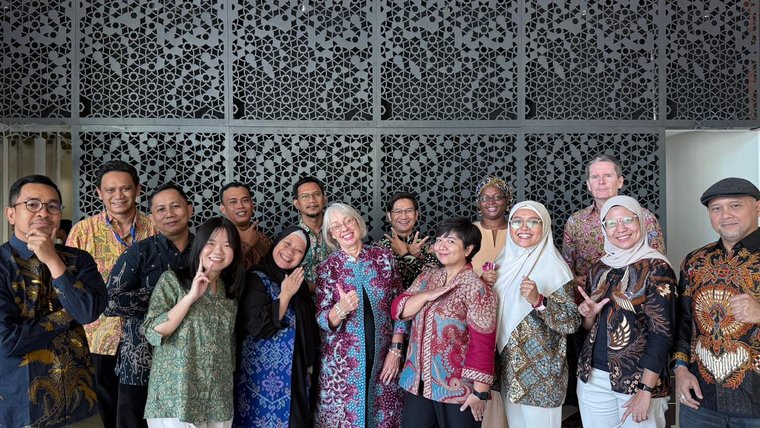
Schools typically provide uniforms for full‑time teachers. If you are not provided with a uniform, a batik shirt is a reliable and culturally appropriate alternative. Batik fabrics are widely available in-country, and you can easily have clothing tailored to your measurements. Affordable tailors are located near PST host families as well as at many permanent sites. If you are not wearing batik, a neat, modest business‑casual outfit that aligns with earlier guidelines is perfectly acceptable. Because sites can be very hot, choosing fabrics and colors that minimize visible perspiration is recommended.
Tailoring professional batik attire usually costs $5–$10, with men’s tailoring typically costing less and more complex garments—such as dresses or gowns—costing more. Batik fabric is often given as a gift, so many Volunteers find they do not need to purchase much themselves. If you do choose to buy batik, prices vary based on production methods: printed batik tends to be more affordable, while handcrafted pieces can range from $5 to $50+ before tailoring.
During PST, you are expected to wear business‑casual clothing when visiting schools, completing practicum activities, or meeting government partners. For special events—such as weddings or national holidays—female Volunteers may be expected to wear a kebaya, a traditional blouse worn for formal occasions. Some schools or host families may provide one, but if not, you can purchase the fabric and have one tailored.
Leisure and recreational clothing
During PST, for outings with your host family, community walk-arounds, language classes, or exercise, you may wear casual clothing such as T‑shirts (without political or offensive graphics), pants that cover your knees, and sandals—including flip‑flops or sport sandals. Casual attire is also acceptable at home, but your knees and upper arms should remain covered. For exercise, avoid tight‑fitting sportswear; loose, comfortable clothing is recommended.
Some training activities will involve cultural discussions with community leaders or facilitating community meetings. For these events, business‑casual attire is expected. This can include polo shirts, pants that cover your knees, and footwear such as sneakers or strap sandals.
For work clothing, you are required to wear closed‑toed shoes while at school. During PST, you will be doing a significant amount of walking, so it is helpful to bring durable, comfortable walking shoes as well as sport sandals for casual use. Shoes can be purchased in Indonesia, but it may be difficult to find half sizes or sizes larger than U.S. women’s 9 or U.S. men’s 11, especially for professional or teaching shoes.
Formal or dress shoes are optional, but bringing one pair is recommended for events such as weddings, school ceremonies, and other formal occasions.
You should bring a 3-month supply of any prescription and/or over the counter medications you use that are authorized/approved by the Peace Corps.
Prior to service, Peace Corps supplies all Volunteers with a medical kit containing basic over-the-counter medications as well as multivitamins.
The medical unit will replenish prescriptions after the initial 3-month training.
If you wear eyeglasses, bring two pairs (of the current prescription) with you. Contact lens use will be considered on a case-by-case basis.
Additional guidance: Medical Care During Service
You should bring a 3-month supply of any prescription and/or over-the-counter medications you use that are authorized/approved by the Peace Corps. Note: Prior to service, Peace Corps supplies all Volunteers with a medical kit containing basic over-the-counter medications, as well as multivitamins.
The medical unit will replenish prescriptions after the initial 3-month training.
If you wear eyeglasses, bring two pairs (of the current prescription) with you. Contact lens use will be considered on a case-by-case basis. See additional guidance from the Office of Volunteer Health.
See additional guidance from the Office of Volunteer Health.
Some items may be personal for each Volunteer. Volunteers may bring a starter kit of travel-size toiletries that can be refilled. Consider bringing a supply of items that you would prefer to have from home or are more expensive or limited in supply in-country. For example, tampons and condoms larger than XL are not readily available. Eco-friendly and reusable menstrual products are socially acceptable but not readily available. The most common menstrual products in the country are disposable pads and are sold in almost every store in Indonesia. Peace Corps Indonesia provides a Diva Cup, if desired. Hair products that do not cater to “fine-straight” hair may be limited, and foundation/powder for skin complexions other than “fair” may be difficult to find. Deodorants and cosmetics are readily available, but many have bleaching components.
Electricity
Electricity in Indonesia is 230 V, with a frequency of 50 Hz. Most power plugs and sockets in Indonesia are type C and F. Adapters can be bought in Indonesia.
If you wish your device to operate in Indonesia it is advisable for you to register to Indonesian Customs unless you plan to buy a new phone from Indonesia. More information regarding the registration will be provided in the Peace Corps' pre-departure call.
Based on your interests and personal preferences there may be additional items you will want to consider bringing. Below is a description of the common activities Volunteers engage in and recommendations from Volunteers on items that might be more difficult to find in-country. Please note that these items are neither required nor specifically recommended; however, they may be useful to have:
- If you enjoy weightlifting, consider bringing elastic resistance bands, as there is no gym near the PST site. Gym facilities may be available at permanent sites, or you may choose to purchase weights (such as dumbbells or kettlebells) locally through sports shops or e‑commerce platforms.
- A selection of jeans, shorts, and sleeveless shirts for use during personal travel or leisure activities in appropriate settings.
- If you enjoy sports, you will find many opportunities to be active in Indonesia. While most common sports equipment is readily available, items such as tennis balls, baseballs, and American footballs may be less accessible. Bringing these from home can be a great way to share your favorite activities with community members. You can also bring a frisbee, American football, or hacky sack; standard soccer or rubber balls can be easily purchased in-country.
- If you like camping, bringing a hammock or some camping gear is a good idea.
- A portable microfiber towel for going to the beach, swimming, or use at home.
- 3-4 microfiber quick-drying full-size towels are essential to dry off after showering and other activities.
- E-reader.
- American‑style deodorant, if preferred, as it is generally not available in-country.
- Waterproof backpack/travel bag.
- A good walk-around bag that can hold a water bottle, wallet, and a few other amenities.
- Extendable umbrella.
- A comfortable poncho.
- Multi-tool (pack in your checked bag).
- A power bank with a charging cable for use while traveling.