 An official website of the United States government




Living Conditions in Indonesia
General considerations
To learn more about living and working in Indonesia, applicants are encouraged to connect with a recruiter to discuss any specific considerations that could affect their service. In addition, please visit the U.S. Department of State's Indonesia travel information pages for the latest on travel advisories, local laws, and special circumstances.
Applicants who undergo an interview will have additional opportunities to raise questions or concerns. If, upon learning more information, an applicant would like to be considered for a different assignment from the one they have been assigned to serve in, the Peace Corps can often find an alternate option that may be a better fit.
Volunteers serve in one of three provinces—West Java, East Java, and East Nusa Tenggara—and live with host families throughout pre‑service training (PST) and during their two years at their permanent sites. Many Volunteers find this to be an incredibly rewarding aspect of their service, as it offers daily opportunities for cultural exchange and community connection.
While amenities differ across locations, Indonesia is generally well‑developed, with reliable access to running water, electricity, and essential services. Transportation options also vary by site and province, contributing to diverse day‑to‑day living experiences.
Community life frequently centers around religious celebrations and national holidays, providing Volunteers with numerous opportunities to build relationships within warm, friendly, and highly communal environments. In professional settings, teachers are expected to follow established dress standards, including closed‑toe shoes, long pants or skirts, and modest tops. Female Volunteers should anticipate wearing quarter‑length to full sleeves, with specific expectations varying by school. Madrasahs, for example, may require more modest attire. Additional details on professional expectations are provided below.
Applicants are encouraged to visit the U.S. Department of State’s Indonesia Travel Information Page for the latest updates on travel advisories, local regulations, and other important considerations.
Communications
Mail service in Indonesia is not as fast as the U.S. Postal Service. It can take about two weeks for mail coming from Indonesia to arrive to the United States via the Indonesia postal system and usually takes about the same amount of time for mail to arrive in Indonesia from the United States. From a Volunteer’s site, mail might take several weeks to reach the United States. Sending a letter home costs about $2 a piece (relatively expensive).
Telephones
Volunteers should bring an unlocked cell phone with a physical SIM slot. eSIM services are still not widely available in Indonesia.
If you arrive without an unlocked phone that has a physical SIM slot, Peace Corps will provide an allowance for you to purchase a basic Android phone (such as a Samsung A06 or similar) that will work throughout your service.
Upon arriving in Indonesia, Volunteers will need to go to the Customs IMEI Post (inside the airport) for the next registration process. You should bring your boarding passes, passports, and phones. This step is necessary for the phones to work with an Indonesian SIM card and to receive a signal.
IMEI registration fees:
During your first week in-country, staff will help ensure you have a functional, connected phone. You will also receive an allowance to purchase a SIM card and data package to cover a basic voice-and-data plan during pre-service training (PST).
After swearing-in, Volunteers are responsible for paying for their own data plan using their living allowance.
Internet
While the internet is widely available in the provinces, it can be difficult to access in the more remote communities where Volunteers live and work. Even when the internet is available, connection times can be slow. Though a personal computer is not required, Peace Corps/Indonesia highly encourages you to bring one since Volunteers will need to access training materials on Peace Corps’ online learning platform. Computers can be also purchased here at prices comparable to those in the United States. Internet cafes and Wi-Fi areas are abundant, and some Volunteers purchase a modem.
Housing and site location
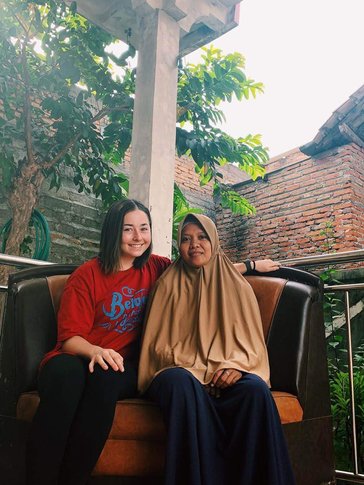
All Volunteers in Indonesia are placed in one of three provinces: East Java, West Java, or East Nusa Tenggara. Most Volunteers live in small towns or rural villages and are generally within a few hours of another Volunteer, though the distance between sites varies. Electricity in Volunteer housing typically runs on 220 V/230 V with outlets that use two round pins. While many Volunteer sites are considered rural, Indonesia is one of the most densely populated countries in the world, so even rural areas may feel busy and well-populated.
Volunteers live with host families for the full 27 months of service, beginning with PST. Before a Volunteer arrives, the assigned school selects a host family, and Peace Corps staff visit the home to ensure that it meets all health, safety, and security standards.
Volunteers are provided with a private bedroom and share bathing and cooking facilities with their host family. Most homes have a basic squat toilet, and living conditions vary by community. Trainees will be informed of their permanent site location during the early weeks of PST.
Living with a host family is often a highlight of service. Host families offer immediate entry into the community, daily opportunities for language practice, meaningful cultural exchange, and an added layer of safety. They frequently become a Volunteer’s primary source of emotional support and connection throughout service.
Living allowance and money management
Volunteers receive a monthly allowance in Indonesian rupiah intended to help them live at a similar standard to the people in their host community. The allowance covers food, household supplies, clothing, transportation to and from work, recreation and entertainment, and incidental expenses. The Peace Corps discourages Volunteers from supplementing their living allowance with funds from home.
Food and diet
Rice is the staple food throughout Indonesia, but each region offers its own unique and flavorful dishes. In East Java, you’ll often find pecel—steamed vegetables topped with peanut sauce. In West Java, fresh raw vegetables are enjoyed in dishes like lalapan and karedok, both known for their bright flavors. In East Nusa Tenggara, jagung bose, a corn porridge cooked with coconut milk, is a well-loved local dish.
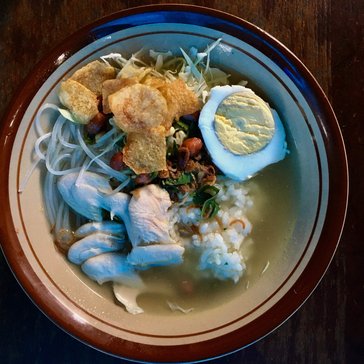
Fresh fruits and vegetables are available year-round in local markets. While white rice is most common, brown rice can usually be found in larger urban supermarkets, and oatmeal and cereals are available in many convenience stores. Protein sources such as tempeh, tofu, eggs, chicken, and fish are widely accessible, with seafood, beef, and goat also available in many areas. Indonesian cuisine often features spicy, fried, and rich flavors, though milder options can usually be requested.
Maintaining a vegetarian diet is possible, though restaurant meals may require some extra attention, as meat is sometimes included in dishes that appear vegetarian. Eating meals prepared by your host family—or cooking for yourself—tends to be both healthier and more affordable than dining out.
Volunteers are encouraged to try a variety of foods early on to discover what they enjoy. Indonesian families, schools, and community members are often eager to learn your preferences and will make an effort to prepare foods you like.
It’s also common in Indonesia to eat savory dishes for breakfast. If you prefer lighter morning options, items like eggs, bread, and oatmeal are easy to find.
Transportation
Indonesia offers a variety of reliable transportation options, including both motorized and non-motorized three‑wheel vehicles, vans, public and commercial buses, trains, boats, and planes. Within towns, people commonly travel by angkot, mikrolet, or bemo (small public minivans), as well as by bicycle.
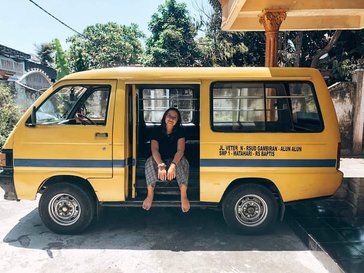
Peace Corps Indonesia provides each Volunteer with a helmet and an allowance to purchase a bicycle. However, road conditions and traffic can make cycling challenging in some areas, so Volunteers are expected to choose the safest transportation option available and to travel in ways that minimize risk and align with their travel and living allowances. Volunteers are encouraged to use their training and exercise sound judgment whenever traveling.
In accordance with Peace Corps policy, Volunteers may not drive or ride as a passenger on any type of motorcycle, and may not own or drive privately owned motor vehicles in Indonesia.
Most Volunteers live within about three hours of another Volunteer, and it is common to visit one another using public transportation, following Peace Corps travel and safety guidelines.
Social activities
Indonesia is a highly diverse country with many cultures, languages, and local traditions. Customs can vary widely from one province to another—sometimes even from one school to the next. In general, Indonesians are known for their tolerance, curiosity, and sense of humor toward behaviors and traditions that differ from their own. Community members will likely be eager to learn about your background, customs, and religious practices. Building strong relationships is central to Indonesian life, and you will play an active role in initiating and nurturing these connections.
Social activities vary by location but often include family events such as weddings and circumcision ceremonies, as well as community celebrations like dedications and graduations. Religious holidays—such as Idul Fitri, Idul Adha, Christmas, and Easter—provide meaningful opportunities for Volunteers to engage with community life. Schools also host many social events, including student competitions, field trips, welcome and farewell ceremonies, and celebrations held for national holidays or school anniversaries.
Day to day, many Volunteers enjoy spending time with neighbors and host families, visiting each other’s homes, exploring local attractions, or simply relaxing together. Communities often enjoy sports such as volleyball, soccer, and badminton, as well as karaoke and late-night cafés. Volunteers also tend to form a close-knit support network, and those living near one another frequently join social activities across communities.
Leisure activities
There are plenty of activities available, varying between sites. Some sites have gyms nearby, while others offer aerobics classes within the community. Other common activities include badminton, calisthenics, soccer, hiking, and running.
Professionalism, dress, and behavior
Most Volunteers in Java are placed at schools and in communities with conservative Muslim values, and Volunteers in East Nusa Tenggara are placed at schools and in communities with conservative Christian values. The importance of respect for local religious practices and cultural mores cannot be overstated. Indonesians value clean, neat, culturally appropriate dress as a measure of professionalism and respect. This is particularly true for teachers, including Volunteers, who are expected to wear neat, modest, business casual attire. Some schools require teachers to wear uniforms, and in some cases, these are provided to the Volunteer by the school.
Tattoos often carry a negative connotation in Indonesia, although many Volunteers with tattoos have served successfully. Volunteers should plan to keep tattoos covered during PST and in professional settings. At permanent sites, you may discuss expectations around tattoos at home with your host family. Multiple ear piercings, facial piercings, and earrings for men are generally not acceptable in professional environments. During training, all tattoos and additional piercings must be covered.
Throughout PST you will receive guidance and feedback on professionalism, dress, and behavior. Once at your site, it is important to observe local norms and seek feedback from your principal and counterparts to ensure your attire and conduct align with expectations at school and in the community.