An official website of the United States government


Relationships during Peace Corps service
So, you’re considering the Peace Corps and are excited to go and serve, except … you’re leaving a significant other or beloved family and friends behind.
Peace Corps service is a commitment, but it’s probably one of many commitments you’ve already made in your life, and others might be to relationships with special people who won’t be serving with you. There’s a reason that the Peace Corps interview includes a question about the relationships you’ll be leaving behind—because it’s a hard thing to do. Whether you’ve been married for 40 years, or have just fallen in love, or are leaving family and platonic friends behind, saying goodbye and joining the Peace Corps is a major life decision. It's one that you may be excited about, but you may also have concerns about leaving people you’re close to (temporarily) behind.
Learning how to stay connected from afar can support you as well as your family, partners and friends—especially if some of your loved ones aren’t quite as knowledgeable or enthusiastic about your service. Well, your first Peace Corps project may be to help them understand exactly what you’re getting into and how you can stay connected.
Consider serving with a partner
Of course, some couples elect to join the Peace Corps together. If your dream of service is shared, consider serving together—whether you’re married or not. Serving as a couple brings both benefits and challenges, but it can be a wonderful way to share the experience of Peace Corps life and make memories together. If you’re thinking of applying as a couple, this page has a lot of information. Some couples feel they have to work harder to ensure they connect with people in their community outside of each other, but others feel having a partner with them allows a safe space from which to connect deeply to the community. Your mileage may vary, so plan to assess and reassess this aspect of Volunteer life during service. Read about Katheryn and Kent’s experience serving as a couple.

Staying connected
If you are committed to taking that bold step into service on your own, there are many ways to stay connected. Many Peace Corps Volunteers have at least intermittent access to cell service and can call and email home. You can find out more about access to internet and cell service in whatever Peace Corps country interests you by looking at the Living Conditions section, such as Living Conditions in Moldova.
Brooke, a Peace Corps Volunteer in Moldova, stays connected by playing virtual games with her family at home. “I love doing virtual game nights with my family at home. Most weekends, my parents, sometimes my sister, and I play a board game on a WhatsApp video call. The physical board games are at my parents’ house. Usually, I partner up with someone and they send me pictures of our cards.”
There’s a place for letters in the Peace Corps
While you may be able to access different communication methods, there’s a place for letter writing. Putting pen to paper and writing home is not just an old-school, analogue, romantic gesture, it’s also an easy way to share and remember your Peace Corps experience. Before you depart, ask the people you plan to correspond with to save your letters. If you save theirs, too, you’ll have a detailed written account of your time in Peace Corps and the things you shared with your friends and family. Several Returned Peace Corps Volunteers (RPCVs) have even turned these collections of correspondence into published books. Even if you never do that, there’s excitement in getting a real handwritten letter, and the international stamps can be beautiful and interesting.
Let each other live your lives
Whether the connection that tugs on you from home is romantic or platonic, understanding that your lives will be very different for a time is key. Consider, too, that focusing on your host family, new neighbors, and friends is a key part of the Peace Corps experience and essential for integrating well into your new community.
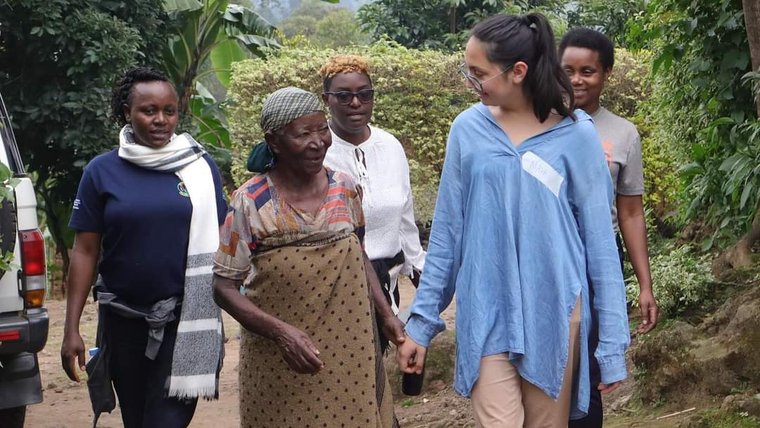
Learn more about Maya's experience connecting with a community in Rwanda.
Your friend or family member, on the other hand, may not be experiencing the same kinds of dramatic changes in their lives. Remember that both experiences are valid. Share your Peace Corps life as much as you want but remember to ask questions and be curious about what the people back home are doing, too.
Peace Corps Volunteer Anna met her boyfriend while serving in Uganda but spent a year living apart from him while serving in Malawi. Read about her experience here.

No matter what, it’s a shared experience
Whether or not you’re serving alone, there will always be connections back home that you’ll have a hard time saying goodbye to when you depart. Keep in mind that Peace Corps takes this seriously and Volunteers are allotted two weeks of emergency leave (and a paid ticket home) in the case of a death of an immediate family member (spouse, parent, child, or grandchild). For the most part, though, Volunteer service is a gift to all involved—the Volunteer themselves and the people who get to share that experience vicariously through their Volunteer loved one.
And hey, planes go both ways, so encourage your loved ones to visit you in your country of service during your vacation! Introducing your Peace Corps family to your own family and friends when they visit can be a uniquely meaningful experience for everyone involved.
Learn more about William's experience connecting with a community in Costa Rica.
Want to find out more about what it's like to serve, on your own or with a partner? Connect with a recruiter.