 An official website of the United States government


Living Conditions in Moldova
General considerations
To learn more about living and working in Moldova, applicants are encouraged to connect with a recruiter to discuss any specific considerations that could affect their service. In addition, please visit the U.S. Department of State's Moldova travel information pages for the latest on travel advisories, local laws, and special circumstances.
Applicants who undergo an interview will have additional opportunities to raise questions or concerns. If, upon learning more information, an applicant would like to be considered for a different assignment from the one they have been assigned to serve in, the Peace Corps can often find an alternate option that may be a better fit.
Communications
Letters to and from Moldova typically arrive in two to three weeks. Advise family and friends not to send anything of value in envelopes. During pre-service training, letters should be sent to you at the following address:
Your Name, PCT
Corpul Pacii
Str. Mitropolit Gavriil Banulescu-Bodoni 57/1, 6th floor
MD-2012, Chisinau
Moldova
Once you move to your permanent site, you can make arrangements to receive mail and packages there or continue to receive mail at the Peace Corps office.
When shipping mail or packages to Moldova, please follow the guidelines below for local addresses to ensure efficient and accurate delivery. When possible, it is best to keep the value of items in your packages below $150 to avoid costly customs expenses (and attract attention to potential valuables in your box).
Telephones
Telecommunications in Moldova are maintained at a relatively high level. Landlines are available in most locations and the mobile communications infrastructure is very well developed. International telephone connections via landline or mobile telephony are generally good and affordable. Upon on your arrival, the Peace Corps will provide a monthly plan for mobile voice communication and internet services.
Internet
Internet is widely available, including on mobile devices, with many Wi-Fi hotspots offering free internet access in public places in major cities. If you have a laptop computer, you should consider bringing it. Volunteers can access IT services at the Peace Corps office as well. Personal property insurance against damages or theft is a good idea.
Housing and site location
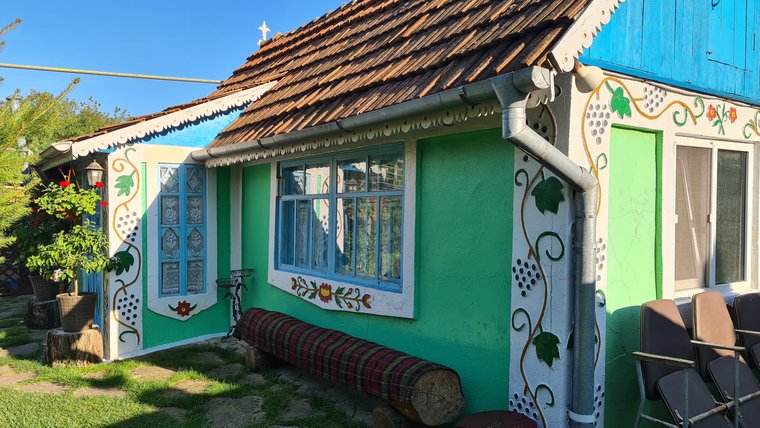
You will live with one host family during pre-service training and another family for at least the first six months at your permanent site. You will have your own room, but you are likely to share kitchen, bath, and toilet facilities with the entire family. Houses seldom have indoor plumbing in most rural areas, so you may not have running water or an indoor toilet.
The current in Moldova is 220 V. If you bring American electronics (which generally run on 110 V) with you, you will need both a transformer to convert the 110 V into 220 V and a converter to fit the American-style plug into a Moldovan outlet.
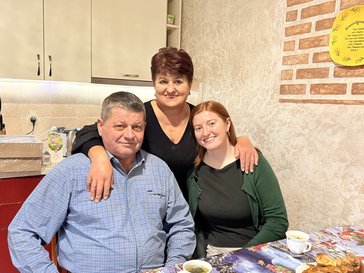
After pre-service training (PST), you will transition to living with your permanent host family as you integrate into your community and begin your work. Most Volunteers choose to live with a family throughout their two years of service and find the experience rewarding, while other Volunteers will opt to live independently after they spend a winter with a host family. Heating in winter can be challenging, as some municipalities cannot afford to turn on the heat until long after the weather has turned cold, and, even then, heating may be minimal or nonexistent for periods of time. For this reason, host families are required to have independent heating sources. Most families in villages rely on ceramic stoves which are built into the walls and burn wood, coal, or corn cobs. In larger towns or cities, houses may have their own gas boilers.
Living allowance and money management
After pre-service training, you will receive a monthly living allowance in local currency that will allow you to maintain your health and safety while living at a standard comparable to your Moldovan counterparts.
Moldova is in transition from a cash economy to a cashless economy. The majority of businesses, hotels, restaurants and big stores accept credit/debit cards, mostly Visa and Mastercard. Cash is still used at markets, small stores, transportation services, etc. In many situations you have the choice to use a bank card or cash. As cash is still used, Moldovan banks and currency exchange offices are stringent about the condition of the U.S. banknotes they will accept due to concerns about counterfeit currency. Make sure that any U.S. currency you bring is not worn, torn, or written on, and that the bills are fairly new. The banks allow cash withdrawals via credit/debit card. There are commissions to be paid for cash withdrawals (1.8%-2%), depending on the bank used, if using a U.S. card in Moldova. There are ATMs in both Chisinau and regional centers, although not generally in villages. Volunteers are advised to be cautious when using ATMs to avoid crime.
We discourage having cash sent from home, as sending money through international mail is risky. Furthermore, having your Peace Corps allowance substantially subsidized by funds from home runs counter to Peace Corps’ philosophy of living at a similar level to those people with whom you work and serve. In an emergency, you can transfer money from your U.S. account to a local account. Peace Corps opens an LCU (local currency) account for the period of your service in Moldova.
We recommend you keep an U.S. bank account with ATM capabilities to assist you with accessing occasional or emergency money from home. It will be the easiest way for Peace Corps to provide you with your readjustment allowance and travel stipend when you complete your Volunteer service. Once again, it is important to recognize that your Moldovan coworkers and friends will not have large sums of money or credit cards so conspicuous displays of wealth on your part could a source of awkwardness or tension. The Peace Corps discourages you from living beyond your monthly allowance.
Food and diet
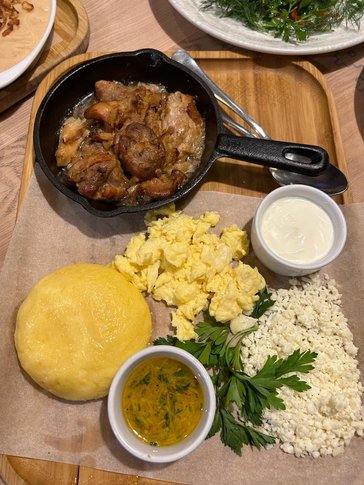
Moldovans love to cook, and they love to welcome their guests with plenty of food and wine. Many traditional Moldovan dishes have roots in the Slavic and Romanian cultures. Pork is the meat of choice, followed by chicken, turkey, beef, and rabbit. The best-known Moldovan dish is mamaliga, which is made from cornmeal and tastes somewhat like polenta or grits. It is served with soft cheese, meat, eggs, butter, or fish.
Vegetarians may find it challenging to maintain their usual diet, mainly in the villages. It may be difficult to explain why you are a vegetarian in a meat-and-potatoes culture. Although the concept of vegetarianism will not be entirely new to most Moldovans, you should expect some surprise and confusion. You will have to be clear about what you can and cannot eat. You will also have to be sensitive and gracious when Moldovans want to prepare special food for you that you cannot eat.
Transportation
Transportation poses one of the most pervasive challenges to Volunteers. Peace Corps Moldova has developed transportation and travel policies that promote the most reliable and safest modes of travel in country.
Operation of motor vehicles of any kind (e.g., cars, motor scooters, and motorcycles) is prohibited for Peace Corps Volunteers. Peace Corps policy also requires the use of a bicycle helmet, which the Peace Corps provides, when riding bicycles. Volunteers primarily rely on public transportation. All the towns and villages in which Volunteers are placed have regularly scheduled bus and/or taxi service to Chisinau and other towns. Peace Corps staff can get to any site by car within a maximum of four hours.
Social activities
Moldovans allocate a relatively large amount of time to social life and entertainment activities, compared with other European countries. Conversely, time allocated to cultural events (theaters, concerts, movies, etc.) is much less in the villages.
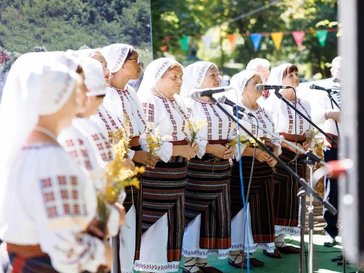
Men socialize more and have more leisure activities than women. These differences are visible particularly in rural areas, where women spend much more time performing household chores and taking care of the family than men. The types of social activity and entertainment also differ for women and men. Women spend their time mainly within the household, while men socialize mainly outside the house (street, park, forest, place of work, etc.).
People living in villages and small communities spend more time socializing and engaging in entertainment activities than urban residents due to closer relationships with the family, relatives or neighbors.
The top five most important holidays for all ethnic groups are Easter, Christmas, New Year’s Eve, Parent’s Day, and Women’s Day. The most important are, by far, the religious holidays, and this trend is universal across all ethnic groups. Holidays that were popular during Soviet times are equally popular today among ethnic minority groups, though the Moldovan majority also celebrates International Women’s Day. Victory Day is still important for Moldovans, but to a lesser degree than for ethnic minorities. Europe Day, which coincides with Victory Day, is not celebrated by national minorities but is becoming popular among ethnic Moldovans. National holidays such as Independence Day and Language Day, are equally celebrated by both ethnic Moldovans and national minorities.
Professionalism, dress, and behavior
Professionalism in the Peace Corps requires an awareness of the host community workplace culture, community values, and your self-presentation. To maintain a positive, culturally appropriate professional standing within a host community or workplace, Volunteers may need to adjust their style of dress, hair style, facial hair, make-up, piercings, manner of greeting others, etc., to demonstrate respect for local culture and customs. How you present yourself, in both informal and professional settings, is a reflection of you as an individual and of you as a representative of Peace Corps and the United States. In the U.S., dress (and other elements of personal appearance) may be seen as an expression of personal freedom and identity. In many host countries where Peace Corps Volunteers serve, the way you dress and present yourself may be interpreted as an expression of regard—or disregard—for those host community members around you. Volunteers are encouraged to observe their partners in the way they dress, especially in schools, where they need to follow a professional dress code, with business casual being the norm
Volunteers are encouraged to invest time in their communities, develop their language skills, and get to know the individual members of their community to better understand their traditions, culture, and norms. As mutual trust is established over time, there may be opportunities for Volunteers to adjust their personal appearance and dress outside of the more rigid local standards. Volunteers are encouraged to discuss these potential adjustments with staff and other cultural mentors.
Few Moldovan men have long hair, locs, or shaved-in patterns, and some may consider it inappropriate for the workplace, especially in rural area. Beards are uncommon, except among the clergy and, unless short and neatly trimmed, not generally accepted.
Visible body piercings (other than earrings for women) and tattoos for both men and women are generally not accepted in professional settings. Wearing facial piercings may make it more difficult to integrate into your community. Tattoos can sometimes indicate that a person has been in prison or is a sex worker. Please be prepared to cover tattoos and remove facial piercings as appropriate.
Volunteers will participate in intercultural pre-service training, which covers culturally appropriate behaviors, cultural dimensions and cultural sensitivity.