 An official website of the United States government


Featured Volunteer Profile
William R.
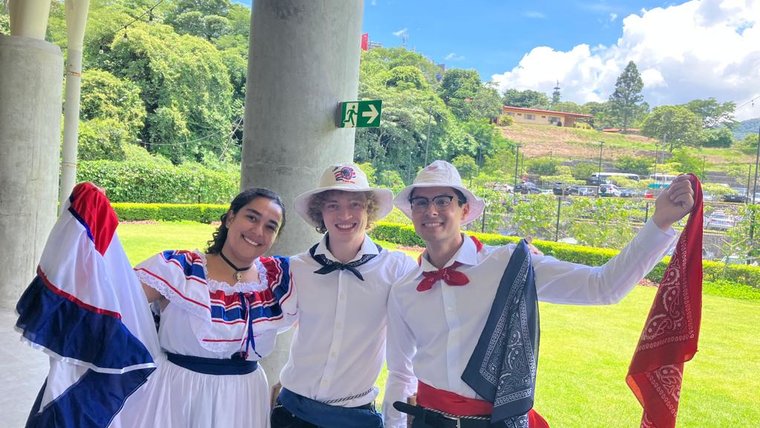
“I didn’t know how to do any typical Costa Rican dances before, but I joined a dance group, and we ended up doing dance performances around the region, meeting people and learning about new communities along the way.”
1. What got you interested in the Peace Corps?
Even as a kid I was interested in learning more about other countries, their people, and their languages. In college, I had the privilege to go on several international trips, and a bit later, I began to help organize events to welcome international students into my university’s local community. Through those experiences, I realized how rewarding it was to promote intercultural understanding and friendship between my local community and international students on campus.
I first heard about the Peace Corps from an international student friend from Timor-Leste. We became great friends during his four years in the United States. He told me how Peace Corps Volunteers had helped him to improve his English, as well as to learn about the scholarship program that had allowed him to study in the United States. In his words, “Peace Corps Volunteers were the best!” Inspired by his story and by the positive impact Peace Corps service had in his life, I decided that I would apply to become a Volunteer.
2. What projects are you working on?
I’m nearing the end of my two-year term as a Volunteer, and I’ve had the privilege to work on a range of projects. When I first arrived in my community, my counterparts and I organized a community workshop to determine community members’ priorities for local development.
Since then, my counterparts and I have organized:
- A women entrepreneurs’ group in the community to develop their small businesses while also having increased access to economic opportunities through entrepreneur markets.
- A neighbors’ committee to involve more of the community in development projects.
- Committee projects to promote more sustainable waste management practices such as recycling, littering, and composting.
- A collaboration between my community and a local university’s engineering department to design a wastewater system to address wastewater contamination.
3. What strategies have you used to integrate into your community?
I feel very lucky with my community. I’ve tried my best to be approachable, present, and “pura vida” (which in Costa Rica generally means being friendly, grateful, and joyful). In turn, many people in the community have been very kind, welcoming, and generous. For example, I didn’t know how to do any typical Costa Rican dances before, but I joined a dance group, and we ended up doing dance performances around the region, meeting people and learning about new communities along the way.
I’ve also had a great experience with my host family. They’ve helped me to improve my language skills, never failed to answer my endless questions when I consult them about projects I’m working on, and introduced me to countless people in the community who have now become my friends.
4. What is a highlight of your time in service so far?
A lot can be said for the projects that Volunteers work on, but in many ways, it seems that the most valuable and immeasurable rewards are the friendships and experiences that are had throughout service. For me, two specific experiences are highlights: the first market day with the women entrepreneurs’ group we started, and my family’s visit to Costa Rica. My family and my host family were able to spend a few days together, and they had the best time getting to know each other. To me, that was truly the essence of what the Peace Corps is all about.
5. What have you enjoyed most about the community where you are serving?
One funny thing I enjoy about my community is that it’s so well connected that sometimes I like to jokingly call it “the internet.” Many times, when I have a question about something in the community, I ask a friend or someone in my host family. If they don’t know, they’ll ask someone else. Eventually, the question will reach someone who knows the answer, and it will get looped back to me. The whole process is slower than Google, but the results are more accurate and personalized.
6. What are some of the most important things you’ve learned from your community?
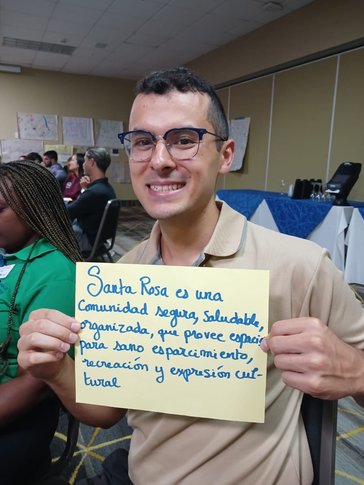
From my community (and from Costa Rica in general), I’ve learned a lot about “pura vida.” To me, that has meant being friendly and easy-going as a person, but it’s also meant learning to be more grateful for what I have. Health, family, friendships, education, and the privilege to come and serve in another country are all things that I have grown to appreciate more. I’ve come to see what an immense privilege we have as U.S. citizens to be from a country that has prioritized the Peace Corps as a means of allowing its citizens to have enriching experiences through service while also contributing to doing good for communities around the world.
7. How do you spend time when you are not working on a project?
My community is at the base of a volcano in a beautiful valley surrounded by lush mountains, fields of coffee plants, and the occasional waterfall. I love exploring the region on my own and with friends.
8. What are you looking forward to in your remaining time as a Volunteer?
My time as a Volunteer is quickly coming to end, but I look forward to making the most of the time that I have left here. I’m doing my best to treasure my relationships here, the beautiful landscapes, and the amazing coffee. I look forward to doing my best to make sure that my projects are sustainable after I leave, and to keep learning as much as I can!
9. Once you finish your service, what will you do differently when you return to the U.S.?
Before beginning my service, I knew that the Peace Corps would change and develop me, but it’s hard to truly understand how much it’s impacted me. Right now, I can say a couple things. First, I hope that I can maintain the humility, deep sense of gratitude, and contentedness that I’ve been able to find during service. Secondly, I feel that I’ve developed a better capacity to think about problems that affect a community, to network and use connections to create working coalitions, and to use the resources available to solve those problems. My hope is that I will be able to take these problem-solving skills, as well as a bit of a "pura vida" mindset back to the United States with me.



