 An official website of the United States government


Featured Volunteer Profile
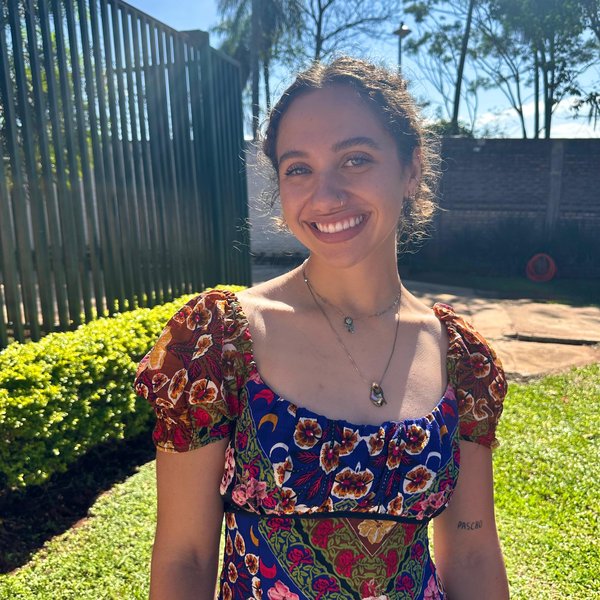
Lola B.
“Despite having experienced ... significant hardship, my neighbors consistently show a profound respect and love for the world around them. I'm grateful to them for revealing a resilience I might never have seen or understood.”
1. What got you interested in the Peace Corps?
My interest in the Peace Corps began during my undergraduate studies, when I realized I wanted to step outside the classroom to broaden my perspective before graduate school. I was motivated by a desire to immerse myself in a new culture, strengthen my Spanish language skills, build genuine relationships, and find meaningful ways to serve others. The Peace Corps stood out as a rare opportunity to work directly with—and learn from—the people of Paraguay, while confronting challenges that would push me to grow personally and professionally. Most importantly, I was drawn to experiencing international development at a grassroots level. Living and working alongside community members, I aimed to gain practical, firsthand insight into how sustainable change happens and a deeper understanding of the real obstacles communities face.
2. What projects are you working on?
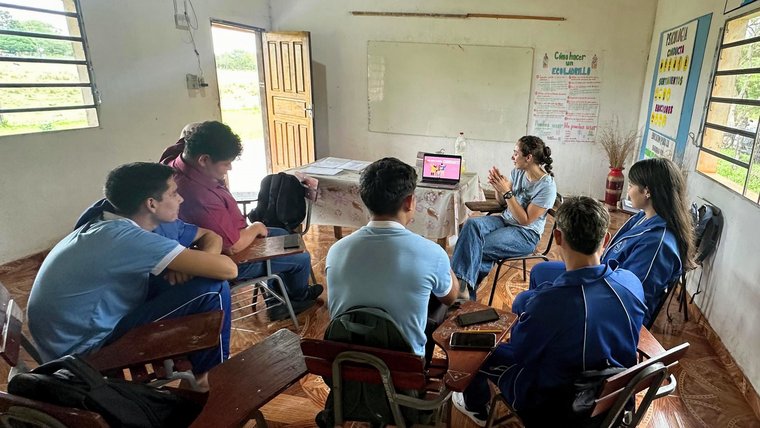
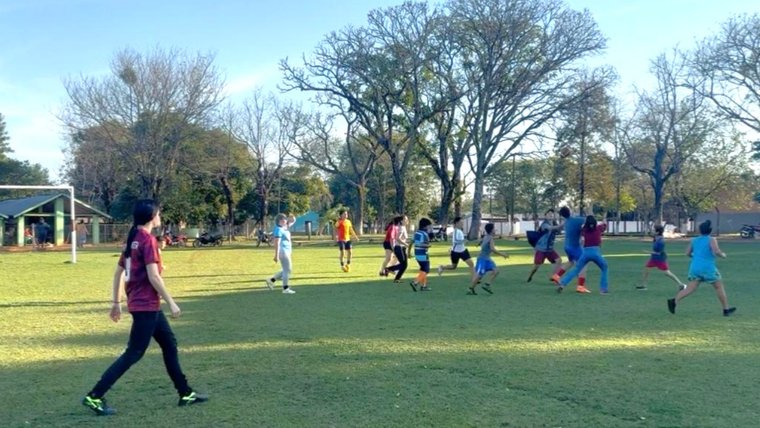
My work here centers on empowering youth and expanding educational opportunities. I lead a class that alternates between personal development and environmental health. In one week, we cover topics such as goal setting, reproductive health, and emotional well-being. The following week, we explore the impact of human activity on the environment and public health, while collecting plastic to construct eco-bricks for school benches at the end of the year. Given my community’s limited activity options for youth, I also make the most of school breaks by facilitating camps that blend sports with life skills, helping youth build leadership and a sense of unity.
A significant part of my service in the Health sector involves collaborating with the health post to design and deliver engaging health presentations in local schools. My counterparts and I address topics such as communicable diseases and substance abuse, as well as dental, nutritional, reproductive, and mental health.
One project especially close to my heart is helping to transform our old chapel into a community interpretation center celebrating our local history. Recognizing a lack of access to books, I am planning a small library within this center and currently working to gather book donations to bring the library to life as both an educational and community resource. In addition, I lead a bi-monthly savings group to foster financial skills among women and youth, teach English as a second language, and provide supplementary Spanish literacy classes for children who need extra support.
3. What strategies have you used to integrate into your community?
My approach to integration focuses on being genuinely present and open, especially during my first year of service. I was intentional about attending birthday parties, Sunday church services, soccer games, school celebrations, and other community events—not only to meet people, but also to demonstrate my commitment to being an active participant in their lives. With my primary focus on youth health, building relationships with both children and their families has been essential to understanding how I can best support them in and out of the classroom.
Life in a small community can often feel like living in a fishbowl, with news traveling quickly and everyone aware of one each other’s activities. I’ve embraced this by promoting the events and classes I organize through word of mouth and social media, which has helped boost participation. Engaging with various community groups has been key, as it has allowed me to branch out and meet different groups in the community. The combination of engagement and intentional outreach has been fundamental to building trust and increasing community involvement in my service.
4. What is a highlight of your time in service so far?
Some of the most memorable parts of my service have been organizing youth camps during the summer and winter breaks. In a community where opportunities for young people to come together outside of school are rare, I wanted to create a space for connection, laughter, and growth. Seeing the kids build stronger bonds with each other through play and discussion has been very rewarding. Our first camp was especially meaningful, as it was a moment when I could truly feel how much the youth trusted me. They saw me not just as a mentor or teacher, but also as a friend or older sister—someone who supported them, shared in their experiences, and celebrated their growth alongside them. That sense of genuine connection is something I’ll always hold close.
5. What have you enjoyed most about the community where you are serving?
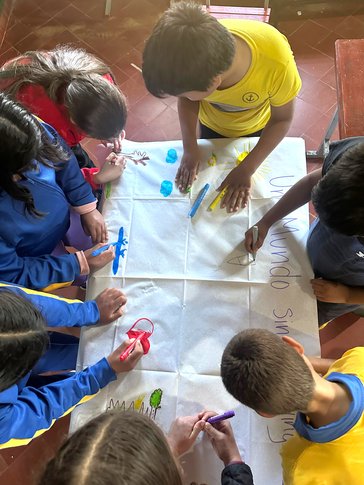
What I enjoy most about my service are the relationships I’ve built within my community, especially with the kids. The longer I live here, the more I recognize how fortunate I am to share tereré (the national drink of Paraguay) with one of the moms, enjoy Sunday asados (barbecues) with my host family, or simply giggle with the kids during English class. The kindness, warmth, and openness my community has shown me has made me feel valued and welcomed. It’s these daily, seemingly small moments—passing time together, sharing in local traditions, and the quiet comfort of everyday life—that have become the foundation of my experience and hold a special place in my heart. They embody the tranquilopa (relaxed) spirit that makes Paraguay so unique, and I know that these memories and connections will stay with me forever.
6. What are some of the most important things you’ve learned from your community?
Slowing down: Life in the Paraguayan campo moves at a much slower, more intentional pace than what I was used to in the States. Through embracing the flow of the campo, I’ve learned to live more fully in the present, to slow down, and truly appreciate the everyday moments. This change of pace has not only given me the space to explore my own interests, but has also encouraged me to express gratitude in ways I never prioritized back in the States. It’s a shift that has helped me find balance and feel more connected to myself and others in my daily life.
Resilience and adaptability: Through the trust and connections I’ve developed, community members have opened up to me about the tough realities they’ve faced—from deep poverty and health challenges to systemic obstacles that are often beyond their control. Despite having experienced, and in some cases still enduring, significant hardship, my neighbors consistently show a profound respect and love for the world around them. I’m grateful to them for revealing a resilience I might never have seen or understood. Their stories have not only inspired me but have also helped shape my own ability to adapt and persevere through challenges during and after my service.
Importance of community and family: Family lies at the heart of Paraguayan life, a value especially felt in a community of 350 people, like mine. Here, I’ve witnessed firsthand the powerful sense of connection that binds Paraguayan families and neighbors. The deep respect for family bonds translates to a sense of solidarity among community members, reinforcing the unity that defines life here.
7. How do you spend time when you are not working on a project?
When I’m not working on a project, I spend my time reading, cooking or baking, doing a crossword puzzle, or planning for the next thing I want to work on. Outside of these moments, I spend time with my host family and other community members. I enjoy traveling to different parts of the country to meet with other volunteers and exploring Paraguay’s natural beauty. I also regularly stay in touch with friends and family back in the States, who have been essential parts of my support network during service.
8. What are you looking forward to in your remaining time as a Volunteer?
I’m looking forward to the opening of our community library in the interpretation center—a chance to promote literacy and provide greater access to books (free!) for everyone. I’m also excited to collaborate more closely with the health post, especially on the project of creating health education flip books in Spanish and Guaraní for people to enjoy while waiting for their consultations. With a year left in Paraguay, I want to make the most of it by exploring more of the country, enjoying time with friends and community members, and soaking in all the festivities and celebrations that make Paraguayan life so full. And of course, consuming all the tereré and chipa that I possibly can.
9. Once you finish your service, what will you do differently when you return to the U.S.?
After finishing my service, I’ll bring a broadened perspective and a daily gratitude to life in the States. I plan to be more intentional in valuing my time and relationships, focusing on being present and appreciating the small moments that are often overlooked. I will leave service with a better understanding of how people’s perspectives are shaped through their experiences, informing how they interact with the world. While placing greater value on the experiences of others, I also want to extend that same grace to my own life, as I intend to be gentler with myself—recognizing that growth and understanding take time, and that mistakes along the way are part of the learning journey. Ultimately, I’ll carry forward a deeper understanding of resilience and love, which will impact the way I navigate the world and build relationships in the future.



