 An official website of the United States government




Featured Volunteer Profile
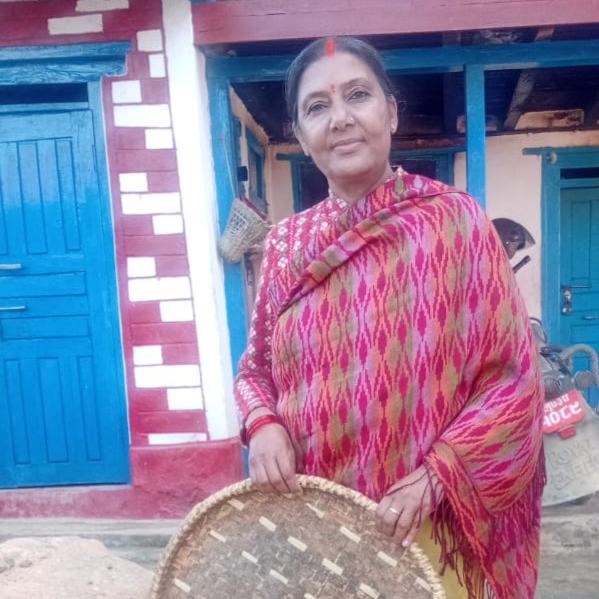
Bhuwan S.
“There is a strong culture of cooperation, especially during planting and harvesting seasons. I appreciate the deep connection people have to their land and traditions.”
1. What got you interested in the Peace Corps?
I was drawn to the Peace Corps because of its emphasis on grassroots development and cultural exchange—sangai basera, sangai sikne (living and learning together). Through my previous work in the agriculture sector, I developed a strong interest in agriculture, food systems, and community resilience, and I wanted to work in a setting where local knowledge is valued as much as technical skills. The Peace Corps’ commitment to living and working alongside community members aligned with my desire to learn through service. Nepal, in particular, interested me because of its diverse agro-ecological regions and rich cultural traditions. I saw the Peace Corps as an opportunity to contribute meaningfully while gaining a deeper understanding of rural livelihoods. The idea of mutual learning and long-term impact motivated me to apply.
2. What projects are you working on?
As a Food Security Volunteer, I work closely with local farmers, community groups, and schools to support improved agricultural practices and nutrition outcome. My projects focus on fruit tree plantations, mushroom cultivation, kitchen gardening, composting, and weather adaptive farming techniques using locally available resources.
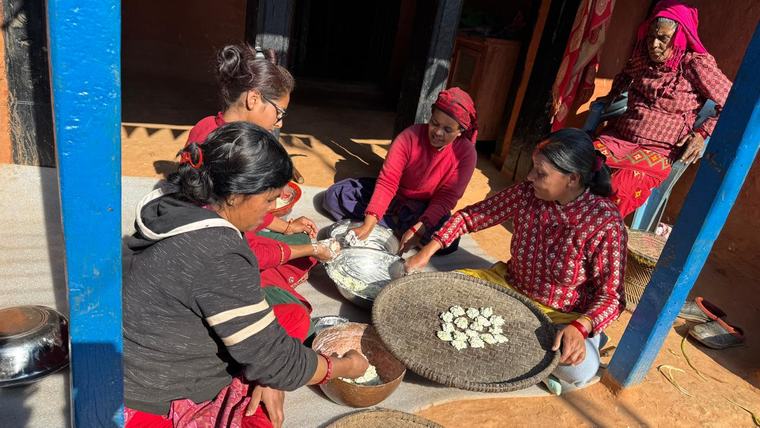
I also collaborate with counterparts to organize and co-facilitate farmer trainings and practical demonstrations, including mushroom cultivation and masaura making. Masaura is a traditional Nepali sun-dried vegetable ball made from minced vegetables like taro, yam, or ash gourd and black lentils or other legumes. These savory, spiced balls are primarily preserved during the off seasons, then fried and added to curries, stews, or soups. It acts as a protein-rich, nutritious substitute for fresh produce.
In schools, I assist with nutrition education and garden-based learning activities to promote healthy eating habits and hands-on experience on food production. A key part of my work involves supporting community-led planning so projects reflect local priorities. Throughout my service, I focus on sustainability, strengthening capacity, and sharing knowledge rather than one-time interventions.
3. What strategies have you used to integrate into your community?
As a Nepali American Volunteer, I have used my language skills, cultural awareness, and understanding of social customs to integrate into my community effectively. My exposure to both Nepali and American cultures and traditions has enabled me to bridge the cultural and language differences and build meaningful connections. I actively participate in daily community life and community activities, such as farming, attending community meetings, and celebrating local social events and festivals. Living with a host family has helped me better understand social norms, cultural norms traditions, and rural household dynamics.
I also prioritize listening first and learn from the community before suggesting ideas, which has helped build trust and mutual respect. Being consistent and present—showing up even without a formal project, and alongside my husband, who serves with me—has strengthened relationships with the community. Over time, these efforts have helped me feel like a valued and respected member of the community.
4. What is a highlight of your time in service so far?
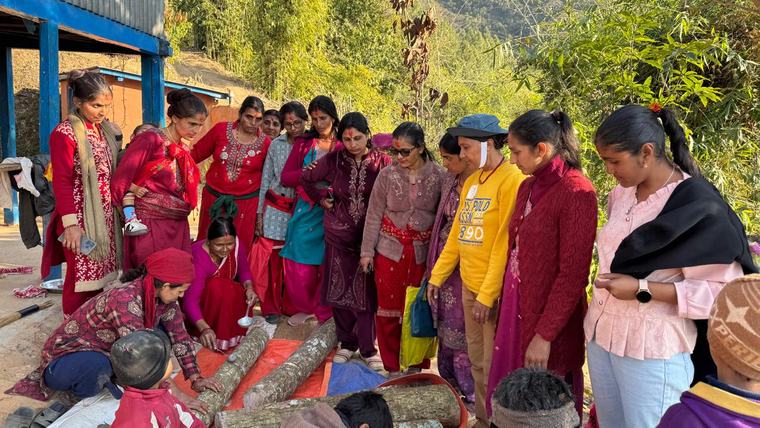
One highlight of my service has been seeing community members take ownership of projects we planned together. Recently, we visited a mushroom farm in another district with community farmers. Community members are taking ownership for ginger and turmeric cultivation and creating added value by grading, packing, and leveling the final products for better marketing. Watching farmers apply new techniques like applying mulch in their farming activities and adapt them to their own needs has been especially rewarding. I’ve also enjoyed working alongside motivated youth and students who are curious about agriculture and nutrition.
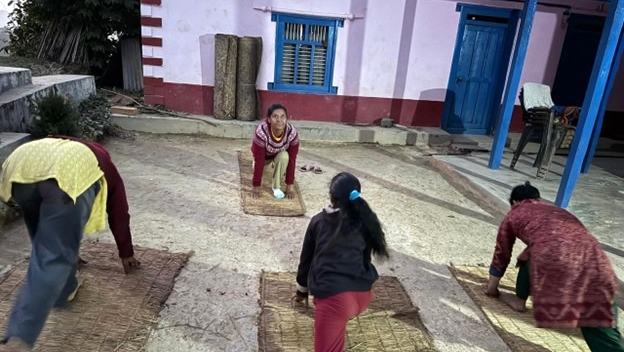
Finally, I also teach yoga for physical and mental health. Yoga regulates the nervous system, clears energy channels, balances emotions, enhances mental focus and improves oxygenation in the body. Teaching yoga has been as impactful as other technical trainings.
Moments of informal learning—such as conversations during fieldwork or shared meals—also stand out as meaningful experiences. These interactions remind me that the lasting change happens susta-susta/bistarai (slowly and over time) through patience, consistency, and mutual respect. Impact often comes from small, consistent efforts. Overall, building genuine relationships has been the most fulfilling part of my service.
5. What have you enjoyed most about the community where you are serving?
I have most enjoyed the sense of community and hospitality in my site. People are generous with their time, knowledge, and resources, even when they have very little. During the Teej festival, local women’s groups invited me to their celebration, and I participated in the ceremony by singing, dancing and fasting with them.
I am also involved with the host family making satu (multigrain flour) and preparing nutrient-rich dal or vegetable flatbreads called roti. There is a strong culture of cooperation, especially during planting and harvesting seasons. I appreciate the deep connection people have to their land and traditions. Daily life moves at a slower pace, allowing for meaningful interactions. This sense of belonging has made my service both comfortable and enriching.
6. What are some of the most important things you’ve learned from your community?
My community has taught me the importance of resilience and adaptability. Farmers regularly adjust to changing weather patterns, rotating their crops based on weather and resource constraints with creativity and determination. I’ve learned local agricultural best practices, such as mixing crops with mustards and peas or wheat and peas, and reducing vines crops like pumpkins due to the overuse of urea in hybrid corn cultivation. This valuable information is passed down through generations for sustainable development. The community has shown me the value of patience and humility when working toward long-term goals. Relationships matter just as much as technical solutions. These lessons have reshaped how I think about development work.
7. How do you spend time when not working on a project?
Outside of project work, I spend time with my host family and community kids by playing, teaching, or exchanging study schedules. I regularly visit neighbors. I enjoy helping with household chores like keeping the area surrounding our house clean, helping the family make balanced meals, suggesting small, family lifestyle modifications, and participating in farm work, which often leads to informal learning opportunities.
Exploring nearby villages and hiking in the surrounding hills helps me better understand the region. I also read books and journal to reflect on my experiences. Staying connected with other Volunteers provides support and perspective. These activities help me maintain balance and stay engaged in my service. Teaching yoga practices also supports my quality of life.
8. What are you looking forward to in your remaining time as a Volunteer?
In the remainder of my service, I look forward to deepening the impact of ongoing projects and strengthening local capacity. I hope to support counterparts as they take on full ownership of initiatives that we’ve started together. I’m excited to document lessons learned that can be useful beyond my service. Most of all, I look forward to continuing the relationships that make this work meaningful. My goal is to complete my service confident that the community is equipped to continue projects moving forward.
9. What will you do differently when you return to the U.S.?
When I return to the U.S., I will approach work and community engagement with greater patience and empathy. My service has shown me the importance of listening first and valuing diverse perspectives. I plan to stay involved in food systems or community-based development work. I will also be more mindful of resource use and sustainability in my daily life. The experience has broadened my understanding of global interconnectedness. These lessons will continue to shape my personal and professional decisions.
Learn more about serving as a Peace Corps Volunteer in Nepal.



