 An official website of the United States government


Featured Volunteer Profile
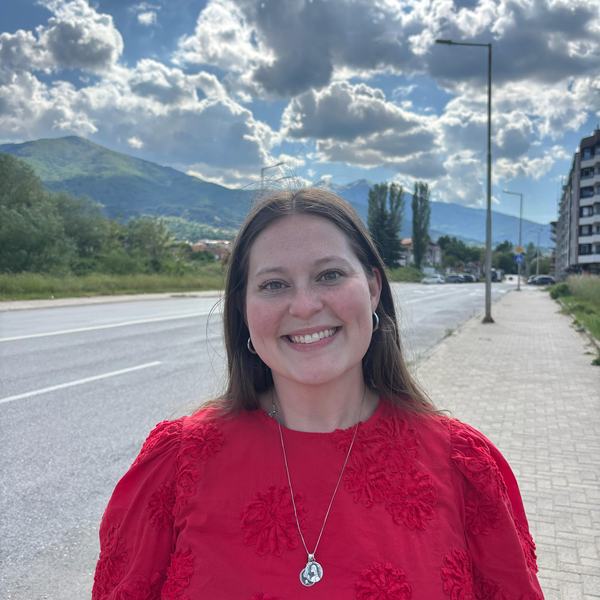
Emma D.
“Every day at school I’m met with a ton of hugs, students telling me about their weekend or day, and always a lot of questions. Whenever I see students out in the community they come up to talk to me and introduce me to their family members.”
1. What inspired you to apply for this Peace Corps position?
Growing up, I wanted two things out of my future career: 1) to work in a hands-on setting with other people and 2) to be able to interact with people from cultures other than my own. When I was in 10th grade, my social studies teacher told us about the many opportunities to volunteer abroad. From that moment, I knew that the Peace Corps was something I wanted to do. That desire stuck with me throughout college and through the start of my career as a school counselor. After working in education for nearly 5 years, I was ready to apply.
As I began my application, I researched various countries with openings in Youth in Development and Education. I didn’t know much about North Macedonia, so it piqued my interest; I’ve always wanted to learn about new places. It seemed like an incredibly vibrant culture with lots of history to explore. After researching more about the country, an English co-education position seemed like the perfect choice.
When I was fortunate enough to receive an invitation, I accepted without hesitation. English co-education gives me the opportunity to collaborate with a local teacher. Together with my counterpart we create lessons based around the curriculum while incorporating best teaching practices. We work to ensure a student-centered classroom!
2. Tell us about a moment that sticks with you from the first week at your site.
What sticks with me the most from my first week at site was how welcoming both the staff and students were. The students were so excited to have me there! On the very first day they drew pictures for me to hang up in my house. Getting a ton of hugs and “Hello teacher Emma” the first week really helped me feel comfortable and excited to be at work. The teachers were also incredibly helpful. They helped me navigate the school and always found time to talk to me or check up on me. If there were things I needed support with, they were always willing to help out.
3. What is your main job?
My main job is as an English Co-teacher at a primary school. Most of my work is with first through fifth graders. My counterpart and I work together to plan and coordinate fun and informative lessons for our students. We love to incorporate creative activities, especially during the holidays. For example, before the winter break this year, each student was able to create an ornament or decoration for the holiday season to take home with them! Along with crafts, this year fifth-grade students started writing letters to pen pals at the elementary school in my hometown in Kansas. This allowed them to practice writing English and make new friends. We have also been working to promote literacy to younger students through “read alouds” in the classroom. Finally, we were able to get a donation of English books for the school library!
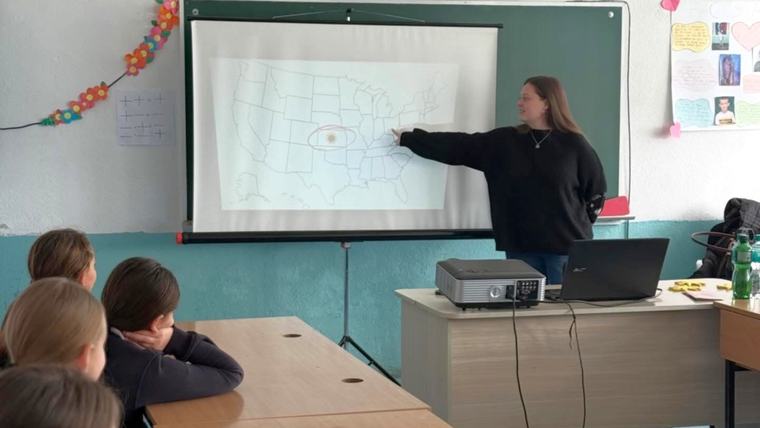
Along with my work at school, I also spend time volunteering for the American Corner (a U.S.–sponsored information and cultural center) in my community. I have been able to travel to nearby schools to present lessons on life skills, and we have recently been working on a project called “50 States in 50 Classrooms.” Through this project, I have been able to introduce students to American culture through lessons on the different states. Currently, I am also helping plan a camp for 6th through 8th graders with a fellow Peace Corps Volunteer and the YMCA. This camp focuses on developing youth leadership skills such as creativity, problem solving, and communication. It will be similar to an American summer camp, with games, activities, and competitions.
4. What strategies have you used to integrate into your community?
One of the strategies is simply to speak in Macedonian! I was really nervous about using my Macedonian at first, but when I tried I realized how receptive people were to chatting with me. Whenever I walk by people on the street or in my neighborhood, I try to say “hello.”
Another strategy is putting myself out there and saying “yes” to invitations. If someone invites me for a coffee, I try to say “yes” or find another time when we can meet up. My community is bigger, so we have events and festivals that take place relatively frequently. Whenever there is an event, I will always try to make it to at least one of the activities. Through this, I have been able to meet a lot of different people at my site.
5. What is a highlight of your time in service so far?
Working with students, and the relationships I’ve built with them, is the highlight of my service. Working with younger kids is always entertaining. There’s no shortage of funny stories with them! Every day at school I’m met with a ton of hugs, students telling me about their weekend or day, and always a lot of questions. Whenever I see students out in the community they come up to talk to me and introduce me to their family members. Being around my students makes every day more fun. I always look forward to our classes together, and I know that they really enjoy their English lessons.
6. What have you enjoyed most about the community where you are serving?
My community is one of the larger communities in the country, with a population of about 65,000. It is always funny to tell people that this is the biggest city I have ever lived in. My hometown in Kansas is only 6,000 people! Being in a bigger community has really helped me step out of my comfort zone and try new things. I attend a lot of events and festivals that I may not have attended before, and I go on walks in the park and around the community. Because my community is bigger, there is a lot of access to resources. I was able to reach out to the American Corner (a U.S.-sponsored cultural and information center) in my community to partner up for a variety of activities. I have also been fortunate to work with other organizations in my community.
Finally, I have also really enjoyed the school I work at, which is one of the biggest in the community, with satellite schools in surrounding villages. I have been fortunate to be able to work at the satellite schools as well as at the central school. Being able to work in a variety of classroom settings has helped me learn to adapt to different class sizes, and it has also been a lot of fun. I’ve been able to connect to more people because I’m familiar with the communities around me.
7. How do you spend time when not working on a project?
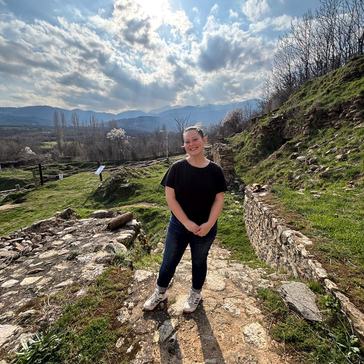
When I’m not working, I really enjoy exploring the country. North Macedonia has so much beautiful nature and really lovely cities and towns. No matter where you are, there is a lot of natural beauty. Although North Macedonia is a small country, there is so much to explore here, including archaeological sites, museums, waterfalls, hiking trails, skiing, incredible lakes, and more.
Along with exploring, I spend a lot of time baking. My host dad has been on the receiving end of a lot of my baking. He has now tried many things common in the U.S., such as banana bread, lemon cheesecake bars, cinnamon roll cake, chocolate chip cookies, and a lot more. Brownies were a hit with students and teachers! It is always really fun introducing people to new desserts or a version they haven’t tried before.
8. Tell us about the strongest relationship you’ve developed while in country.
One of the strongest relationships I have built during my time in Peace Corps is with my host family. I have been very fortunate to live with my host dad, Zivko, during my service (Zivko's wife passed away about 10 years ago). When I moved in, it was late December and it was going to be my very first Christmas away from my family. Although my host family celebrates Christmas in January, my host dad wanted to make sure I felt comfortable and at home so he got a Christmas tree that we decorated together, then we had Christmas dinner together. Since then, we have had dinner or lunch together at least once a month! We even had a special dinner to celebrate my first full year at site, and we have hosted other Volunteers for meals when they visit.
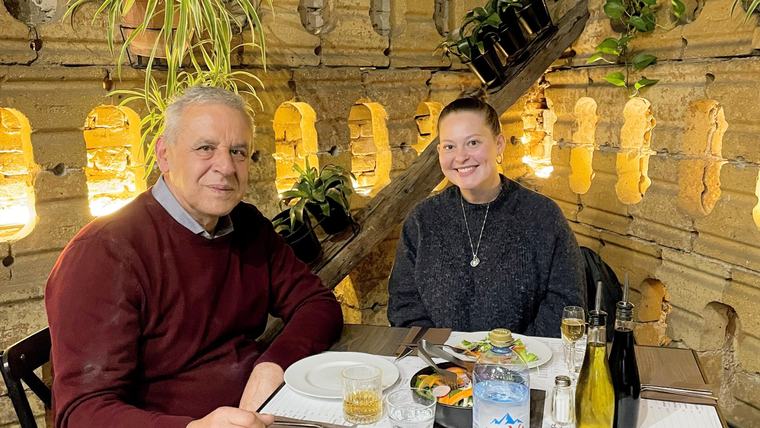
My host dad and I spend a lot of time together outside of meals. At least once a week we have a coffee together to catch up on the week and talk about our families. It has become one of our traditions. We also go on walks in our community. During our walks, he will share about the history of the place we live, the buildings, or tell me about his life growing up here. Whenever there is a festival, we try to attend at least one of the events together. Last year, we attended a play during a drama festival in our community. We have gone to quite a few concerts in the center, explored the winter market, and he introduced me to “chorba,” a stew that is usually served in the mornings. Zivko often tells people that I am his third daughter, and he absolutely treats me that way.
During the summer, my Zivko’s older daughter, son-in-law, and grandchildren also live with us. It is a full and lively house! Last summer, my family and best friend came to visit me and got to meet my host family. Everyone got along so well, and it was genuinely one of the best experiences I’ve ever had. My mom now sends postcards to my host sister and her kids, and we all talk frequently. We are just one big family!
9. What are you looking forward to in your remaining time as a Volunteer?
As I near the end of my service I am really looking forward to continuing to work with my students, spending time with my host family and friends, and trying to soak up as much as I can in the country. I hope to continue making classes meaningful and exciting for my students so that they are excited to go to class and learn. It has really been a joy watching students grow in their language skills and become more confident in their abilities. I’m also going to spend a lot of time with my host family before I leave. We’ve truly become family, and although I know that we will continue to stay in touch after service, I want to take every opportunity to be with them before the end of my service.
10. Tell us your favorite phrase in the local language.
“Toa e toa” is probably one of my favorite phrases in Macedonian. It means “it is what it is.” This is a phrase I use a lot in English, so translating it for the first time was very funny to me. We use it a lot when things aren’t going exactly according to plan. But it is a great reminder to go with the flow because, well, toa e toa.
11. What will you do differently when you return to the U.S.?
Serving in North Macedonia has helped me develop my ability to take the time needed for something, slow down, and really build relationships with people. Once I return to the U.S., I want to continue showing people the hospitality that was shown to me here. There is a huge emphasis on spending time with the people you care about, whether that is sitting down for a coffee together at a cafe or going to someone’s house for a visit. A lot of people in North Macedonia will go for “na gosti.” Na gosti is when you go to a friend’s home and sit together to chat and spend time together, usually for a few hours. Being in North Macedonia has helped me understand that prioritizing relationships with people is incredibly important. You can have both a fulfilling career and personal life; you just have to slow down sometimes.
12. What would you say to someone thinking about joining the Peace Corps?
Without hesitation, I would say go for it! Peace Corps has given me so much in such a short amount of time. Throughout my service I have learned a lot about who I am, my interests, and the things that are most important to me. Peace Corps really helps you step outside of your comfort zone. You also have the opportunity to really immerse yourself in a new culture. Peace Corps is an opportunity to meet new people, learn a new language, and develop skills that will help you in the future. My service has been the experience of a lifetime, and I will always tell others that it has truly helped shape my future. If you are interested in Peace Corps, you should absolutely apply!
Learn more about serving as a Peace Corps Volunteer in North Macedonia.



