 An official website of the United States government


Featured Volunteer Profile
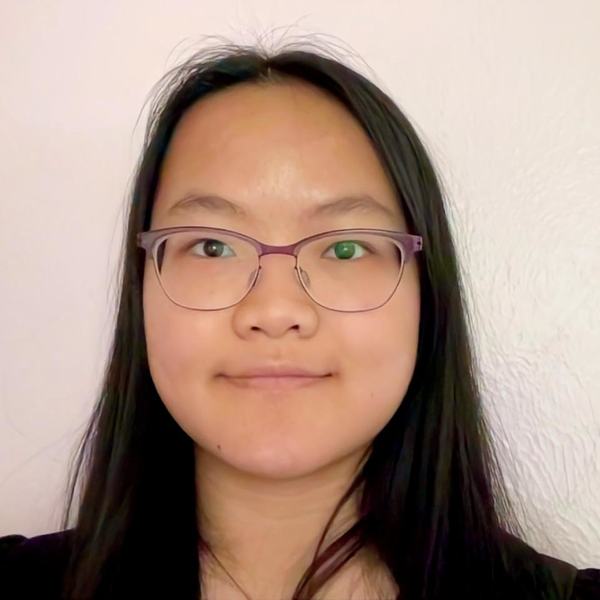
Linh V.
“People are imperfect, life is imperfect, and for peace and friendship to happen, you have to have the emotional agility to deal with unexpected problems and have the determination to keep moving forward towards the end goal.”
1. What inspired you to apply for this Peace Corps position?
I migrated from the Central Highlands of Vietnam to the Texas panhandle with my family when I was 12. We experienced many difficulties: language barriers, cultural shocks, financial issues, and health complications. The experience of living in a different country changed me forever. I became more kind, resourceful, resilient, courageous, and disciplined. After I graduated from college, I wanted to go through a similarly transformative experience again, but this time as an adult. Moreover, I wanted to help people and pay the support I've received throughout my life forward. I volunteered to serve where I was needed most, and the Peace Corps placed me in Mongolia.
2. Tell us about a moment that sticks with you from the first week at your site.
When I arrived at my apartment, I had a balcony with four plants already there. I explained to the landlord that I'd never taken care of plants before, but he kindly reassured me that I could do it. I was touched by his generosity in giving me his plants as well as his complete trust in me to take care of them. When I texted him a picture of the two cucumber plants dying during the Mongolian winter, he calmly said that they were at the end of their lifespan. I did my best to take care of the two remaining tomato plants, and I'm proud to report that they survived the Mongolian winter!
3. What projects are you working on?
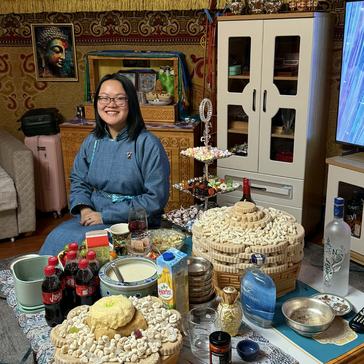
During the Mongolian school year, I co-teach English classes with local English teachers and sometimes lead teacher development workshops. I also co-facilitate an art club, a cultural exchange club, and a coding club with local non-English teachers. This summer, I plan to co-run several camps, most notably a low-resource mini-GPT coding bootcamp for high school students. We will run the code on CPUs, not GPUs, and because of the small scale, the results will only resemble English but won’t make sense on inspection. My hope is that this bootcamp will inspire students to be more ethical in their usage of AI tools, and if they choose to become software engineers in the future, they will create solutions that are beneficial to their communities and their environments.
4. What strategies have you used to integrate into your community?
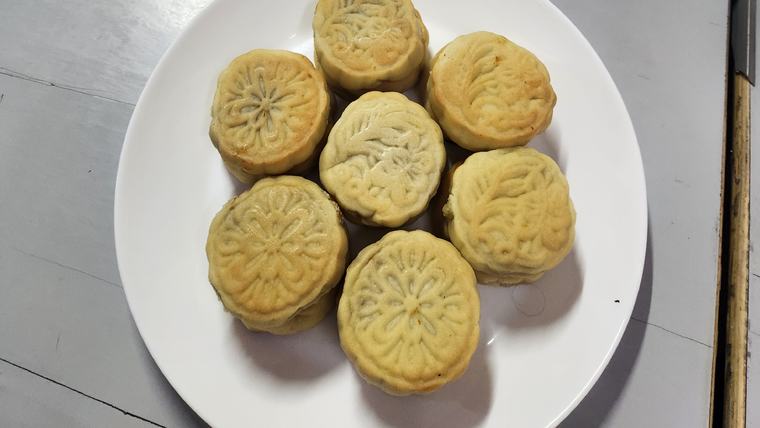
Despite being an introvert, I understand that I need to interact with as many people as possible in order to find opportunities for collaboration. To do so, I share at least one baked good per month with others. For Thanksgiving, I made pumpkin pie. For Christmas, I made brownies. For the Lunar New Year, I made pumpkin pie mooncakes to honor my Vietnamese American roots. For Pi Day on March 14th, I made pizza. And so on.
5. What’s a typical day like for you?
Monday mornings usually start with finalizing the materials for my art club. Then I head to my first English class of the week at 9:25 a.m. Then I spend time planning with two Mongolian English teachers until lunch. After lunch, I hold office hours for practice speaking English. My art club starts around 2 or 2:30 p.m., depending on the week, and runs for three hours. I usually end the day planning with one more Mongolian English teachers and then go home and cook dinner.
6. What is a highlight of your time in service so far?
I got to my site at the end of August, and when my counterparts found out that my birthday was in September, they organized a birthday party for me. They took me to a nice dinner, with a birthday cake, and concluded the evening with a karaoke session. I couldn't find many songs I knew, so I sang one Mongolian song, and they gave me lots of compliments. That night was my first time celebrating my birthday with a group of people. To pay back the love I received, I plan to throw a goodbye party when I finish my service.
7. What have you enjoyed most about the community where you are serving?
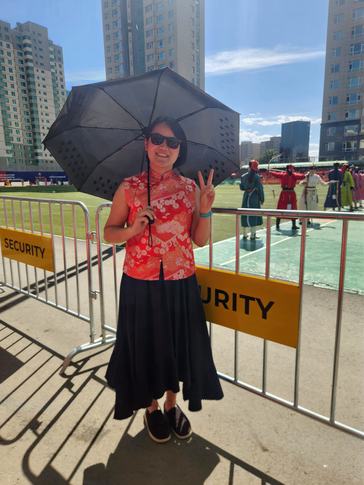
Before coming to my site, I didn't like sports. But now, I'm happy to share that I finally have a sport that I enjoy: archery.
I was touring a school when I mentioned to someone who worked there that I wanted to try archery sometime, and she said her husband does archery as a hobby. I have been learning from him ever since! I now have my own arrows, and I will get myself a customized bow soon so I can compete in a local archery competition. I was a little hesitant because I don't think I'm very good, but my teacher said that competing is the best way to learn and improve, so I will gather up my courage and compete soon!
8. What are some of the most important things you’ve learned from your community?
I am learning how to network with people I don't have much in common with. I also have learned that success is all about momentum and consistency. As long as my counterparts and I are still talking and listening to each other, it doesn't matter if some plans fall through. Being able to sustain the relationships means that we can still do something else together. The final outcomes may look different from my initial expectations, but they will be meaningful nonetheless.
9. How do you spend time when not working on a project?
I've always been a big reader, but recently I’ve started to brainstorm ideas for writing short stories. I finished writing one already, and it received lots of positive feedback! Now that I'm older, I realized that it's important to have hobbies that are not just about consumption, but also production.
Aside from my hobbies, I also have weekly scheduled calls with my friends and family in America. I'm very grateful that I've been able to maintain ties with people who I grew up with, and to have meaningful conversations about life with my immediate family.
10. Tell us about the strongest relationship you’ve developed while in country.
I would say the most unique one is my bond with a Mongolian teacher who teaches Chinese here. I took Chinese classes in college, so I really appreciate having someone to practice my Chinese with. We don't work together on any projects, so it feels more carefree and relaxing to hang out with her. We share food, talk, and one time, I even showed her how to do Mongolian-style archery. She also helped translate for me a few times to communicate with some Mongolian people.
11. What are you looking forward to in your remaining time as a Volunteer?
I look forward to traveling around Mongolia and running different camps this summer. The one I'm most excited about is a dinosaur-themed camp in the Gobi Desert. The target is young students who plan to become scientists in the future. I also look forward to helping train the new Volunteer cohort that is arriving soon. I hope they will have a rewarding time in Mongolia!
12. Tell us your favorite phrase in the local language.
I’ve learned many funny phrases here. “Морь харах,” or “to look at a horse,” is a euphemism for doing a number 1. “баавгай алах,” or “to kill a bear,” is a euphemism for doing a number 2. I hope to learn more interesting expressions in the future!
13. What will you do differently when you return to the U.S.?
I will learn to cook more Vietnamese dishes! When I was little, my mom cooked, and after she passed away, my dad cooked. When I went to college, I ate at a dining hall. Because of my lack of experience, I used to think cooking was magic and shied away from learning. Life in Mongolia has taught me to trust in myself more and experiment with ingredients with no set recipes. Now that I can cook and bake a bit, I would like to do more when I return to America, where there is more access to Vietnamese ingredients.
14. What would you say to someone thinking about joining the Peace Corps?
The mission “world peace and friendship” is meaningful and appealing, but definitely prepare yourself to put in the work for that to happen. People are imperfect, life is imperfect, and for peace and friendship to happen, you have to have the emotional agility to deal with unexpected problems and have the determination to keep moving forward towards the end goal. I like the quote “You can't control what happens to you, but you can control how you respond to it.” Being resourceful and adaptable is key to success and happiness during service. You don't have to have everything figured out, but if you join the Peace Corps, at least go with this mindset.
Learn more about serving as a Peace Corps Volunteer in Mongolia.



