 An official website of the United States government


Featured Volunteer Profile
Hewan P.
“My goal with my students is to build a safe environment where they know mistakes are okay and will never be judged … I want to show them that I make mistakes every day, and that it's a great way to learn, especially in a new language.”
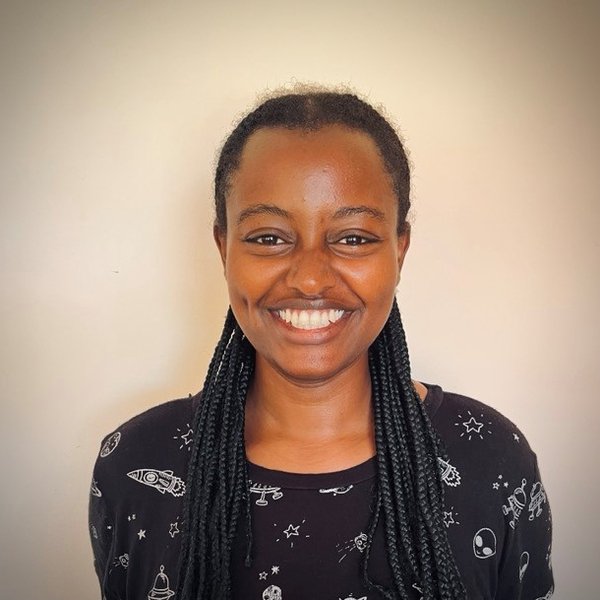
1. What got you interested in the Peace Corps?
I was born in Ethiopia and have lived overseas for most of my life. Prior to serving, I spent two years as a reading tutor with AmeriCorps in Colorado. During my time serving with AmeriCorps, I received my bachelor's degree in psychology and sociology from Kennesaw State University in May 2023. I've always wanted to live a life of service and feel that I'm making a real difference in the world. The Peace Corps seemed like the perfect opportunity to do just that.
Coming from a family of Returned Peace Corps Volunteers (RPCVs), I've been inspired by the stories of my parents, aunt, and cousin, who have all served in different parts of the world, such as Togo, Sierra Leone, Kazakhstan, and North Macedonia. Listening to their experiences and hearing how the Peace Corps shaped their lives and deepened their understanding of the world and themselves motivated me to join and experience that transformation for myself.
2. What projects are you working on?
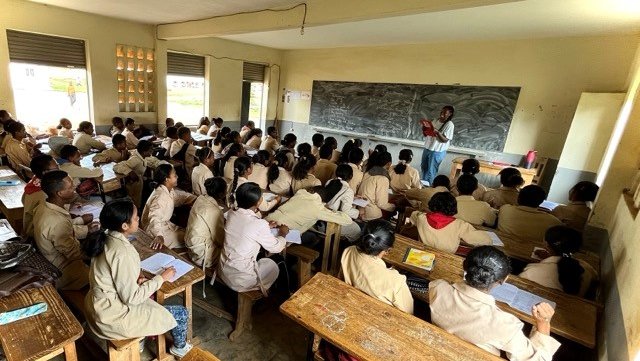
I teach high school students. Beyond teaching, I serve as a mentor, advocate, and bridge between cultures.
I'm currently working on building a library and multipurpose space in my community. The community identified the need for a library to increase connectivity, offer a space for learning, and promote literacy. The library will also include a computer lab, providing students and teachers the opportunity to learn about technology and how it can connect them globally. This project is meaningful because it creates a safe, inclusive space for students and encourages the exchange of ideas. Libraries are proven to support higher education, improve literacy, promote lifelong learning, and foster a stronger sense of community.
3. What strategies have you used to integrate into your community?
I've built many relationships that have helped me establish trust with locals.
Coming into my one year of service in my community I have integrated by spending time with the teachers and students, whether through hiking together or simply connecting with women in my community when I get my hair done. These casual conversations have not only helped me practice Malagasy but also made me feel more at home. I also run an English club every Wednesday, where we sing and dance, which has been a fun way to connect.
4. What is a highlight of your time in service so far?
Some of my favorite moments stand out, but one of the most rewarding has been seeing my students attempt to speak with me in English outside of school. My goal with my students is to build a safe environment where they know mistakes are okay and will never be judged (making mistakes is frowned upon here). I want to show them that I make mistakes every day, and that it's a great way to learn, especially in a new language. Another highlight is seeing students ask more questions in class. Initially, it was hard to get them to engage, but now they are curious and eager to learn about the English language and American culture, making me feel like I'm truly having an impact.
5. What have you enjoyed most about the community where you are serving?
I really enjoy the connectedness of my community. Everyone knows everyone, and there's a real sense of camaraderie. I've lived in other communities before, but this one feels special. People are always willing to help, even if they don't know you personally.
One of my fondest memories is the time I was invited to my counterpart's school so her students could hear an American accent. I spent hours talking with them, and it was dark by the time I was done. I was informed there was a small search party looking for me to ensure I was safe getting home. The way people care for one another and appreciate the simple joys of life is something I truly cherish.
6. How do you spend time when you are not working on a project?
When I'm not working on my project or teaching, I love to go hiking and explore the area with my host family. I've even spent time with my host family's relatives, allowing me to connect with a broader circle of people. While hiking with my host family, we discovered multiple mysterious craters, which made the adventure even more exciting. I also make time to connect with other Volunteers and share experiences. It's a great way to stay grounded and remind myself that we are all in this together.
7. What are you looking forward to in your remaining time as a Volunteer?
With the time I have left, I’d like to secure funding for my library and get it up and running to become a resource for future Volunteers. I envision it as a space for clubs, activities, and book donations. I also want to ensure the library is a sustainable part of the community, a place that will continue to help students and teachers long after I leave.
8. Once you finish your service, what will you do differently when you return to the U.S.?
After my time in Madagascar, I know I'll appreciate things I once took for granted. Living here has shown me how to unlearn my old ways and relearn how to live life more mindfully and intentionally. I want to continue this mindset of gratitude and simplicity when I return to the U.S., not only in my personal life but also in how I engage with others and the world around me.



