An official website of the United States government


Everything couples need to know about serving together

You and your significant other are ready to start a new life chapter by serving as Peace Corps Volunteers. We’ve compiled everything you two need to know—from submitting your applications to preparing for your new home.
What to know before you apply
When you find an opportunity that excites you, be sure to scroll down to read the details about serving as a couple. Most posts and programs accept couples but there are a few that do not. If not, the couples section will be blank. Each of you will need to submit your own application and qualify to serve for your respective program regardless of the country or sector. Some countries require each partner to serve in the same job sector, while others require different sectors. For instance, both may serve in Education, or perhaps one may serve in Education, while the other must serve in Agriculture or Environment This cross-sector requirement is often due to the location of the organizations requesting Volunteers.
You may also notice that not all countries accept same-sex couples. The Peace Corps is dedicated to fostering safe and productive assignments for Volunteers. For this reason, same-sex couples are not placed in countries where their safety could be at risk, and therefore, there will be fewer options on the website.
Couples in a domestic partnership may be encouraged to present themselves as married to respect the host country’s local cultural norms and expectations. In some cases, couples must be legally married to avoid conflicts.
What to know after you apply
In addition to completing the individual interview, you will also need to complete an interview together as a couple. This second interview is much shorter and focused on the challenges and opportunities that you may encounter serving together.
If your significant other is not selected or can’t move forward, you could still move forward as an individual.
What to expect during training
Each country conducts pre-service training a bit differently based on the available resources, staff, and accommodations. During pre-service training, everyone lives with a host family to encourage language acquisition and cultural understanding. Couples often live together but may separate for a few days of field-based activities. Cross-sector couples may live in separate communities based on where their individual sector training will take place. Placing each of you in a different household allows for increased interaction with others and an equitable training environment for both of you. Cross-sector couples likely will see each other for joint training days or on the weekends but that’s not always guaranteed.
If the thought of briefly leaving your best friend gives you pause, remember that pre-service training doesn’t last forever. Three months apart will help you individually build connections and focus on the necessary learning. And just think of all the great stories you two will have to share with one another after you reunite!
What to expect when serving together
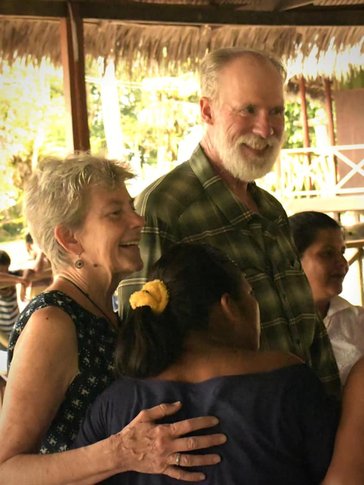
There are certainly benefits to serving as a couple. For one, you’ll have someone to share the successes and challenges. This retired couple said serving together was a dream come true.
Madeline and Clint K., who served together in Guatemala, had this to say: “Serving as a couple gave us mutual support to navigate the culture and work and helped us keep perspective on our service.”
Couples face unique challenges not experienced by single Volunteers. Integration can be more difficult as communities tend to give couples more space. Together, you’ll need to be more proactive in engaging with your shared community, which will also help you learn and retain the local language. Remember to show yourself grace if your significant other picks up the local language or adapts to your new life more easily. Find ways to support one another based on your unique strengths.
“The only disadvantage [was] that we tended to talk to each other in English rather than Spanish. We went to México with virtually no Spanish, and we learned a lot, but were never really good,” shared Mary H. about serving as an Environment Volunteer with her husband, John S.
You will live together in a house provided by one of your respective communities. Couples should expect similar living conditions as single Volunteers. Just because there are two of you, that does not mean you will get housing twice as big. Some couples may be required to live with a host family at their permanent site. Should one of you need to travel to a neighboring community to work, the commute shouldn’t be more than 30 minutes away.
You’re in good hands
Peace Corps recruiters and placement officers work closely with each applicant to understand their unique skills, needs, and interests. Stay in contact with them throughout the application process.
If you have specific questions about serving with your significant other check out our Couple FAQs or Connect with a recruiter.