 An official website of the United States government


Featured Volunteer Profile
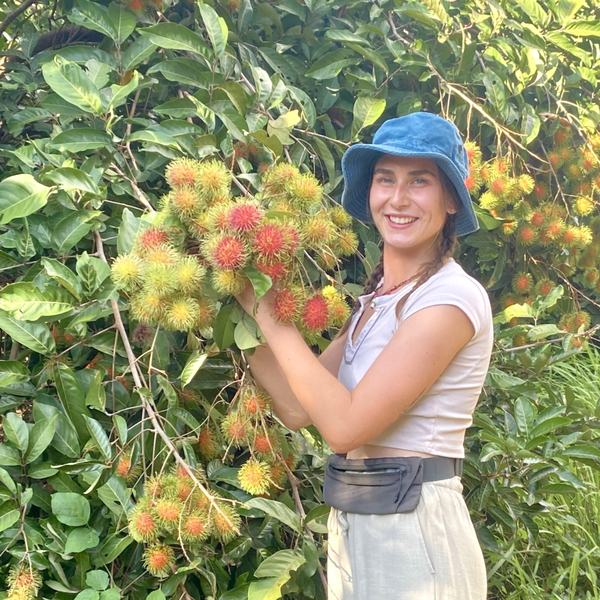
Sophia K.
“During the first few months at site, I found myself constantly wondering about everything .... Asking questions allowed me to get to know those around me and understand why things are the way they are.”
1. What got you interested in the Peace Corps?
When I was younger, I enjoyed volunteering and helping my community at the local food shelf and through other community programs. I also found myself interested in learning about different cultures and investing quite a bit of time into language learning, particularly Spanish.
When I was 15, one of my high school biology teachers told my class about his experience in Peru as a Peace Corps Volunteer with his wife in the 1990s. After hearing this teacher explain the beauty of the community and relationships he built during his service doing grassroots work, I knew that was exactly the type of work I wanted to do. When people asked me what I wanted to do after college, I told them that I wanted to become a Peace Corps Volunteer.
2. What projects are you working on?
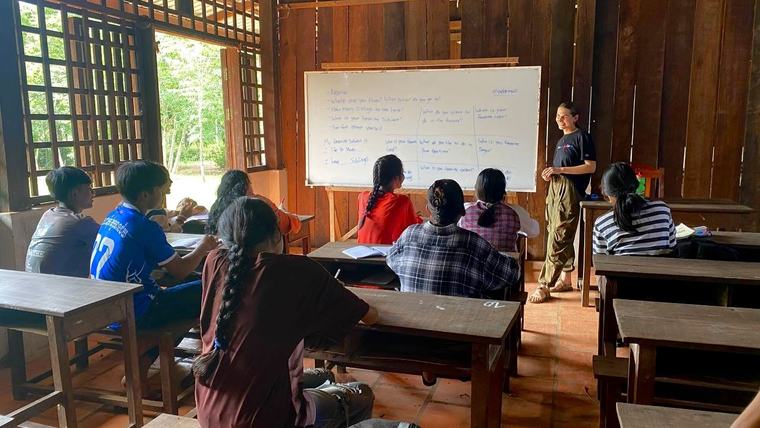
In my first year in service, I was focused on creating a library for high school students. The project was halted due to a brief conflict between Thailand and Cambodia, but we were still able to source and provide over 300 books in both Khmer and English languages for the students.
Additionally, I taught yoga twice a week at two different gym centers in town. These classes aimed to provide women in my community with a new skill to enhance both their physical and mental well-being.
In my final months of service, my students are exchanging pen-pal letters with students taught by my brother, who is a high school teacher in Minnesota, through Peace Corps’ Global Connections Program. Our goal is to have our students exchange knowledge, experience, and culture.
3. What strategies have you used to integrate into your community?
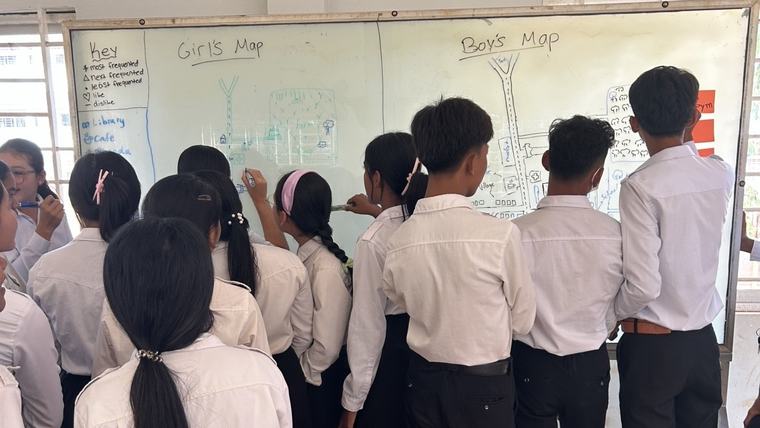
One of the main strategies I used to integrate into my community was to sit and observe. I am quite a forward and strong-willed person, but in a culture drastically different from my own, I learned that it is best to watch the actions and words of those around me to see how they react to things and others. This allowed me to adapt and participate with the culture respectfully.
During the first few months at site, I found myself constantly wondering about everything, leading to my second most important strategy: asking questions. Asking questions allowed me to get to know those around me and understand why things are the way they are. In the very beginning, I was nervous that my lack of knowledge and constant inquiries would be a nuisance, but almost everyone around me was eager to provide an explanation, sharing their culture and knowledge.
4. What is the highlight of your service so far?
The highlight of my service so far has been teaching yoga to the women in my community. It has been a privilege to get close to them and learn about their individual lives. Additionally, it is a way to show them how strong they are. Many of the women I teach lead busy lives, so I always make it a point to tell them that by doing yoga, they are showing up for themselves, which is an important aspect of self-care and mental health. It has been a privilege to be able to emphasize the importance of physical well-being and moving your body on a daily basis.
5. What have you enjoyed most about the community you are serving?
I have enjoyed the fact that everyone in my community is so willing to help each other. My community is very small, so everyone is familiar with everyone. I know that if I ever need a ride or assistance, my neighbors would be more than happy to support. It is beautiful to see my neighbors leisurely visit each other and offer up fresh fruit from their backyards. It’s clear that there is love and trust in my community.
6. What are some of the most important things you've learned from your community?
My community has taught me the importance of slowing down and really getting to know those around you. In the U.S., I focused on getting from one place to another, finishing one task and starting another; I never truly got to know my co-workers on a deeper level or ask my local barista and community members questions about their lives.
In my community here, however, there never seems to be a rush. Instead, it’s encouraged to take time to get to know the people around you, and you will be better for it. Going for a late night walk? Be prepared to tell everyone what you’re doing and where you’re going. By doing this, you will just have made a connection—and I can guarantee that person will smile and make a point of talking to you the next time you’re on your walk. It will lead you to making friends and having experiences you otherwise couldn’t have predicted.
7. How do you spend time when not working on a project?
When I am not working on a project or teaching, I can often be found in my backyard hammock with a good book. Exercising is also very important to me, and I enjoy doing yoga on my roof at sunset, running along the dirt paths of my community while the local dogs join in, or biking to the gym for strength training. While I enjoy my host mother’s Khmer food for lunch, I love evenings when I can play my favorite music and make my favorite meals.
8. What are you looking forward to in your remaining time as a Volunteer?
I am looking forward to making more connections with my students and coworkers. My students have become very invested in their English abilities and seeing their growth over the past year has particularly rewarding. I am also looking forward to spending more time with my host family as there is always new family lore to learn about. Lastly, Cambodia is a beautiful country, so I can’t wait to explore more of its regions during my school breaks.
9. What will you do differently when you get back to the United States?
I will focus on building a wider community of acceptance around myself. I plan to slow down and take time to learn more about those around me as I have found that every single person offers an opportunity to shape who I am.
Additionally, I would like to lead with more love and gratitude. Instead of seeing every day or activity as a task that must get done, I will intentionally work to find the beauty in everything I do. There is so much more to life than our mundane and everyday to-do lists, and you don’t have to travel far to obtain those little sparks. These sparks are already with and around you, you just have to tap into them.
Learn more about serving as a Peace Corps Volunteer in Cambodia.



