 An official website of the United States government


Featured Volunteer Profile
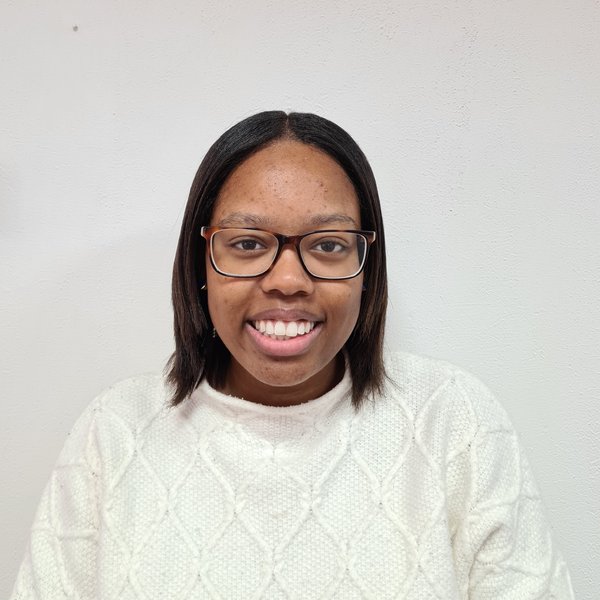
Ashli A.
“I love being a part of the holidays and traditions here. I can feel the pride and love that Moldovans have for their country in the way that everyone comes together to share in the joy.”
1. What got you interested in the Peace Corps?
Growing up in a small town in Georgia, I was always interested in how other people in various places live. As I learned more about other cultures through school, clubs and media, I became interested in experiencing them for myself by living abroad. Paired with my interest in development work in college, I thought the Peace Corps was a great opportunity to combine the two. I believe there is no better way to positively impact willing communities than by living with them and putting myself in their shoes.
2. What projects are you working on?
I have a weekly English club in the library with participants ranging from 5-16 years old. The club serves a dual purpose of fulfilling a requested community need of improving English skills and promoting use of the library (it’s easy for kids to check out books after the club since they are already being there). I co-facilitate the club with the librarian and a student volunteer who uses the opportunity to practice her leadership and English skills.
Additionally, I am supporting my counterparts in project planning and implementation. So far our collaboration has involved the writing of three grants, two of which were successful. Our projects include building life skills and increasing civic engagement for teenagers and revitalizing the local park, which involves making repairs and adding lighting and a volleyball net to encourage recreation and movement.
3. What strategies have you used to integrate into your community?
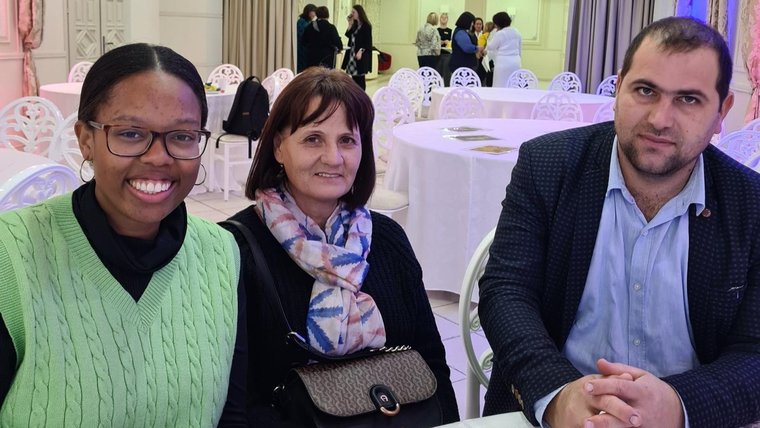
My main strategy is making individuals in my community feel seen and heard. I do my best to remember names, ask about their lives, and most importantly remember small details from every conversation. Following up on the well-being of a sick child or weekend trip to see their kids in the capital shows my interest and desire to form deeper connections. I also try to be present at community events. Even though I don’t understand everything that is said, showing up and making an effort goes a long way.
4. What is a highlight of your time in service so far?
A surprising highlight has been the bond I developed with some of the youth in the village. Before service, I had limited experience or desire to work with youth. Now, I find their energy, curiosity, kindness, and creativity to be refreshing.
5. What have you enjoyed most about the community where you are serving?
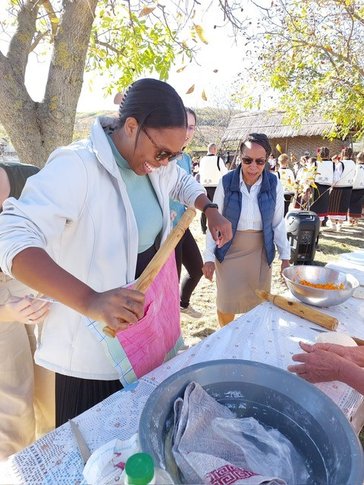
I work closely with the culture house, which is responsible for the majority of community events; I love being a part of the holidays and traditions here. I can feel the pride and love that Moldovans have for their country in the way that everyone comes together to share in the joy.
6. What are some of the most important things you’ve learned from your community?
The most important thing I’ve learned so far is that a community is stronger together. I have tended to think I can solve all my problems on my own. Seeing the close collaboration in my community has inspired me to use all my resources and ask for help when I’m struggling. I'm very glad to have the support of my friends, family, community, fellow Volunteers and Returned Volunteers as I go through my service.
7. How do you spend time when you are not working on a project?
One thing I love about Moldova is the emphasis on relationships. When not working on a project, I spend time with my counterparts having tea and getting to know them. In my free time, I love to read and am a part of a book club with fellow Volunteers. I also watch Romanian drama shows to practice the language and make time for physical exercise to boost my moods and unwind from the day.
8. What are you looking forward to in your remaining time as a Volunteer?
Now that I’ve built trust with my community, I’m really excited that our collaboration is yielding projects where I can provide more helpful input and contributions. I’m also looking forward to engaging with my community on a deeper level now that my Romanian has improved. Lastly, I want to continue surprising myself in terms of resilience, perseverance, and dealing with the unknowns that Peace Corps service presents.
9. Once you finish your service, what will you do differently when you return to the U.S.?
I hope to return to the U.S. with more self confidence in myself and abilities. Prior to starting service, I experienced a period of intense self-doubt that made me question how prepared I was to deal with the realities of no longer being a student. In my time here, I’ve seen my persistence, competitiveness, adaptability, and desire to do a good job. All traits that were present but I had convinced myself weren’t strong. When I return to the U.S., I want to bring this renewed self-confidence into everything I do, whether that be in my future career, relationships, or perspective on life.



