 An official website of the United States government


Featured Volunteer Profile
Sophie B.
“People in my community love to dance. There is a rich culture and tradition around it, but it is also just fun ... I feel lucky that I have been invited to be part of the community in this way and gotten to know the women and culture better.”
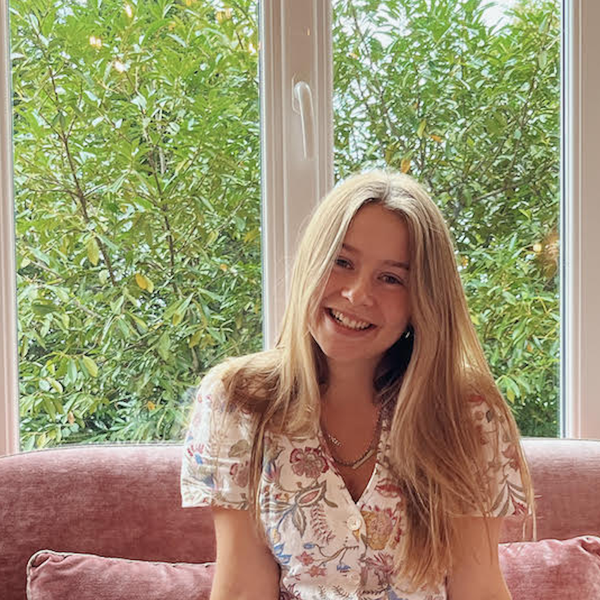
1. What inspired you to apply for this Peace Corps position?
Some of the people I admire most were in the Peace Corps, so they were my main inspiration to look into the Peace Corps as a post-grad opportunity that aligned with my goals, passions, and values. During my final two years in university, I developed a deep passion for women’s health. The Community Health Empowerment Project (CHEP) program in Zambia has a strong focus on maternal health, which made me excited to apply and eventually accept the position. Also, how can I study and hope to work in global public health spaces without experiencing health systems, barriers to health, and time abroad in health spaces? It was a natural next step to continue my global health education in a less traditional way.
2. Tell us about a moment that sticks with you from the first week at your site.
The first week at site was intimidating—trying to settle into my space, get to know people, understand expectations, and so much more. I was nervous about doing the wrong thing, misunderstanding someone, or forgetting a name! In the end, I did all these things, and it didn’t stop the world from turning. But that first week, I was especially worried and hung up on everything. My host mom doesn’t speak any English, but she is chatty! She has been such a huge help during my entire service, and especially during that first week. We initially had some kind of misunderstanding, causing us to both erupt laughing—a real, deep, belly laughter. She wasn’t laughing at me, nor me at her; we were laughing together at whatever we had failed to understand and the inconsequential but funny outcome of that misunderstanding. This moment loosened me up and brought me closer to her. I let go of the fear about not always knowing what was going on, having to ask people to repeat themselves, and making mistakes. There have been many misunderstandings since, but my host mom and I understand each other more often than not these days.
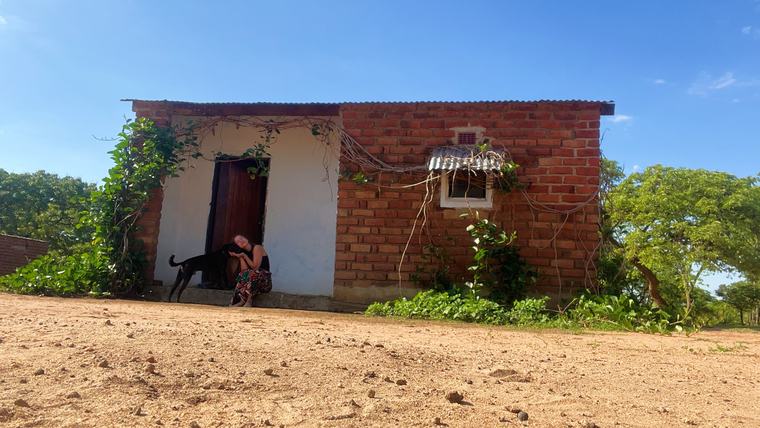
3. What is your main job?
My main role is co-facilitating health programs, conversations, and outreach and to build the community’s capacity to live healthier. For one project I and my community counterparts, clinic staff, and the district health office applied for and received a Peace Corps grant to train 25 community members to be safe motherhood educators in an area lacking key information on pregnancy, post-partum wellness, and raising children under 5. This training has been incredibly successful, as we have seen increased and earlier attendance at antenatal appointments, healthier habits adapted by households, and no children born with HIV. Through this grant, we also started a community garden that will serve as the source of food for cooking demonstrations to caregivers of children under 5 and an income-generating resource for the clinic so that in the future it will have its own resources to train volunteers as needed.
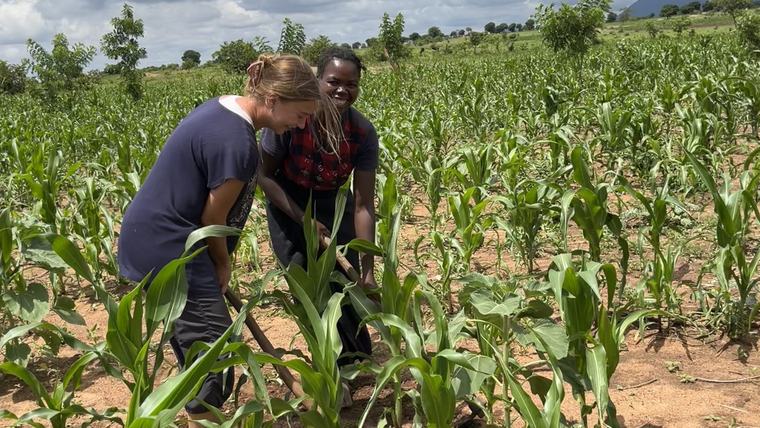
I also work bi-weekly at the clinic with volunteers and staff to educate and provide services to pregnant women and post-natal mothers. Monthly, there is outreach to five neighborhoods to monitor and promote healthy growth in children under 5. This term, I started a weekly health club for adolescents with two teachers at the school. The topics are selected by the youth, who are encouraged to share what they learn at home so there is more conversation on these health topics in the broader community. I also co-created a support group for HIV-positive women seeking services from the clinic. This group started a savings club, is learning financial literacy, and applying to be a farm cooperative.
4. What strategies have you used to integrate into your community?
I have used two main strategies to integrate. The first is language. I have always been a lover of languages and this has only deepened since being in the Peace Corps. People everywhere appreciate the effort it takes to learn a language. It requires study, embarrassment, frustration, and vulnerability. Learning the local language seemed like the least I could do to integrate into a community that was welcoming a stranger. Since very few members of my community are proficient in English, my language ability has been a cornerstone to getting to know people and engaging in successful health projects. I also love surprising people with my language ability and the joy it brings them to have a foreigner speaking with them in their mother tongue.
The second strategy is baking and sharing food! Baking has been a hobby of mine for as long as I can remember, and one of my favorite things about baking is sharing it with others. In Zambia, baking has required more creativity than usual, but it is really satisfying to have a product that is yummy to share with neighbors and coworkers. It also sparks conversation, knowledge sharing, and brings us closer. People are always graciously sharing local food with me, so I enjoy the challenge of using what is locally available to make a sweet treat.
5. What’s a typical day like for you?
Every day is a little different, because I am not going to the clinic every day from 9-5 or anything close to that. My days always start when the sun comes up. I make coffee, let my dog out, and sweep the house, front porch, and yard. If I am going to the clinic, I leave at 8 a.m. on my bike. If I am not going to the clinic, I do laundry, go to a friend's house, or go to the fields with my host family. Between noon and 2 p.m., I finish up at the clinic or the fields and we have lunch. I eat the staple food, nsima, with my host family a couple times a week. After lunch, I wash dishes and then get water from a borehole that is pretty close to my house. Some of the kids will help me fill and carry the buckets in exchange for goodies. During the rest of the afternoon, often the kids will come over to color, play Uno, or play soccer. A few afternoons a week I have commitments like the school club or support group meetings. If the kids are occupied, I spend time with neighbors, but I also enjoy reading or going on a long walk with my dog. Around 5 p.m., I light my brazier to heat water to bathe with and make dinner. Once it is dark, no one is outside or socializing, so I try to call friends and family back home after 7 p.m. my time, but the network is not always on my side! Around 8:30 or 9, I get ready for bed and read until I fall asleep.
6. What is a highlight of your time in service so far?
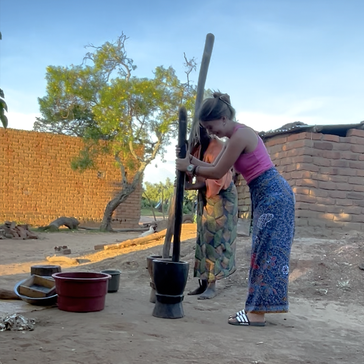
Being a part of creating spaces and groups centered on women’s voices, health, and well-being around issues like HIV, sexual and reproductive health, and non-communicable diseases has been the most rewarding part of my service. It has introduced me to people who have become some of my closest friends in the community, and the women inspire me with their strength, humility, and resilience. I have so much to learn from them, and they are so open and authentic. Women’s health is so much more than just reproductive health but is often reduced to that. Spending time in the community in formal or informal groups of women has allowed me to learn so much about barriers they are facing in seeking and attaining good health and witnessing firsthand the social determinants of health. This may sound very serious, and while it is, these are rarely spaces of sadness. Rather they are hopeful and supportive spaces that bring the community together in an effort to achieve better health.
7. What have you enjoyed most about the community where you are serving?
People in my community love to dance. There is a rich culture and tradition around it, but it is also just fun! I am not a great dancer, especially compared to the women in my community, but it has been fun to learn and get to know people this way. Whenever there is an opportunity, we dance—on holidays, when guests come, or just when we feel like it. Women of all ages will dance; the girls look up to women in the community and try to emulate them from an early age. This is true beyond the dancing, but being part of the real dancing happens when you come of age, so it is symbolic and important. I feel lucky that I have been invited to be part of the community in this way and gotten to know the women and culture better.
8. Tell us about the strongest relationship you’ve developed in country.
My strongest relationship is with my neighbor, Judy. We became close about a month into my service. She was pregnant and not going to the fields all day every day like everyone else. When I wasn’t working on a project, I would sit outside with her. At first, we didn’t say very much, but as we got more comfortable, and my language got better, we started to have long conversations. She would also be at the clinic for antenatal appointments, which I would be a part of, so we would talk about pregnancy health at home, too. It was her first pregnancy (she is the same age as me—our birthdays are only a week apart) so she had many health questions and I had more personal questions. We got to know each other and our different cultures this way. It was fun to ask each other questions like “what is dating like in Zambia” or “do people in America eat with their families every night?” Judy is also a great source of information on what is going on in the community; she knows everyone from growing up here, so she is always in the loop and can give me context.
As time has gone on, she understands my language and its shortcomings and helps correct me or helps others understand what I am trying to say. We don’t always understand each other, but because we want to, we try however we can, often via charades or using simple words. When her baby was born, I continued to spend a lot of time with her. Judy’s partner is in school a couple hours away, so she lives with her grandma. Because of this, and how busy everyone was with farming, I helped out a lot. For example, I would get back from the clinic or a project, Judy would drop off the sleeping baby for me to watch so she could cook, bathe, do laundry, etc. I was nervous caring for such a young baby, but Judy trusted me and we figured a lot of it out together. There is so much generational knowledge about motherhood that is passed down in the community, and I have been lucky to absorb through this our friendship.
In the past year we have both changed a lot and our friendship has grown. Her baby is almost one now, just starting to walk, which has been incredible to witness. However, it makes me sad that my service is coming to an end and I won’t be here for so many upcoming milestones. Making such a great connection has been amazing for so many reasons. I will do my best, of course, to stay in touch and come back to visit.
9. What are you looking forward to in your remaining time as a Volunteer?
I am looking forward to so many things! There are my current projects that I want to make the best they can be, focusing on sustainability. Then there are the relationships I have made and am fostering by spending intentional time with people while I am still here. I want to explore more of my province by visiting the sites of my fellow Volunteers, who I love and admire. Finally, I am excited to continue to learn as much as I can from the people around me. This includes my community, other Volunteers, and Peace Corps staff.
10. Tell us your favorite phrase in the local language.
Kum'mawa in Nyanja or Chichewa is how Zambians refer to Eastern Province (where I live), but it also refers to where the sun rises. I appreciate that the language is tied to nature rather than man-made things. It is understood across Zambia, despite the 73 different languages, that Eastern Province means “toward sunrise.” The name is full of hope and beauty and the promise of a new day.
Learn more about serving as a Peace Corps Volunteer in Zambia.



