 An official website of the United States government




Featured Volunteer Profile
Haldan J.
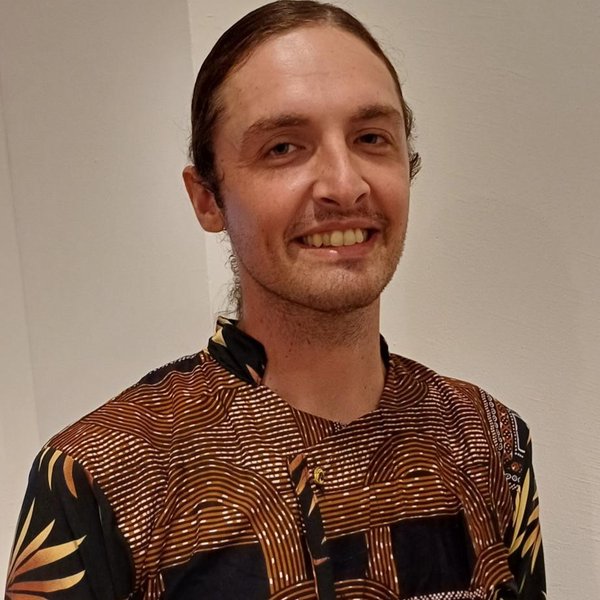
“Many Gambian families have joking relationships with each other, and I discovered it’s a great way to get to know strangers … I utilized this cultural unlock to my full advantage, joking with family and community members to build strong relationships.”
1. What got you interested in the Peace Corps?
Ever since I was in high school, I have had a yearning for exploration. The thirst for adventure and challenge has manifested in many ways. I was introduced to my first opportunity to volunteer abroad during my college German language class. In this class we had to translate an advertisement for a volunteer abroad program in Germany. After learning about this program, I thought to myself, “why not apply?” The following summer I was on my way to Germany, alone, nervous, and excited for the journey ahead. But I was ready to embrace the challenge! After my first foray into volunteering and service I decided to do it again after college, volunteering in Germany in the summer of 2021, and after that I was back home teaching at an elementary school in D.C. Through these experiences I discovered that service to others was my primary motivator, and this love combined with the tireless yearning to explore is what led me to apply for the Peace Corps.
2. What projects are you working on?
My two years at site I have worked with counterparts to co-teach and host workshops, supported science and social and environmental studies clubs at my school, and worked with teachers and the community to open a school library.
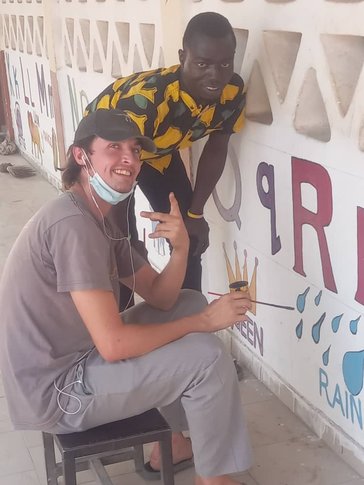
Additionally, community members and I came together to fix a water supply issue in the local community garden. We also partnered with local NGOs to co-train community members on how to make organic fertilizers and composts that preserve soil fertility. It has been a busy two years!
3. What strategies have you used to integrate into your community?
The first and most important strategy I used for integration was developing my local language skills to a high proficiency. Working hard to develop my language not only allowed me to connect with others and develop strong relationships, but also demonstrated to my community my curiosity, care, and sincerity to learn and integrate into their culture.
The second strategy I used to integrate was humor. Luckily, most Gambians have a great sense of humor. Many Gambian families have joking relationships with each other, and I discovered it’s a great way to get to know strangers. As a humorous person myself, I utilized this cultural unlock to my advantage, joking with family and community members to build strong relationships.
The third strategy was to attend community events/programs, and just generally make time for people so my presence could be felt. However, I also gave myself time and space to relax so I could be present for my community at these critical moments.
4. What is a highlight of your time in service so far?
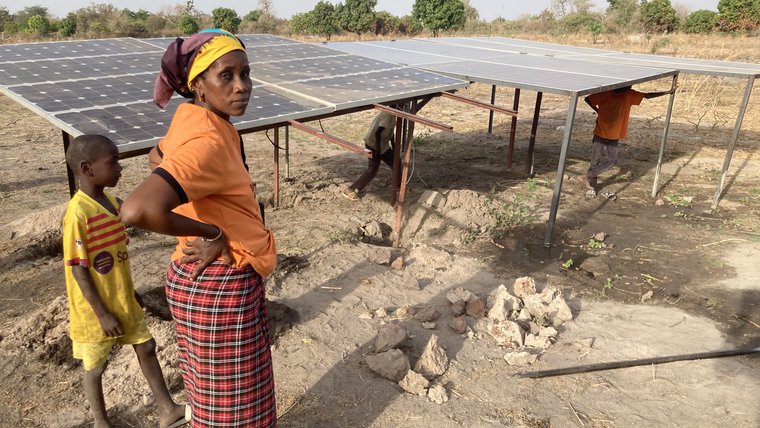
Although there have been many high points throughout my service, the highlight has been working with my community to solve the water supply issue in the community garden. Water supply has been a problem for my community stretching back 15 years. The community tried several times on their own to solve this problem. However, the money they were able to raise proved little, and the equipment they were able to buy was of poor quality—it broke quickly and left the community stranded. To work with the community to diagnose the issues, plan a solution, fundraise and implement the project has been a rewarding if not always easy process. Repairing the water supply to the community garden has helped more than 3,000 people gain access to nutritious food. I am proud that I was able to help solve a systemic problem in my community.
5. What have you enjoyed most about the community where you are serving?
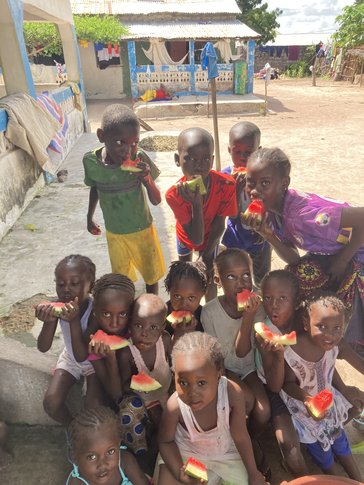
This question is difficult to answer, for I have enjoyed so many different aspects of my community. However, if I were to put one joy above the rest it would be my host family. The host family I was placed with at site has been so kind and full of grace. They are a large family, with four host fathers, five host mothers, and over 30 children—15 of them below the age of 10! Coming from a small American family, the size of my Gambian family was a shock. However, time with my family eventually soothed my anxieties like a stream of water can smooth a stone. They have seen me at my best and worst, and through it all they never lost their grace and patience towards me. I am very grateful to them, and the success of my service would not have been possible without them.
6. What are some of the most important things you’ve learned from your community?
One of the most important things I have learned from my community is how to work with people with whom you have a fundamental disagreement but share a common goal. Throughout your life you are going to encounter people you disagree with. However, you will need to learn to put your differences aside for the people and communities you serve to focus on common goals. Do this by looking at what each individual brings to the table, the experience and knowledge that they have, and acknowledge the gaps in your own. Do this while also being aware of your own strengths and needs, and the areas where you will need to be more involved in than others. Everyone brings something to the table, the key to group success is often identifying those strengths for the good of a common goal.
7. How do you spend time when you are not working on a project?
My favorite pastime is socializing. When I am not socializing with teachers at the school or with my host family, I can be found underneath a mango tree or in my room relaxing, usually listening to music or reading. Power at my site is limited, so movie time is a once-in-awhile treat that I mostly share with my little siblings.
8. What are you looking forward to in your remaining time as a Volunteer?
The opportunity to spend my remaining days at site resting and with my community. The work and demands of service can be stressful, so it is a relief to know the work is done and that all I have to do now is be present for people. Of course, I still need to pack and organize, but it is nice to know I can spend the remainder of my time being present and enjoying the company of people I care about.
9. Once you finish service, what will you do differently when you return to the U.S.?
One thing I will do differently when I return to the U.S. is be more kind to people. It really is amazing the things you can accomplish when you practice kindness and compassion in your everyday life. Doors will open you never thought possible, and you will feel a sense of relief day to day. Too often people mistake kindness for weakness—nothing could be further from the truth. Martin Luther King and Mahatma Gandhi both got it right. Choosing kindness and compassion over resentment and revenge is a much better way to live and solve problems—and it truly works. That doesn’t mean be a pushover and not have boundaries, but rather cultivate peace by being empathetic, sympathetic, and understanding to the best of your ability. This is what I will do differently when I return to the United States.



