 An official website of the United States government


Featured Volunteer Profile
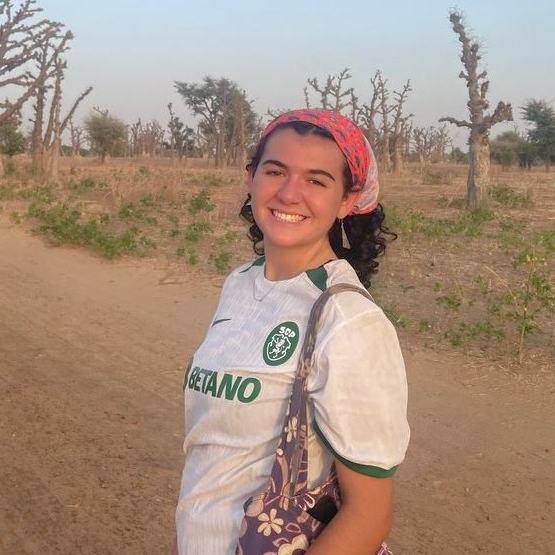
Molly G.
“One of my favorite things about Peace Corps service is how little things can turn into important things, and how a mundane afternoon walk turned into a weekly tradition of foraging and making tea with my host brothers.”
1. What inspired you to apply for this Peace Corps position?
I was introduced to the Peace Corps in 2021 during a university career fair. Through the maze of booths and fliers, the Peace Corps stand caught my eye. A Community Economic Development Volunteer from Jamaica told me about her work with banana farmers to make their plantations accessible to tourists. Listening to her stories, I was inspired by how she integrated into her community and how that integration allowed her to implement sustainable projects. I signed up for the email list and that was it. I knew my future was with the Peace Corps.
While some people know exactly what sector they want and where exactly they want to serve, I did not. I applied via the “serve where needed most” option, provided by the Peace Corps for adaptable individuals hoping to make a big impact. With my background in public health, I was chosen for the Maternal and Child Health Volunteer position in Senegal, West Africa. Without this option, I wouldn't have been introduced to the wonderful hospitality (“teranga” in Wolof) of the amazing country that became like home to me.
2. Tell us about a moment that sticks with you from the first week at your site.
The first week at site can be overwhelming. Learning a new language was difficult and, coupled with the distance from home, I was a bundle of nerves. As the Peace Corps van pulled up to the compound that would be my new home, a group of 15 women sat in a circle, waiting to welcome me. I started to feel more comfortable as the women introduced themselves, and I began to feel like I had a network of people that I could talk to and rely on. Later in the week, I visited their homes and families, drinking countless cups of “attaya” (tea). In my first week in a rural village of approximately 2,500 people I didn't have time to feel afraid or nervous. People were eager to share their culture and homes with me, whether I knew it or not.
3. What projects are you working on?
As a Maternal and Child Health Volunteer, I work in the community health post from Monday to Friday. At the health post, I conduct height and weight measurements of children six months to two years alongside my counterpart, the health post’s growth monitoring specialist. We use the measurements to determine possible nutritional interventions for children under certain weight benchmarks.
An important part of my weekly routine is assisting in child vaccinations with my Senegalese colleagues. In addition to vaccinations, my counterpart and I give 5- to 10-minute health talks on topics ranging from breastfeeding to the importance of mosquito nets and keeping to vaccination schedules.
I also facilitate two clubs at the local primary school, an English and health club. These meetings occur once a week and are highly interactive, involving drawing, videos, and physical activity. At these clubs, skills like handwashing, nutrition, and English can be practiced in a less rigid atmosphere of learning. Currently, I am implementing a grant to construct a well at the health post, with the aim of improving health outcomes for children under two. The well will provide water for the health post’s garden. This project aims to lower the rate of malnutrition in the health post service area while simultaneously educating caregivers on positive nutrition practices.
4. What strategies have you used to integrate into your community?
In Senegalese culture, greeting others, even in passing, is a sign of respect. In my first weeks at site, I greeted as many people as I could. Any time I left my compound, I would talk with almost every person I came across, using this cultural norm to my advantage. These weren't just greetings. A simple hello would typically lead to larger conversations about who I was and my work in the village. I found myself being invited to many weddings and baby naming ceremonies that furthered my integration into the community. Now, when I walk through the village, I am met with smiles and people shouting my name from the streets.
5. What’s a typical day like for you?
Every day I go to the health post from 9 a.m. to 1 p.m., where I support patient intake by taking blood pressure and temperatures alongside my counterpart. For children, I take weight and height measurements as well for our growth monitoring records. After my time at the health post, I spend time with my family before lunch, coloring with the kids or talking with my host mom at her sandwich stand. After lunch, I prepare for the English club or the health club, which meets at 4 p.m. Then I go back home, where I relax and either read outside with my host family or call my American family and friends back in the U.S. After a late dinner at 9 p.m., it's time to go to sleep and do it all over again!
6. What is a highlight of your time in service so far?
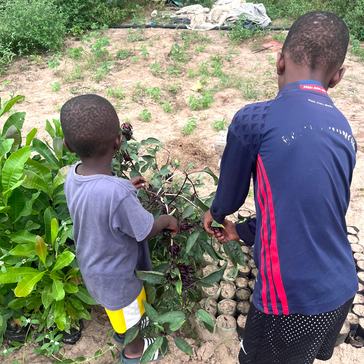
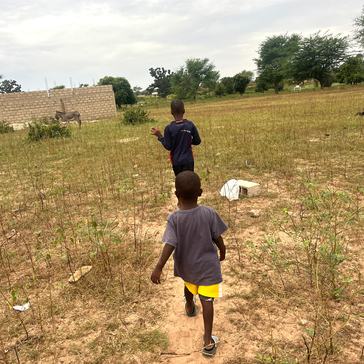
A highlight of my service has been making “attaya bissap” with my three host brothers. Attaya is a Senegalese tea drink and bissap is a type of hibiscus flower. In the weeks after the rainy season, shiny red bissap flowers sprout everywhere the eye can see, growing in peanut fields as well as among arid patches of grass outside schools and compounds. One afternoon I came across a patch of bissap and, after talking with the farmers, discovered that it was up for grabs. I told my family about the bissap and my host brothers immediately asked if we could collect it to make attaya bissap. The following day, we went to harvest some. Since bissap is a perennial, we were careful to pick the flowers and leave the stem, so the plant would continue to grow. After 45 minutes of running through the fields, and a couple breaks for games of tag, we trekked back to the compound, grinning ear-to-ear with our bountiful bissap harvest. Then we boiled the bissap, creating a sweet ruby red syrup that we mixed with the attaya. With smiling faces, my host brothers served the tea to family members throughout the compound. Every week thereafter, we dedicated one day to foraging for bissap flowers. One of my favorite things about Peace Corps service is how little things can turn into important things, and how a mundane afternoon walk turned into a weekly tradition of foraging and making tea with my host brothers.
7. What have you enjoyed most about the community where you are serving?
There are many things I enjoy about serving in my community. The experiences granted to me through this opportunity make me fall more in love with my community every day. From riding in the back of an ambulance during vaccination campaigns to learning how to dance, to making cups of tea, this community has been instrumental in allowing me to experience all that rural Senegal has to offer. These opportunities would not have been possible without the teranga (hospitality) of community members. Most, if not all, community members want me to love Senegal as deeply as they do. Their generosity has opened doors to experiences and opportunities I could never have imagined.
8. What are some of the most important things you’ve learned from your community?
The patience my community exhibited in the first weeks of my service allowed me to slowly open up and be able to be my true self. Their patience, coupled with their openness, created an atmosphere of support that has allowed me to thrive.
I’ve participated in a variety of major projects and small daily activities. I feel so comfortable now that I’ve danced in front of 50 people at a baby naming ceremony and participated in important project meetings at the mayor's office. I hope to take this mentality with me after service, supporting those around me to be their best selves.
9. How do you spend time when not working on a project?
In my downtime, I prefer to read or run, two hobbies I picked up in Senegal. Going on runs in and around my village allows me to get in much-needed exercise but also allows me to relax and let off steam. After an evening run, I feel more motivated and prepared to face the next day! These runs have even inspired some girls to try it for themselves.
During the midday heat I enjoy reading on a “basan” (a woven mat for outdoor use) in the shade of the big mango tree while my host mom lies beside me. Reading allows me to spend time with my family while also enjoying my own personal relaxation.
Taking time to relax is important to me. When I start to become overwhelmed with work or other activities, running and reading help me to prioritize my thoughts, making my mind clearer and allowing time for myself.
10. Tell us about the strongest relationship you’ve developed while in country.
Throughout my service, I have been lucky to enjoy many great relationships with family and community members. The relationship I have with my counterpart Aissata, my best friend at site, is a special one. She spent time teaching me the ins and outs of the health post—where the materials are, who to ask for help, and how to perform daily tasks like patient intake. During our time together, I share with her what growing up in America was like. In turn, she shares with me what a childhood in Senegal was like, such as walking 16 km to high school every day.
As our relationship develops, I was able to share my emotions, knowing that if I ever had issues, work or otherwise, she would be in my corner, ready to help in any way. Having a trusted friend in my community has helped me immensely during service. She has been there to assist with any work, language, or personal problems and assures me that she is always there for me. Once a month, I go to her family's compound for lunch, where I talk with her family members and help cook. Getting to know her outside of work has helped us share our authentic selves. I know this is a lifelong friendship that will continue after Peace Corps service.
11. What are you looking forward to in your remaining time as a Volunteer?
Besides spending time with my host family, in the remaining three months I have left, I'm looking forward to completing a community garden project. Despite a couple bumps in the road, health post staff have stayed undeterred in their effort to co-facilitate this grant for over a year. The project includes the construction of a well and the installation of a garden at the health post. Produce grown in the garden will go to children who are malnourished. While I'll be able to support the establishment of the garden, I won't be able to see its benefits to the community. Despite this, the project brings me joy, as the work I'm doing will have a lasting effect on the health post and the community.
12. Tell us your favorite phrase in the local language.
My favorite Wolof phrase is “ndank, ndank,” which translates to “slowly, slowly.” It’s a simple phrase but has many uses. “Ndank, ndank” can mean “slow down, relax, and be present.” It is a reminder to enjoy the little things without focusing on stressors like work or school. The phrase is also used to teach patience. When I first started learning Wolof, my language facilitator used this phrase every day. He explained that learning a language takes time and that we should not be frustrated with ourselves if we make mistakes. “Ndank, ndank” is also useful in the work environment. There are times when I have been eager to start or continue a project and have been told, “ndank, ndank,” meaning, “We will get this work done, but we don't want to rush.” Everything will work out if we allow space for it.
13. What will you do differently when you return to the U.S.?
In the U.S. many of us live very fast-paced lives. Being in Senegal has taught me that it's okay to take a step back, relax, and see the bigger picture. At the start of service, I placed a large emphasis on work. I missed social gatherings and celebrations because I wanted to show that I was dedicated to my mission of service.
One day, in the middle of the week, my counterpart didn't show up to work. I wondered if she was sick. After asking around, I learned that she was attending a friend’s multi-day baby naming ceremony. In Senegal people often take off from work to attend weddings and celebrations.
When people come back from seeing friends and family, even for a short time, they are refreshed and have more energy for work. I will maintain this perspective when I return to the U.S.
14. What would you say to someone thinking about joining the Peace Corps?
Do it. No matter where you go or what community you live in, you will learn invaluable lessons. As a Volunteer you will become a better problem solver. Whether it's figuring out how to explain something in local language or determining the best way to deliver health talks in a clear and engaging way, the Peace Corps empowers you to figure out new and creative solutions to various challenges. The Peace Corps also expands your worldview, by experiencing firsthand what it is like living in a new environment; it will give you a deeper appreciation for another culture.
Learn more about serving as a Peace Corps Volunteer in Senegal.



