 An official website of the United States government


Featured Volunteer Profile
Ian O.
“Meeting new people has not only enriched my personal experiences but also opened up possibilities for meaningful change, reminding me how powerful human connection can be in shaping ideas and inspiring action.”

1. What got you interested in the Peace Corps?
When looking at graduate schools, I interviewed a Returned Peace Corps Volunteers who served in Kyrgyzstan, and he recommended the Peace Corps as an option to make graduate school more affordable. As I looked deeper, the more interested I became. I was still unsure of what I wanted to do after college, and thought that 2 years of working in the field could help determine my future path. I also wanted to go outside of my safety zone and experience a place I had not visited and likely would never travel to if not for the Peace Corps. I chose Nepal because my grandfather was a researcher of Sanskrit and Nepali was the closest language to Sanskrit.
2. What projects are you working on?
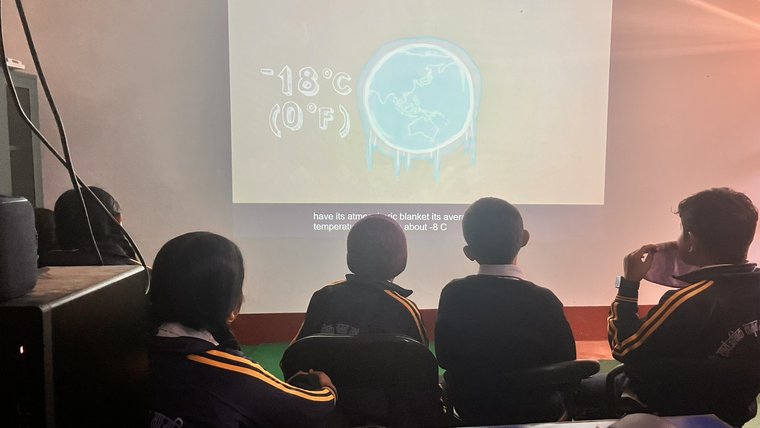
Currently I am working on a digital education project mainly for teachers, as I saw that while the school provides teachers with laptops, they only use them once every 3 months when they write the exams. I help teachers understand how to utilize resources such as PowerPoint and YouTube for teaching. Ultimately, I intend to install projectors in all classrooms so teachers can utilize them for their classes. I also am planning a library project, working with organizations such as Darian Book Aid, to create a space for students to learn and read books for enjoyment.
3. What strategies have you used to integrate into your community?
The first strategy that I used was to try and speak Nepali as much as possible. Even if your Nepali is terrible, the sheer fact that you are trying can still earn some respect within the community. The second strategy was to spend time with my host family. I had tea with them every day, helped with farmwork, and joined all their celebrations. Hospitality is a central part of Nepali culture. The third strategy was to honor their culture. Never judge them from the lens of an outsider, as each country has their history and their culture.
4. What is a highlight of your time in service so far?
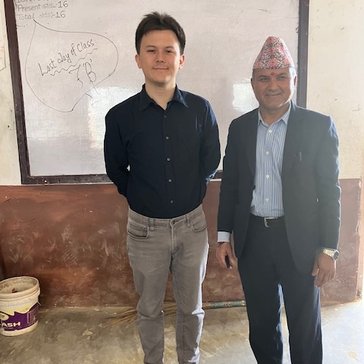
One of the biggest highlights of my journey so far has been working with students at school. Every day I feel proud to be supporting Nepali youth—teaching them in classrooms, playing with them during free periods, and seeing them grow little by little. There is something magical about seeing their curiosity unfold and their confidence build with time.
One moment that stands out is working with a student to prepare him for a spelling competition. He was already one of the best in English in his class, but his pronunciation was still shaky—a common issue since certain English tones and sounds simply don’t exist in Nepali. We practiced together every single day for a month, going over words, sounds, and expressions until he grew more confident. The day he became No. 1 in the entire municipality I was overwhelmed with pride and emotion. It was not just his victory, but a shared achievement that showed me how much can be accomplished with patience, dedication, and encouragement.
5. What have you enjoyed most about the community where you are serving?
What I’ve enjoyed the most so far is the opportunity to meet new people. Although the community I live in is relatively small, I always seem to meet new people on the road, whether it’s a person I haven’t yet met, or a family member who lives outside the community. Each meeting is an opening to a new perspective.
Engaging in conversation with people, whether planned or spontaneous, often gives rise to different ideas and possibilities. Sometimes a talk with a random stranger may even give me ideas for a new project. For instance, one simple conversation about how lemongrass grows abundantly in the area sparked an idea. What started as a passing remark evolved into a project to make use of this natural resource—transforming a surplus of lemongrass into lemongrass tea. It excites me to think that an everyday interaction could lead to a sustainable, practical initiative that might benefit the wider community.
In this way, meeting new people has not only enriched my personal experiences but also opened up possibilities for meaningful change, reminding me how powerful human connection can be in shaping ideas and inspiring action.
6. What are some of the most important things you’ve learned from your community?
The most important thing that I have learned from my community is to always be there to help others. When there is a problem in the community, the tightly knit network of people always seems to find a way to solve the situation. Once my dog suddenly fell ill, and a vet turned up on the corner, out of nowhere. When the lock to my room broke and I was trapped outside, someone came to cut the lock within the hour. When there was a problem in the farm, all the neighbors were there to help. Everybody acts as a handyman for everyone else.
7. How do you spend time when you are not working on a project?
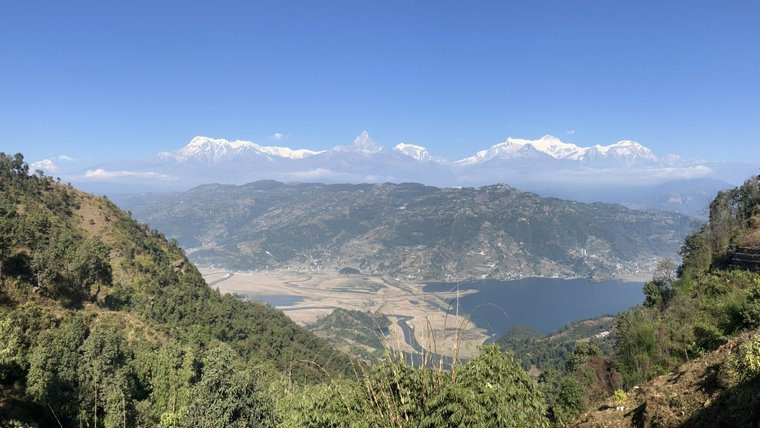
My favorite pastime is talking a walk. Being close to the Himalayas, Nepal has a beautiful landscape that changes colors by the season. Walking along the hills is a joy and talking to the people who pass by is a delight as well. A random person might invite me for a cup of tea or snack, and joining somebody’s birthday party is more than welcome. Every walk is a different experience that’s never boring.
8. What are you looking forward to in your remaining time as a Volunteer?
I am the only Volunteer in my cohort who is extending my service and am eager to help incoming Volunteers. There are many tips that I would like to share with them about living in Nepal—how to bear the cold winters and the scorching summers, how to improve your quality of life at site, or how to deal with the stress of living away from family and friends for 2 years. I’m sure that sharing my experience can help them enjoy Nepal even more than I have and make the Nepal project even more successful. When I eventually leave I hope that I can be proud of my work in the community and leave a lasting impact.
9. Once you finish service, what will you do differently when you return to the U.S.?
I will be more appreciative of things I took for granted in the U.S. Constant running water, central heating, air conditioning, warm showers, washing machines, and uninterrupted electricity are among many things that most people in Nepal do not have. During the dry season, there were days that the family could not use any water at all. Finding ways to deal with cold winters and scorching summers are a necessity. Using a bar of soap to wash clothes in a bucket is a weekly activity for everyone. Turning on the fan only for it to immediately turn off because of a power outage is not out of the ordinary. I will respect what I have and the people who provide them.
Learn more about serving as a Peace Corps Volunteer in Nepal.



