 An official website of the United States government


Featured Volunteer Profile
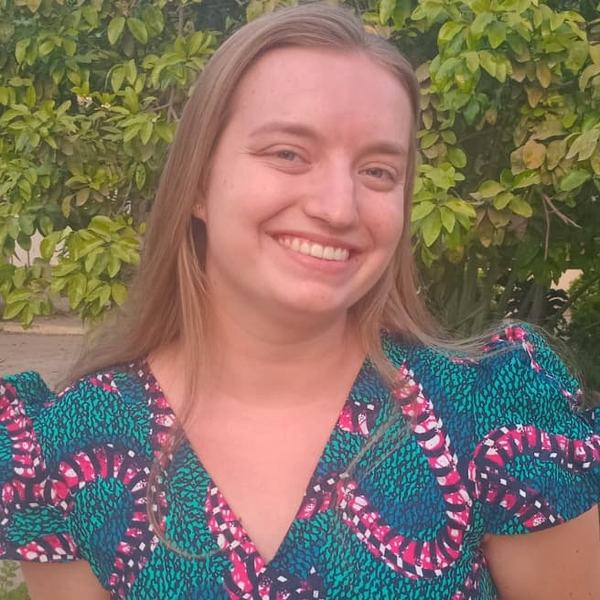
Mackenzie P.
“I go to my host mom and aunt for support. If I have a question, need help in town, want to understand a dynamic, or just want a comforting conversation, they are sympathetic listeners and work with me to improve my local language skills.”
1. What inspired you to apply for this Peace Corps position?
I wanted to serve in the Peace Corps since learning about it in middle school. I grew up loving volunteer work, and enjoyed jobs that were active, allowed me to work with others and grow as a person. In college, applying for the Peace Corps rose to the top of my list for things to do after graduation. I had just finished studying abroad in Senegal when I started looking at positions. I had fallen in love with the culture, and the people of Senegal and knew I wanted to go back. The Peace Corps felt like the perfect way to get back into the country and help the communities I fell in love with.
2. Tell us about a moment that sticks with you from the first week at your site.
When I arrived, my house was not yet built. My host family volunteered me a room in their own home until my new home was built in their compound. Every night for a week, I sat with my teen siblings and helped with their English homework while sipping a cup of freshly brewed hibiscus tea. My sisters and I would go on walks as the sun was setting to pick the hibiscus ourselves. It was a chance to become fully integrated in the family that chose me, took care of me, and accepted me as one of their own. By the end of the week, my house was done and my host sister cleaned the whole place for me (Senegalese style) so that I could start making the house my own. I am forever grateful for the time I was able to live with my host siblings.
3. What projects are you working on?
My main job is to promote and help achieve food security in my town. Some of the projects include planting moringa trees, setting up disability gardens and home gardens for the dry season, and working with a Senegalese company to distribute new seed varieties to farmers in my community. This seed distribution has been a great way to see if these newly modified seeds work well in the hot and dry Senegalese environment. I work with the farmers to collect yield data on these seeds to see how well they are growing.
4. What strategies have you used to integrate into your community?
I’m so lucky to be a part of such an amazing community who have accepted me into their homes with open arms. In one small neighboring town I am a part of a weekly women's group, where I met 30 incredible women, some of whom I have become very close to. They are the people I reach out to when I am in town and looking for a friend.
I also have a language tutor in my town. My counterpart also speaks French, and has taught me more vocabulary and phrases. Thank goodness I minored in French because there are no English speakers in my town.
5. What’s a typical day like for you?
Every other day I either walk to the market or visit my host family’s garden, about 20 minutes from my host family’s compound. I teach the kids how to water certain plants and show them the trees we have planted together. I also take time to go on walks/runs in the bush or relax in my room. In the afternoon I always sit with the family for lunch and attaya (tea). I will sit and read while watching the kids play in the compound or go to school. In the evening I enjoy helping the kids with English and French homework, watching telenovelas with the family, and eating millet for dinner.
6. What is a highlight of your time in service so far?
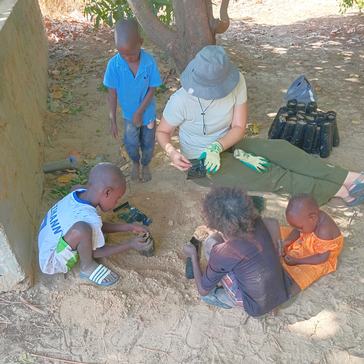
I set up a tree nursery so I could grow a variety of trees in my host family’s garden. All the kids in my compound (there are close to 20, ranging in age from 4 to 20) came with me to make tree sacks and were excited to learn every aspect of the process. They helped water the trees, which eventually grew large enough to be planted. The kids helped me carry them back to our house, where they each got their own moringa tree to plant and take care of. There were plenty, so I every woman in my women's group received a tree as well. They learned about the nutritional value of moringa leaves and how they can help create a balanced diet. It was an amazing experience that involved so many people, and was also easy to do and fun for the kids.
7. What have you enjoyed most about the community where you are serving?
I have enjoyed my community so much for so many reasons. First of all, it’s the best of both worlds. I live in a small commune (one of about 40) on the outskirts of a larger town. I am surrounded by a close-knit farming community but still have access to amenities (like boutiques and a daily market) in the larger town. Also, people in the area speak Seereer, and the schools use the language as well, which is pretty rare for a town this size. I learned Wolof during my initial time in Senegal and learned Seereer as a Volunteer. I feel so accepted because I speak Seereer and can communicate with everyone in my community.
8. What are some of the most important things you’ve learned from your community?
Some of the most important things I have learned from my community include how to slow down and be in the moment with those around you. Everything is so fast paced in the United States, so it has been eye-opening to live in a community where a common phrase is “God willing,” meaning, the project will get done when it gets done, or you will get there when you get there. Don't get me wrong, it has been a hard transition. I joined the Peace Corps straight out of college, and I am used to a fast pace where everyone wants to get things done all the time. But I have learned to find peace and joy in the little things, as well as enjoying being in the moment, not just using that moment as a way to get to an end goal.
9. How do you spend time when not working on a project?
Life in Senegal is all about slowing down and going with the flow, so I tend to have quite a bit of downtime and free time to do other things besides work. The biggest thing I enjoy is sitting with my family and drinking attaya. I have learned to make attaya and now enjoy resting and reading with my host sisters and mom. I have also picked up running since being in Senegal. I started by walking into the wilderness and finding good trails, but now I will go for morning or evening runs after sitting with the family. My Kindle is also my most prized possession here in Senegal and I have been reading more books than ever before. It has been a good way to connect with other Volunteers; I even started a book club within my Volunteer cohort.
10. Tell us about the strongest relationship you’ve developed while in country.
In my community, there are so many amazing people I lean on for support and fun conversation. I love talking to my 20-year-old host sister about all things culture, school, work, as well as a little gossip. She is learning languages in advanced high school classes right now and loves sitting with me to learn some English. But I go to my host mom and aunt for support. If I have a question, need help in town, want to understand a dynamic, or just want a comforting conversation, they are sympathetic listeners and work with me to improve my local language skills. I have never felt more integrated than when we can joke around and laugh during our conversation.
11. What are you looking forward to in your remaining time as a Volunteer?
I spent my first year learning how to be a good community member and integrating into my town. I have loved getting to know everyone and doing small projects to stay busy. I am excited to use those connections and my growing knowledge of agriculture to work directly with farmers with my seed distribution project. Last year was testing the waters with seed distribution, so I am excited to fix some issues around the project and get amazing data to share with the Peace Corps and the Senegalese seed company.
My town doesn’t need to create community gardens or build wells. They are pretty set up, so I am excited to work one-on-one with some of the farmers I have made friends with. I have also started growing flowers, aloe vera, and trees to share with my community. Everyone is excited to add more color and greenery to the sandy landscape, so I have been experimenting with different plants to see how well they do in the compound.
12. Tell us your favorite phrase in the local language.
A main greeting in many cultures including Seereer is “Nam fi'o? (How are you?)” As Americans we tend to respond by saying everything is fine, but here in Senegal the response is, “Mexe mene (I am here).” I've used this saying as a touchstone for my life here in Senegal. I am here, I am a part of this culture, I am making a difference. Even on the days when work is hard, or the language isn't working, I am still here, and I'm grateful for that.
13. What will you do differently when you return to the U.S.?
I hope to bring a lot of my Senegalese lifestyle back home with me. I am, of course, excited to get back to driving myself around and cooking a wide assortment of foods. But I will never take my car and grocery store for granted, and I hope to add a few Senegalese dishes to my meal rotation. The biggest difference, though, is that everything in the United States is about working, staying moving, and never slowing down. I hope to take my slower, more restful mentality back with me. I want to enjoy the peace and quiet, lift my head more often to observe what is happening around me, and celebrate the little things. I have loved becoming more mindful and grateful while I am here. I make sure to get out into nature more often and enjoy the slow quiet moments.
14. What would you say to someone thinking about joining the Peace Corps?
My favorite Peace Corps slogan from an old ad campaign is “It is the toughest job you will ever love.” I think that quote is so true and I wouldn't trade this experience for anything. It is hard, and pushes you out of your comfort zone, but that’s what makes it so impactful and changes how you live your life.
Learn more about serving as a Peace Corps Volunteer in Senegal.



