 An official website of the United States government


Featured Volunteer Profile
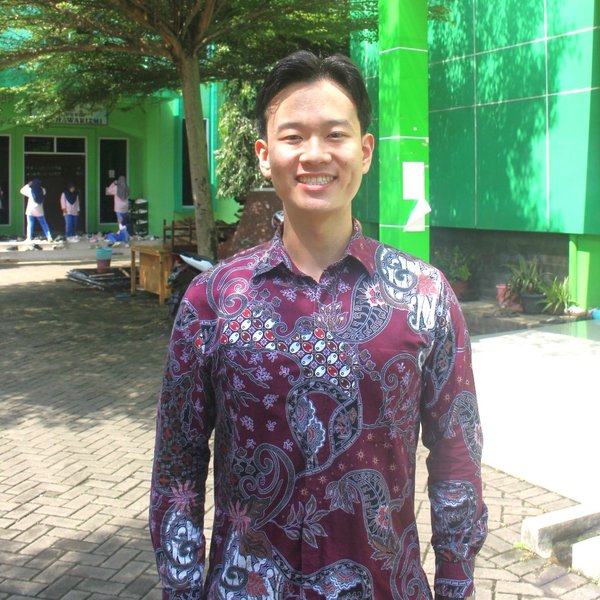
Ben L.
“The ability to go beyond surface-level small talk and share our hopes and dreams, qualms, and setbacks is something I love. Sharing a laugh is universally loved, and I always try my best to do so with my friends and family here.”
1. What got you interested in the Peace Corps?
Life is short, as many say and, with this in mind, I have always been someone who prioritized gaining new experiences and trying new things. When I was in high school, I was blessed with the opportunity to volunteer in Haiti with a non-profit hydroponic organization to build greenhouses. This opened my eyes to the world beyond the U.S. and to a socioeconomic pyramid that I was aware of on paper but not in my heart or eyes. During this significant moment in my life, one of the trip supervisors was my math teacher, Ms. Hart, a former Peace Corps Botswana Volunteer, who instilled in me the idea of the Peace Corps as a viable path to continue international volunteer work.
How else would someone be able to form connections across the world, work for a purpose, and receive support from amazing Peace Corps staff for two plus years? This was one of the reasons why I committed me to applying to the Peace Corps. And if given the chance, I would choose to join the Peace Corps a hundred times over!
The Peace Corps' goal of cultural exchange and building peace through relationships is truly commendable, and I am honored to be a part of the mission.
2. What projects are you working on?
My main project is being an English teacher at an Islamic boarding school. Developing lesson plans with my fellow English teachers and co-teaching are my primary activities. It has been such an awesome experience working with Indonesian senior high school students and teachers. I am so grateful to be a presence in my students' lives as they learn and experience a different culture and language through me. My counterparts, the other English teachers, and teachers of other subjects (Arabic, economics, physics, Indonesian, biology, and counseling) are all so kind and help with my work.
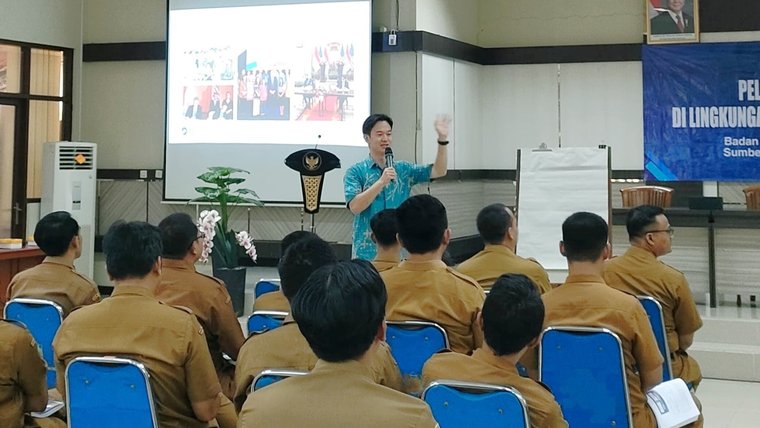
In addition to being a teacher, I help lead an English club (a place for students to learn English and have fun with cultural activities), peer teacher club (a club where 11th graders teach 10th graders English, started by Talia, a previous Volunteer), a class for motivated students who want to study abroad, and an English club for teachers and staff at my school and from the nearby middle school and university. I am also applying for a grant to improve my school's science labs, as the equipment is severely lacking and outdated. Working with a committee of volunteers and community members, we are also organizing a province-wide English leadership camp at my site and re-establishing a province-wide English competition at the provincial capital building.
3. What strategies have you used to integrate into your community?
Exploring and always being willing to try new things. Even when I’m unsure who I will meet or if I am tired, saying yes to a random invitation may open doors. You never know until you try. Pushing myself to stay socially open, even on days I feel tired, is also a good way to keep integrating. There may eventually come a time when I have developed many relationships and may focus on strengthening the ones I most value.
4. What is a highlight of your time in service so far?
It was a bright and sunny day with the bluest, clearest sky I could remember. A hot day, with a hint of a breeze. I had finished teaching some of my athletic program students about procedural text, and we had so many laughs as we learned new words related to recipes and food. After class all the students were smiling, laughing, and shouting in unison, "Thank you, Mister Ben!" As I walked back to the teacher's room I remember thinking, "Wow, this is what it's all about." When people, especially my students, smile and laugh, it’s always the highlight of my day.
5. What have you enjoyed most about the community where you are serving?
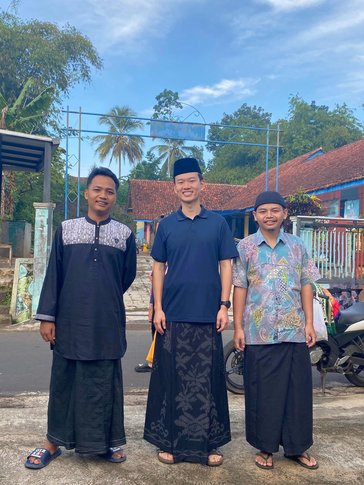
The personal connections I have made. As my language has improved, I have been able to communicate my feelings and jokes and, more importantly, ask others how they feel and what they think. The ability to go beyond surface-level small talk and share our hopes and dreams, qualms, and setbacks is something I love. Sharing a laugh is universally loved, and I always try my best to do so with my friends and family here.
In addition, the Indonesian culture of welcoming others like family is something I will always be grateful for. Members of the community, my family, and my friends always ask if I have eaten or where I am going. These questions may seem repetitive and overly curious, but they come from a place of caring. When people are in need of help, the community always comes together to help. These are things I will carry with me for life.
6. What are some of the most important things you’ve learned from your community?
No matter who you are, what your background is, or what you believe in, Indonesians will welcome you with open arms and an open mind. Patience for the unpredictable, acceptance for the different, and tolerance for the various religions of the world are things that I have learned, especially from my experience working and interacting closely with a pesantren, an Islamic boarding school. Even though they read, pray, and study the Quran and Islam devoutly for hours every day, the leaders preach to their students to be moderate, democratic, and diplomatic. Members of all religions and backgrounds are accepted, and that has been very eye-opening to me, coming from a non-Islamic-centered world in the United States.
7. How do you spend time when not working on a project?
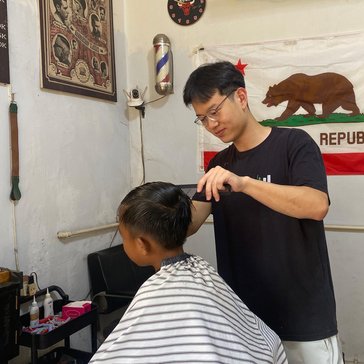
Staying active has helped me integrate. Playing table tennis with kids and adults in my community, running around my town, meeting new people at the gym, biking to the badminton court with local friends, and pairing up as doubles partners with new faces at the local tennis court are ways I have spent time and integrated.
And of course, the nongkrong culture. Hanging out with my host brothers and friends from my local neighborhood, chatting, singing, and joking around past midnight over coffee is the quintessential Indonesian experience.
8. What are you looking forward to in your remaining time as a Volunteer?
Maintaining and strengthening my relationships. The people are why I applied and why I am dedicated to the projects I am working on now. I am so grateful to have had the opportunity to meet them all.
Second, I am looking forward to completing the projects and programs I mentioned earlier and to continuing helping my students in competitions and events they hope to attend and win. I hope to make as much of a sustainable impact as I can on my school, community, students, and counterparts before the end of service.
9. What will you do differently when you return to the U.S.?
First, professionally, I have built on my skills in public speaking, reading the room, and comprehending cultural differences, among countless other things. Speaking in front of 1000-plus students and staff? No problem.
Second, and closest to my heart, is how I will see the world and walk my life differently after my time here in Indonesia. I will remember to smile and that it’ll be okay even when faced with the hardships and unpredictable obstacles that life so often throws at us. I will remember to be patient because people naturally want the best for others in this world, and rarely do people have malicious intentions. And I will remember that we are all humans with a soul, whether you are a man in Connecticut or a woman 10,000 miles away in West Java, Indonesia.
Learn more about serving as a Peace Corps Volunteer in Indonesia.



