An official website of the United States government

Official websites use .gov
A
.gov website belongs to an official government
organization in the United States.

Secure .gov websites use HTTPS
A
lock (
) or https:// means you’ve safely connected to
the .gov website. Share sensitive information only on official,
secure websites.

Search
Connect with the Peace Corps
If you're ready for something bigger, we have a place where you belong.
Apply to the Peace Corps
The application process begins by selecting a service model and finding an open position.


Let us help you find the right position.
If you are flexible in where you serve for the two-year Peace Corps Volunteer program, our experts can match you with a position and country based on your experience and preferences.
Serve where you’re needed mostYouth Development Facilitator
 Youth in Development
Job highlights
- Gain practical expertise in positive youth development by applying community-based strategies and tools that are transferable to any career.
- Strengthen your Spanish language through immersive instruction from skilled Language and Cross-Culture Facilitators.
- Immerse yourself in the rich Ecuadorian culture and enjoy living in the Ecuadorian mountains or its Amazon region.
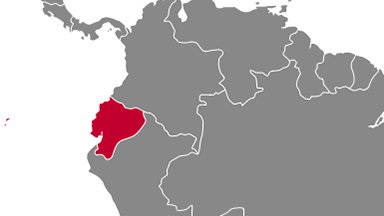
Ecuador • South America
In partnership with: Municipalities, non-governmental organizations, and youth centers.
Get answers live — every weekday at .
Apply by
October 15, 2026Know by
December 1, 2026Depart on
May 30, 2027Duration
2 years, plus 3 months trainingAbout the project
Are you motivated to join a team that is committed to supporting youth? Ecuador has an opportunity for you!
In Ecuador, more than one-third of the population is under the age of 18—an extraordinary source of creativity and potential. At the same time, many young people and their families face social and economic challenges that limit their access to opportunities for growth, leadership, and well-being. Poverty, migration, family separation, school disengagement, and limited access to supportive services can increase vulnerability, particularly in rural and underserved communities. Ecuador’s National Development Plan (2025–2029) prioritizes strengthening community-based systems that support young people and families.
As a Youth Development Facilitator, you will collaborate with organizations, schools, families, and young people to strengthen local capacity and expand opportunities for youth engagement and leadership development. You may support initiatives that foster life skills, civic participation, employability, and/or family engagement. Together you will create safe spaces where youth can learn, lead, and grow. In your supportive role, you will help communities develop stronger support systems for young people (11–24 years old), allowing the next generation to become confident, engaged, and resilient leaders of positive change.
SPECIAL NOTICE ABOUT CITIZENSHIP: Candidates who are dual citizens of Ecuador and the U.S. are not eligible to serve with Peace Corps Ecuador. Volunteer safety is of paramount importance, and the protections of U.S. citizenship promote Volunteer safety. If anyone holding dual U.S. and Ecuadorian citizenship were to face a legal, safety, or other emergency situation in Ecuador, the Peace Corps' ability to intervene would be limited. If you hold citizenship with both the U.S. and Ecuador, we encourage you to look at other opportunities with Peace Corps.
Learn more about what Volunteers do in country by visiting our Ecuador project page.
Required skills
Qualified candidates will have one or more of the following criteria:
Associate degree in any field and at least two years of full-time, post-high school work experience (from any combination of roles).
OR
Bachelor's degree in any field.
OR
High school diploma or GED and four years of full-time, post-high school work (from any combination of roles).
Language: There are no pre-requisite language requirements for this position.
Required behavioral competencies
These competencies are essential for all service assignments and are assessed in the application and interview process:
Motivation for and commitment to service
Adaptability and open-mindedness
Problem solving and resourcefulness
Behavioral maturity and professionalism

Photos from Ecuador



How you and the community will make an impact together:
Train youth in core life skills, including self-esteem, goal setting, decision-making, communication, leadership, and prevention of alcohol and substance abuse.
Engage youth in clubs, camps, sports, arts, and recreational activities that promote positive behaviors.
Design and facilitate workshops for community stakeholders on positive youth development, facilitation skills, volunteerism, service-learning, advocacy, community assessment, and project management.
Strengthen organizational capacity and community development initiatives.
Support the implementation of community-led activities and youth-focused projects.
Train youth in employability and vocational skills to enhance workforce readiness.
Tutor through after-school and literacy programs to improve reading comprehension and academic performance.
Facilitate sessions with families and community members on parenting skills and positive youth development practices.
You may also work on additional projects that meet the community’s interests and priorities, such as an English language club or environmental clubs.
Volunteers will reside in the highlands and the Amazon regions of the country and live with a host family during training and for at least the first three months of service. Volunteers are encouraged to live with a host family throughout their entire service as this is the norm for most adults, including college-educated professionals who generally live with their parents until they get married and start a family of their own.
Learn more about the living conditions, including detailed information on culture, communications, housing, and health/crime statistics on our Ecuador country page. You can also delve into stories about local communities by reading our blog or Volunteer stories.
Meet a Volunteer in Ecuador

Maja S.
Health and Well-Being Volunteer
"[From my community] I learned to conserve resources by doing dishes once a day; taking short, cold showers; unplugging electronics while not in use; and taking advantage of natural light whenever possible."
See full Volunteer profile
As a Youth Development Facilitator, you will be trained in working with vulnerable youth to support their transition into healthy, productive, civically engaged adults. Peace Corps/Ecuador will teach you Spanish to help you comfortably live in and connect with the community. You will also receive language resources and learn possible secondary languages depending on your assignment site.
After 9 weeks of training, you will move to a rural, a semi-urban, and/or urban community where you will collaborate with a government, a non-governmental organization, youth centers and/or municipality. You will work with the community to assess the local needs and develop solutions based on supporting local partners assisting vulnerable youth and families in underserved communities with sustainable interventions.
Heterosexual and same-sex couples are accepted for this program. Each person must apply separately and qualify for a position in a different sector than their partner. Cross-sector couples will live with different host families who may reside in different communities during training. Cross-sector couples may see each other for joint-sector training days or on the weekends but neither are guaranteed. Cohabitating couples are highly encouraged to present themselves as married throughout service due to cultural expectations.
To learn more about serving as a couple in Ecuador, visit the country page.
Application process
From application to departure takes around nine months. Learn about the application process for Volunteer opportunities.
Medical/legal clearance
You will need to be cleared medically and legally in order to serve in Ecuador. Review information on medical clearance and legal clearance to learn about the process.