 An official website of the United States government


Featured Volunteer Profile
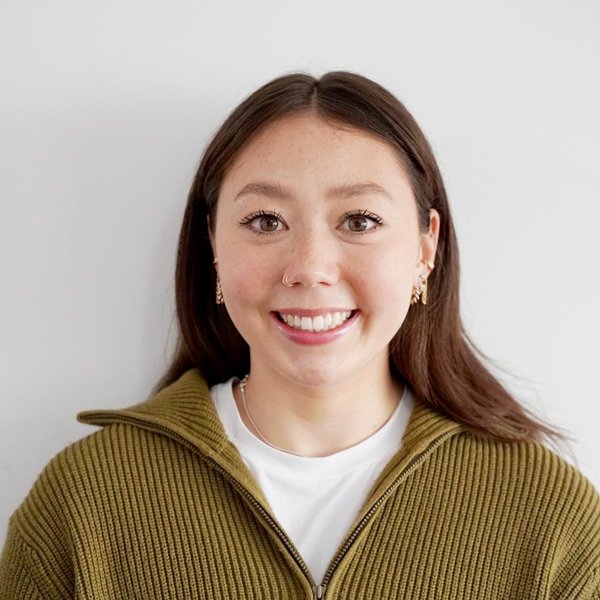
Maja S.
“[From my community] I learned to conserve resources by doing dishes once a day; taking short, cold showers; unplugging electronics while not in use; and taking advantage of natural light whenever possible.”
1. What got you interested in the Peace Corps?
I first read about the Peace Corps in a magazine when I was 14, and was immediately intrigued. I had always been drawn to opportunities to work with and help others. I also had a sense of curiosity and adventure that came from being raised in a multicultural household. My mother lived in Japan for 10 years as a young adult, and my father moved to the U.S. from Japan 25 years ago. I saw through my parents the power of living abroad: the personal development, impactful relationships, and expanded worldview that results.
Around the time I graduated college, I started researching the Peace Corps more seriously—contacting RPCVs, speaking with recruiters, and seeking out more information. I really appreciated the Peace Corps approach to service, and the dedication to and relationships with host countries. After getting a little bit more professional experience, I applied to the Peace Corps and started my journey!
2. What projects are you working on?
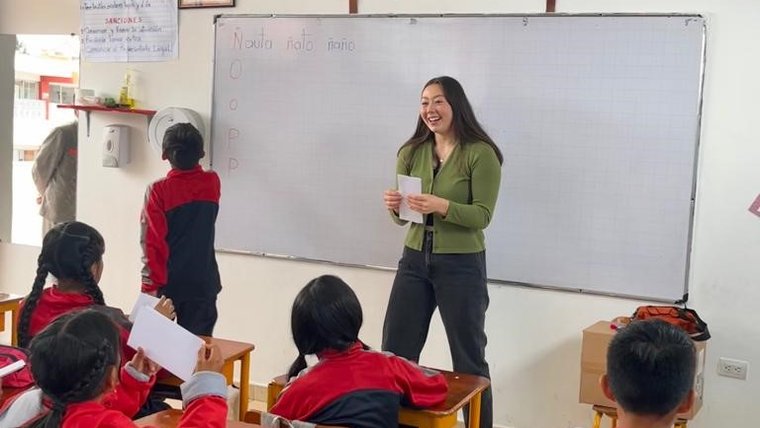
My main project is called “Plan de Vida (Life Plan)” and focuses on supporting youth well-being and mental health. I collaborate with the local health council to support youth in various community locations, including schools, markets, and soccer clubs, delivering dynamic, engaging, and creative workshops to teach important life skills regarding communication, relationships, peer pressure, emotions, and self-care. We modify the Grassroot Soccer methodology to teach students through soccer and other activities. To ensure our interventions are as effective and sustainable as possible, we also work with teachers and parents, educating them on how they can best support their children at school and at home.
In my secondary project “Mamá 360,” another Volunteer and I collaborate with the local initiative “Hermandad Prematura (Premature Brotherhood),” to support families with premature babies. We organize monthly workshops where local experts lead classes in nutrition, mental health, lactation, early childhood stimulation, and more, in order to help educate and bring vital resources to families as they navigate the complex and often difficult journey of caring for a premature baby.
3. What strategies have you used to integrate into your community?
As a Volunteer serving in an urban environment, integration seemed daunting at first. How was I going to find my place among so many people? I started to take small steps in order to find smaller communities and niches.
One of my favorite things to do is spend time in the many parks in my city. There are always groups exercising or playing sports, doing art, and hosting events. I’ve found that simply striking up conversation is a great way to make friends and find new groups to join—in fact, that’s how I started volunteering with a local animal shelter.
I also make an intentional effort to frequent the same tiendas and businesses. At first I was seen as a tourist or foreigner, but after several weeks owners began to recognize me. Now the family that runs the store across the street always asks how I am and, if I don’t visit them for more than a week, where I’ve been. The woman who owns the tienda a block away calls me “mija,” and “corazón,” knows my typical purchases, and watches me walk home to make sure I’m safe. The owners of the small fruit stand I frequent slip me extra produce, and if I forget my wallet, tell me not to worry about it and pay them the next time. Through building these relationships, I’ve created a strong community network.
4. What is a highlight of your time in service so far?
When the animal rescue organization I volunteer with sent a message about an abandoned puppy needing a temporary home, I offered to take her in. I was about 6 months into my service and had just started living independently in a new neighborhood. I started taking my puppy Boots to a nearby park every morning and evening, where I discovered a community of dog owners. While Boots played and made friends with my neighbor’s dogs, I made friends with my neighbors. During the three months I had Boots, I developed close friendships with my neighbors that have continued even after Boots’ adoption. I now spend holidays, weekends, and afternoons with them, and they’ve made my new neighborhood truly feel like home.
Another highlight is my fellow Volunteers. From the moment I landed in Ecuador, they have been incredibly welcoming, supportive, and helpful. Any kind of question I have—cultural (Why was my host mom mad at me when I told her I didn’t want any breakfast?), work-related (How did you get your foot in the door at your local school?), or personal (tips on natural bug repellent?)—my fellow Volunteers have been there for me. And they are always open to visiting!
5. What have you enjoyed most about the community where you are serving?
My community has opened its arms to me in my work. There are so many impressive, dedicated professionals in my city who have welcomed my ideas and supported me in developing projects. When I first got to my site, my counterpart and I had long conversations about the issues we wanted to address in the community. She explained why and how these issues had developed and previous initiatives that did or did not work. She also helped tame my big ideas, breaking them down into smaller, achievable steps. The working relationships I’ve formed and the things community members have taught me have defined my time as a Volunteer.
I also love how easily I can access nature. I can take a bus to a national park in 45 minutes, hike, and get back the same afternoon. Within the city, there are lots of walking trails, parks, and gardens to visit, and on weekends, you can find families flying kites, having picnics, and playing soccer or Ecua-volley together.
6. What are some of the most important things you’ve learned from your community?
My community taught me important lessons in resilience and caring for our limited resources when we faced a severe drought that resulted in nationwide power and water cuts. We faced up to 13 hours a day without electricity, but the community found ways to support each other, and continue our lives and activities. I never realized how much water and electricity I use until they were gone for most of the day. I learned to conserve resources by doing dishes once a day; taking short, cold showers; unplugging electronics while not in use; and taking advantage of natural light whenever possible.
My service has also taught me to always look out for others, in big and small ways. I’ve met so many kind people who, once they hear that I’m a foreigner who lives alone, invite me to events or gatherings, give me their contact information in case of emergency, or even welcome me into their homes for a meal. Here, it’s much more common to strike up a conversation with a stranger on the street, bus, or market and make meaningful connections and build friendships. People who have extended invitations and warmth to me have taught me to always look out for others, and that small gestures can make a big difference.
7. How do you spend time when you are not working on a project?
Ecuador is a beautiful country, and I try to enjoy as much time in nature as I can. If I'm free in the morning or on weekends, I like to spend a few hours hiking in the mountains. My city also has lots of parks and green space, and I often spend afternoons reading in the park or walking by the river. I also joined a local gym, and every afternoon attend workout classes with a group of people I met there.
On long weekends, I like to travel with other Volunteers to nearby cities or towns. Ecuador is special in that it has three regions in the mainland—the coast, the Andes mountains, and the jungle—all only a bus ride away! On a recent trip, we spent time on a beach, swam in the river, and watched monkeys relax on the sand, and then later hiked through the jungle where we saw lots of wildlife.
8. What are you looking forward to in your remaining time as a Volunteer?
As the end of my service approaches, I want to focus on continuing to strengthen and develop my projects and ensuring their sustainability after I leave. I love working with the people in my community, especially the youth who always welcome me with curiosity, participation, and many, many questions. Being a part of their education and development is a privilege and has been the most rewarding job I’ve ever had. Continuing to spend time with youth and my counterparts is a priority in my remaining time as a Volunteer.
I also look forward to spending time with the community: coworkers, neighbors, and street dogs I’ve befriended. I hope to fill my last months with many almuerzos with my coworkers, cafecitos with friends, and visits to gorgeous sites all around the country
9. Once you finish service, what will you do differently when you return to the U.S.?
I will definitely change my consumption habits with regard to water and electricity, but also clothing and other material goods. My host family and community have taught me to use the things I have as long as I can, and to use items I already have instead of buying new things. For example, my host mom showed me how to make a watering can out of a water bottle we had in recycling, saving us a trip to the store and a few extra dollars (not to mention keeping a chunk of plastic out of a landfill)!
I will also approach relationships with a new perspective. I used to keep my work and personal life very separate, and often avoided unnecessary conversations when out and about. Now, I’ve learned to appreciate the close relationships I have with my coworkers, and that small interactions with strangers can be fun, insightful, and brighten your day.



