An official website of the United States government

Official websites use .gov
A
.gov website belongs to an official government
organization in the United States.

Secure .gov websites use HTTPS
A
lock (
) or https:// means you’ve safely connected to
the .gov website. Share sensitive information only on official,
secure websites.

Search
Connect with the Peace Corps
If you're ready for something bigger, we have a place where you belong.
Apply to the Peace Corps
The application process begins by selecting a service model and finding an open position.
Let us help you find the right position.
If you are flexible in where you serve for the two-year Peace Corps Volunteer program, our experts can match you with a position and country based on your experience and preferences.
Serve where you’re needed mostHigh School Science Educator
 Education
Job highlights
Applications are now closed. View current openings.
Apply by
January 1, 2026Know by
April 1, 2026Depart on
August 30, 2026Duration
2 years, plus 3 months trainingAbout the project
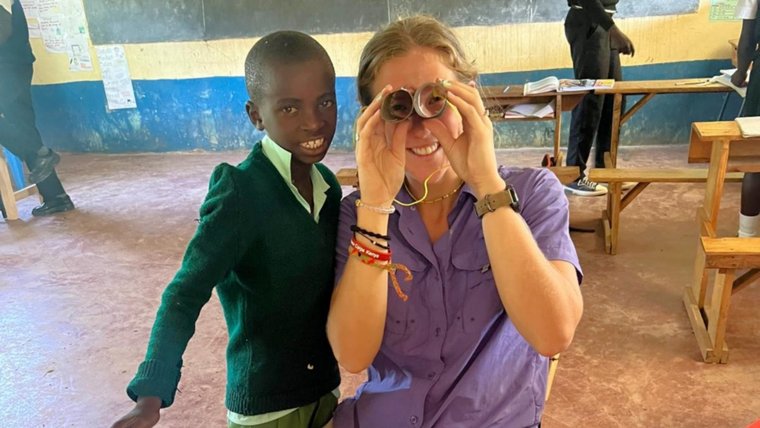
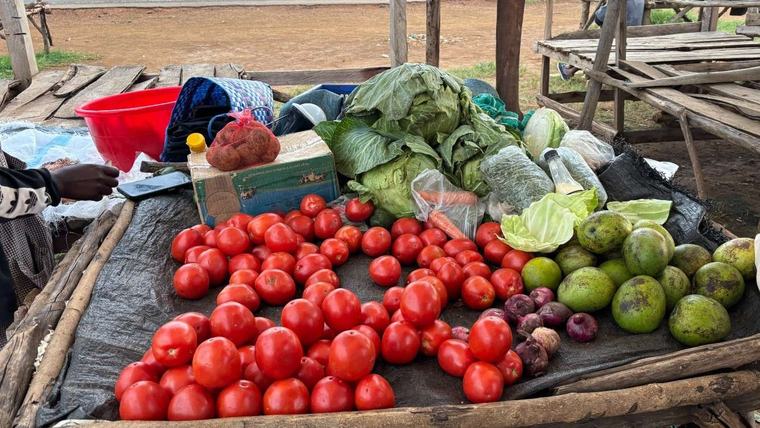
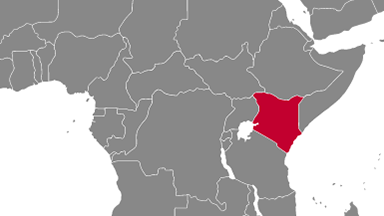
Can you see yourself presenting a science lesson to a class of eager young Kenyan students, or sipping chai (tea) with a group of colleagues as you share lesson plans in the teachers' room? Can you envision walking to the local market to buy beans, corn, and peanuts to make “nyoyo” and meeting a group of girls from the IT club you support who shout greetings to you in Kiswahili? If the answer is yes, Peace Corps seeks applicants like you who have the passion, flexibility, and resiliency to support Science, Technology, Engineering, and Math (STEM) education initiatives in Kenya.
Peace Corps Volunteers’ work complements and supports the efforts of the Government of Kenya at the grassroots level through:
• Addressing secondary school teacher shortages in science subjects
• Supporting Information and Communication Technology integration in the classroom
• Collaboratively promoting STEM education
• Co-developing STEM teaching and learning materials
• Promoting creativity, innovation, and practical application of STEM concepts in real life situations
• Supporting co-curricular activities including career guidance, HIV/AIDS awareness and prevention, and life skills trainings
High School Science Educator Volunteers work collaboratively with Kenyan counterparts in four focus areas:
1. Building teacher capacity through formal and informal Communities of Practice
2. Increasing student skills and performance in STEM through direct classroom teaching
3. Promoting increased community involvement to support school activities
4. Co-developing materials and increasing access to materials/resources to support a STEM approach to math and science
Volunteers teach in high schools and may also be asked to support junior high schools within their communities as an additional responsibility. Kenyan high school students range in age from 13-18 while those in junior high schools range from ages 10-13. Volunteers with interest and/or experience in special needs education may opt to be placed in secondary schools for the Deaf, in which case they would be trained to teach science using Kenyan Sign Language (KSL).
As with all Peace Corps programs, flexibility and a positive attitude are important for this project. Volunteers may be asked by their Kenyan counterparts to provide instruction on a variety of subjects aside from the one they have been invited to teach. Volunteers will teach and/or co-teach in the classroom and support activities to collaboratively build capacity with their counterparts and teachers. To engage the broader community, Volunteers and their counterparts might organize math and science competitions, camps, clubs, and school enhancement projects. Along with classroom teaching, many Volunteers get involved supporting sports teams, youth conferences, school gardens, and other extracurricular activities. STEM Volunteers also work with counterparts to integrate HIV/AIDS and malaria work into their teaching and community development activities in a culturally effective and appropriate manner.
Peace Corps Kenya partners with community counterparts to promote boys’ and girls’ education and empowerment and promote healthy social norms around education. Volunteers are trained on social norms and realities in Kenya and together with their Kenyan counterparts they have the opportunity to co-implement activities that are contextually and culturally appropriate, promoting social norms and co-facilitating empowerment programs to support both girls and boys in exploring a new paradigm together.
Learn more about what Volunteers do in country by visiting our Kenya project page.
Required skills
Qualified candidates will have one or more of the following criteria:
Competitive candidates will have one or more of the following criteria:
• Bachelor of Arts/Bachelor of Science degree in Secondary Education with concentration in any science
OR
• Bachelor of Arts/Bachelor of Science degree in any discipline with secondary certification in science
OR
• Bachelor of Arts/Bachelor of Science degree in General Science, Biology, Chemistry, Physics, or Engineering
OR
• Bachelor of Arts/Bachelor of Science degree in any physical science or any biological science or equivalent
OR
• Bachelor of Arts/Bachelor of Science degree in any discipline with a minor or equivalent (15 semester/22 quarter hours) in Biology, Chemistry, or Physics
Language: There are no pre-requisite language requirements for this position.
Required behavioral competencies
These competencies are essential for all service assignments and are assessed in the application and interview process:
Motivation for and commitment to service
Adaptability and open-mindedness
Problem solving and resourcefulness
Behavioral maturity and professionalism

Photos from Kenya



How you and the community will make an impact together:
Trainees live with Kenyan host families throughout Pre-Service Training (PST). After PST, Volunteers are placed in rural communities in Western Kenya. Housing is provided by the work partner and may be a private structure in a family compound, staff housing at the school or health facility, or a stand-alone house in the community. Structures vary from mud houses with metal roofs to concrete houses with glass windows, but all have facilities for cooking, bathing, and either indoor toilets or outdoor latrine outhouses. Volunteers may have to fetch and carry water from a local water source up to 100 meters from their home and may not have reliable access to electricity.
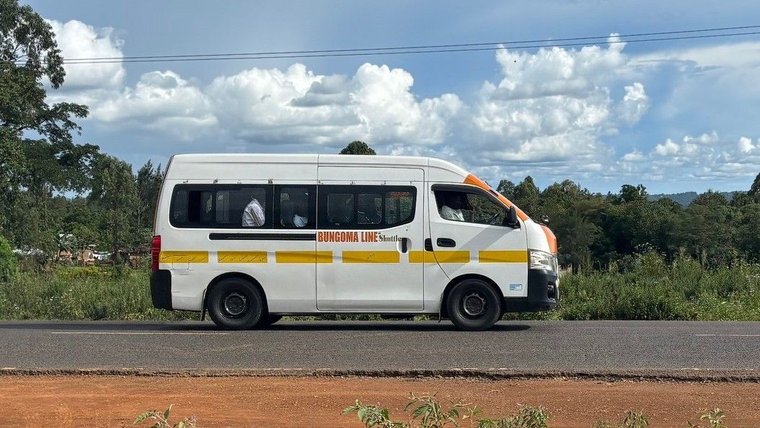
Volunteers in Kenya live within three kilometers of their work sites and are placed no more than five hours by public transportation from the regional capital, Kisumu, where the Peace Corps office is located. Volunteers ride matatus (minivans) as a main mode of public transportation to and from the nearest county capital to access banks, a variety of shops, markets, restaurants, and guesthouses. Peace Corps Kenya provides an allowance for Volunteers who wish to purchase a bicycle.
Cell phone coverage is not consistent in all communities, and text messaging may be more reliable. The Peace Corps will issue a Kenyan SIM card, and certain staff will be on call 24/7. Internet is available through cellphone service providers, and Volunteers are advised to bring a laptop to complete assignments such as monitoring, evaluating, and reporting activities.
Kenyans regard attention to dress and appearance as demonstrating respect, and Volunteers must take care to dress in a culturally appropriate manner 24/7. In training and on the job, Volunteers are expected to dress in modest, comfortable, business casual clothing. Hair should be clean and neat, with beards and mustaches neatly trimmed. Long hair and ear piercings on men and tattoos and piercings beyond the earlobe on any Volunteer may have a cultural stigma and could impede a Volunteer from building trust with and integrating into their host community. Volunteers with visible facial or body piercings or tattoos will need strategies to conceal them during the process of integration into their communities.
Food availability and variety will vary by community within Kenya. The staple food is ugali, which is made from maize meal and is eaten with cooked vegetables, fish, meat, beans, or chicken, typically with the right hand. Vegetarians and vegans can maintain a healthy diet, but vegetarianism is relatively uncommon and many prepared foods are made with animal products.
Peace Corps Kenya welcomes Volunteers from various backgrounds in the U.S., and staff and currently-serving Volunteers are committed to supporting them through challenges. Because Kenya has some restrictive laws against certain sexual acts, LGB Volunteers in particular must be mindful of cultural norms and country-specific laws and use their best judgment in their communities and host countries. Staff and currently-serving Volunteers will address this topic during PST and identify support mechanisms for incoming Trainees.
Learn more about the living conditions, including detailed information on culture, communications, housing, and health/crime statistics on our Kenya country page. You can also delve into stories about local communities by reading our blog or Volunteer stories.
Meet a Volunteer in Kenya
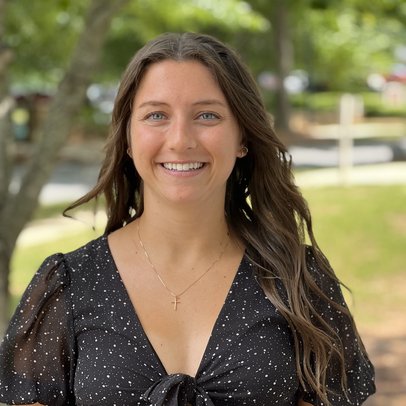
Hannah W.
Secondary STEM Educator
"I've been blessed with several 'mamas' who have shown me immense care and affection. They've also taught me the importance of a slower pace of life. The philosophy of 'pole pole'—taking things slowly and steadily—has impacted how I approach life here."
See full Volunteer profile
To learn more about serving as a couple in Kenya, visit the country page.
Application process
From application to departure takes around nine months. Learn about the application process for Volunteer opportunities.
Medical/legal clearance
You will need to be cleared medically and legally in order to serve in Kenya. Review information on medical clearance and legal clearance to learn about the process.